


































I’ve tried BYD’s five-minute ‘Flash’ charging – and it’s impressive
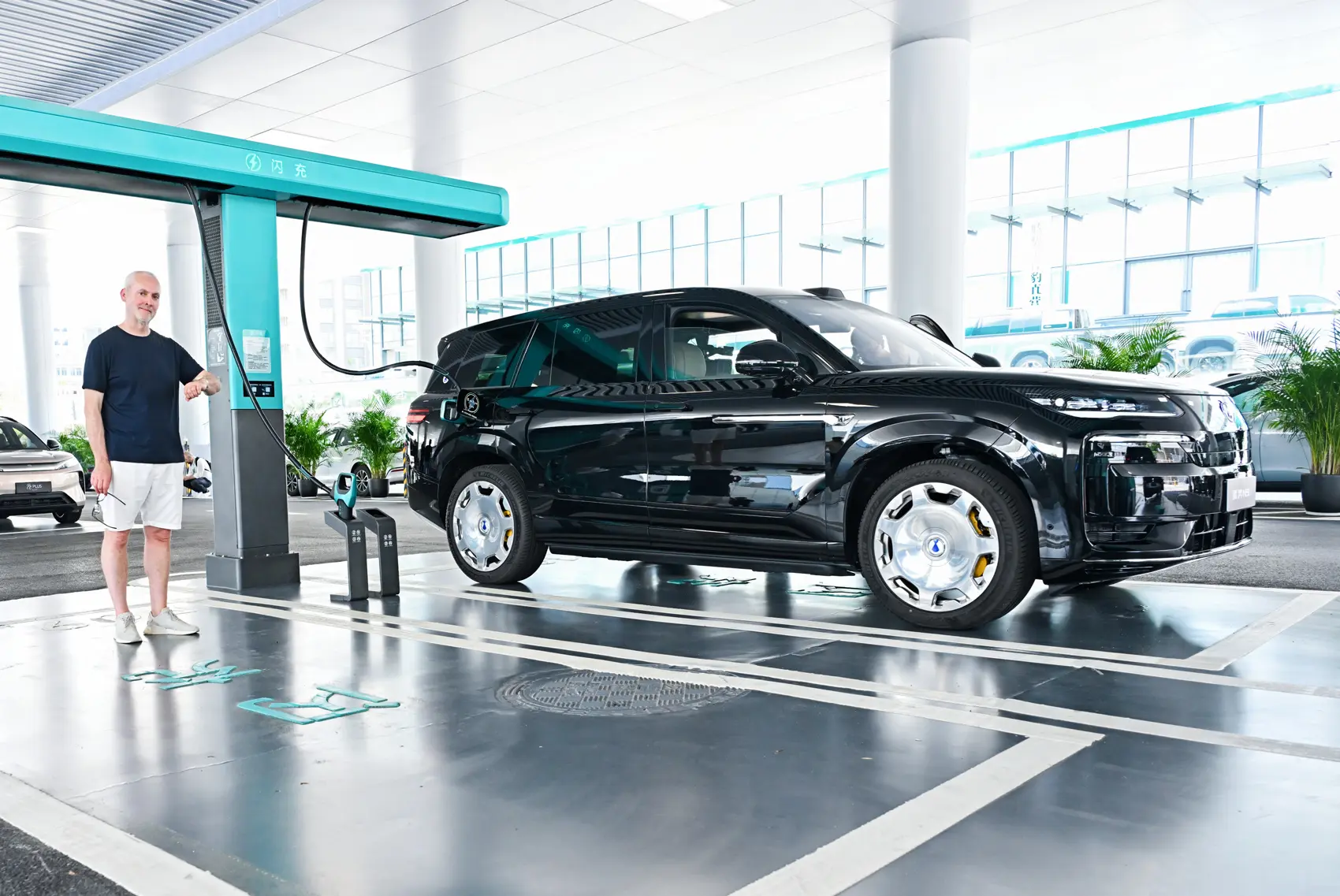
► A 10-70 per cent charge in five minutes witnessed ► BYD to install 300 ultra-fast ‘Flash’ chargers in the UK this year ► Network available to non-BYD drivers too
One of the biggest barriers to EV ownership – long refuelling times compared to petrol or diesel – looks set to fall, if BYD’s new ‘five-minute’ Flash Charging network dream rolls out successfully.
The best-selling electrified Chinese car brand in the world first known for making rechargeable batteries for mobile phones and more, has now developed a new car battery and charging system which can fill a large car from 10-70 per cent in five minutes, 10-97 per cent in nine minutes, and even in cold weather – up to minus 30 degrees centigrade – achieve 20-97 per cent in 12 minutes.
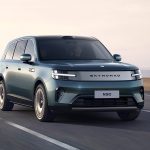
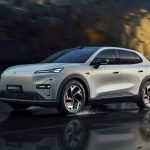
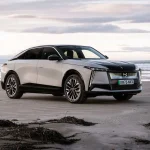
Utilising one of BYD’s existing 6000-plus Flash chargers in China, we plugged into one of BYD’s premium sister brand models – the Denza N9 large SUV – and watched the charger’s digital screen whizz through the numbers, first to 70% and then 97%, in the time it would normally take to pop to the gents and grab a coffee from the café.
Compared to existing ‘fast’ charging times of 20-40 minutes, this is a massive leap. So how is it possible and when and where will UK drivers benefit? Firstly, BYD has developed a new station capable of 1500kW of charging power through a single cable (with a Chinese market connector) and secondly, a new lithium iron phosphate (LFP) Blade battery with increased energy density and ability to recharge at a wider range of temperatures. At BYD’s Shenzen HQ we also witnessed a frosty Denza Z9 GT in a car-sized freezer cabinet refuel almost as quickly at -30° C (pictured above). Impressive stuff.
But how will the UK’s sometimes less than fabulous grid cope with such electricity plundering? ‘The beauty of our Flash charging stations is the battery storage that comes with it, which is again a BYD product,’ explains Alfredo Altavilla, BYD’s European market special advisor. ‘BYD is the world’s leading manufacturer of solar panels and the second-largest producer of battery storage. Our Flash charging stations can recharge at [higher] speed even though we might be sourcing under 150 kilowatts from the grid.’
In the UK, there will be only one model that can charge that fast for a while – the would-be Porsche Taycan bothering Denza Z9 GT due this winter. To help sales of that circa £100k EV (a £95k PHEV will also be offered), UK owners will get 18 months of free charging. More fast-charging models will follow. Meanwhile, existing BYD customers with first-gen Blade batteries will also get preferential charging rates.
Owners of non-BYD cars are also welcome to charge at the BYD-branded Flash charging stations, but their vehicles will take longer than five-to-nine minutes to fill up, as BYD’s Altavilla points out: ‘Our customers will enjoy the benefit of a 1000-volt electric architecture and therefore charge faster. If you have an 800-volt architecture vehicle it will take slightly longer. And if you have a 400-volt electric architecture, it’s going to take twice as long, but that’s not our fault.’
Should BYD’s Flash charging only be used for special occasions (or drastic emergencies) to avoid reduced range over time? Apparently not. ‘A key reason our Blade Battery 2.0 is able to accept such high charging speeds is its reduced internal resistance relative to previous Blade Battery technology,’ says a BYD UK spokesperson. ‘This reduces friction – and therefore temperature – while charging. Along with active battery cooling, repeated ‘Flash charges’ are possible without any significant degradation.’
Many of the Flash 300 chargers in the UK will be at new Denza and existing BYD dealerships – about 40 existing sites already have the right infrastructure– but locations alongside other charging providers are also planned.
Finally, will customers pay through the nose for a fast Flash charge? ‘Prices will depend on commercial agreements with existing charge point operators,’ adds the BYD UK PR spokesperson. ‘While we may want to target, for example, 50p per kWh for all customers, if an existing charging operator charges 79p on the site, we will need to find a solution that keeps all parties happy.’