

























History of the Honda Ridgeline
Honda is, above all, a spirit of sport. It is a car of emotion, steeped in technology and achievements in the world of seconds and speeds. And, of course, just solid Japanese hatchbacks, coupes, and sedans: the compact Civic, the larger Accord and Legend, the Prelude and NSX coupes… But what about a pickup truck?
It would seem that this conservative type of American vehicle is incompatible with the DNA of the Japanese brand. But if you think so, you are mistaken: two decades ago, Honda actually began producing a pickup truck that managed to break most of the canons associated with this type of vehicle form factor. Today, we will recall the history of the Honda Ridgeline – probably the most atypical car in the entire history of the brand bearing the name of the great Soichiro Honda.
The Beginning
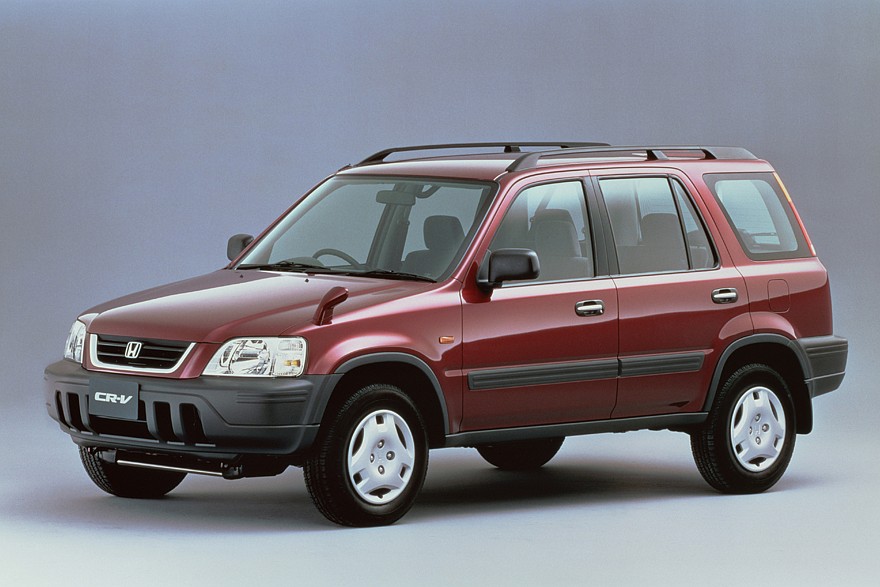
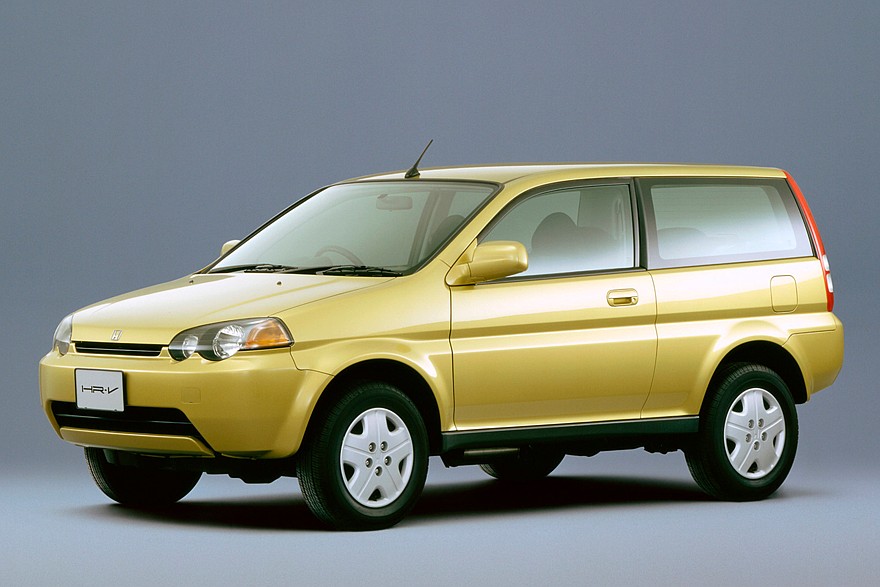
In the nineties, under pressure from market factors, the company stopped limiting itself to city subcompacts and larger cars with a noticeable sporty bias. Crossovers and SUVs appeared in the model lineup – both proprietary models like the CR-V and HR-V, and slightly rebadged “jeeps” from Isuzu/Opel and Land Rover under the names Passport, Horizon, and Crossroad.
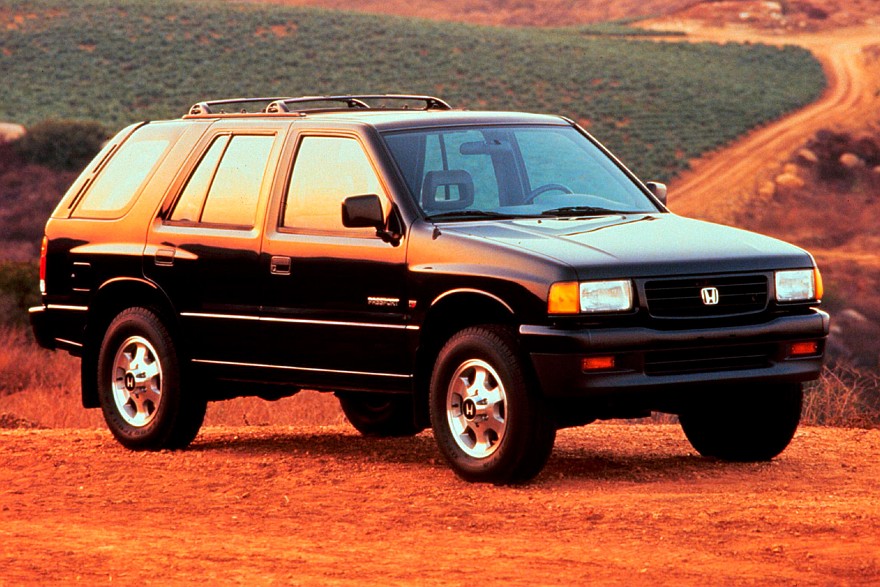
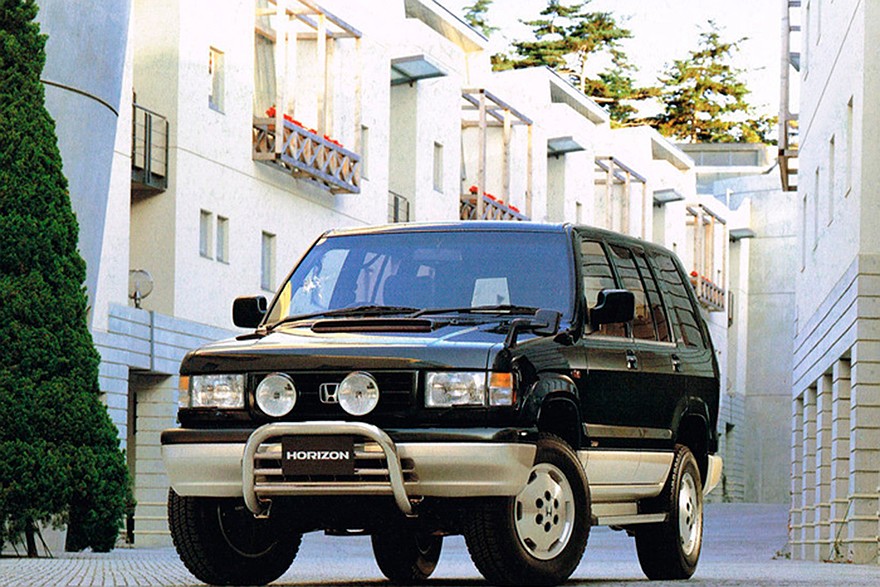
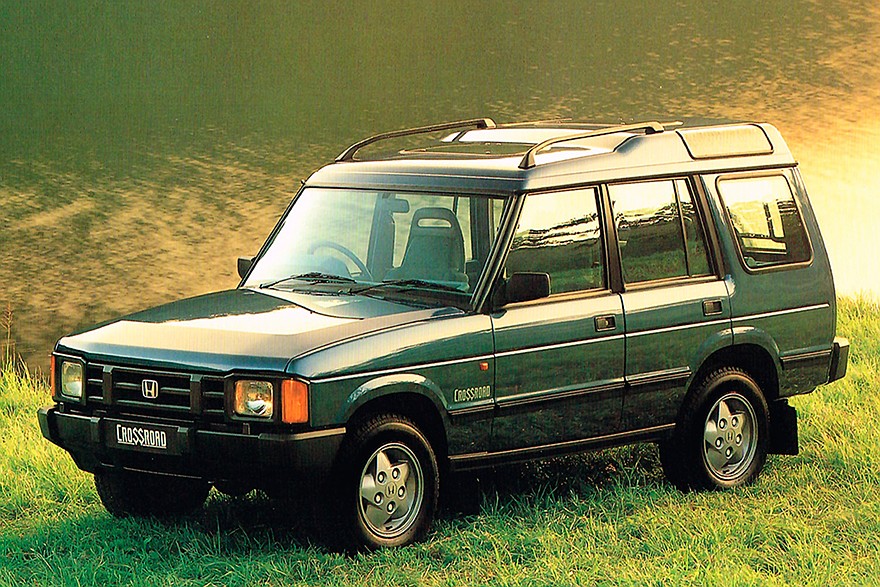
As for pickup trucks, their history traces back to the very automotive origins of the brand: back in the early sixties, compact cab-over trucks T360/TN360 appeared in the model range, and in 1973, the name Honda Life gained the suffix Pick Up, as its cargo platform was integrated into the body, rather than being a separate bed module.
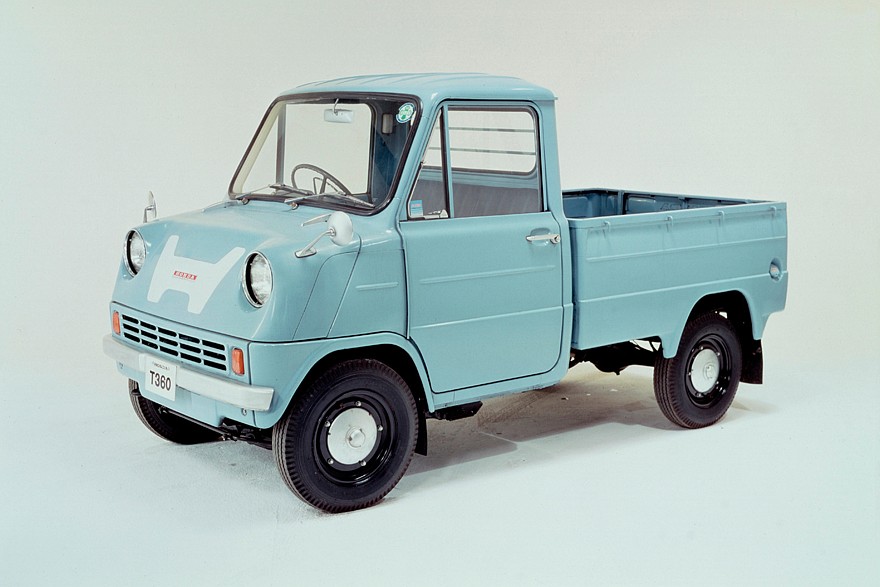
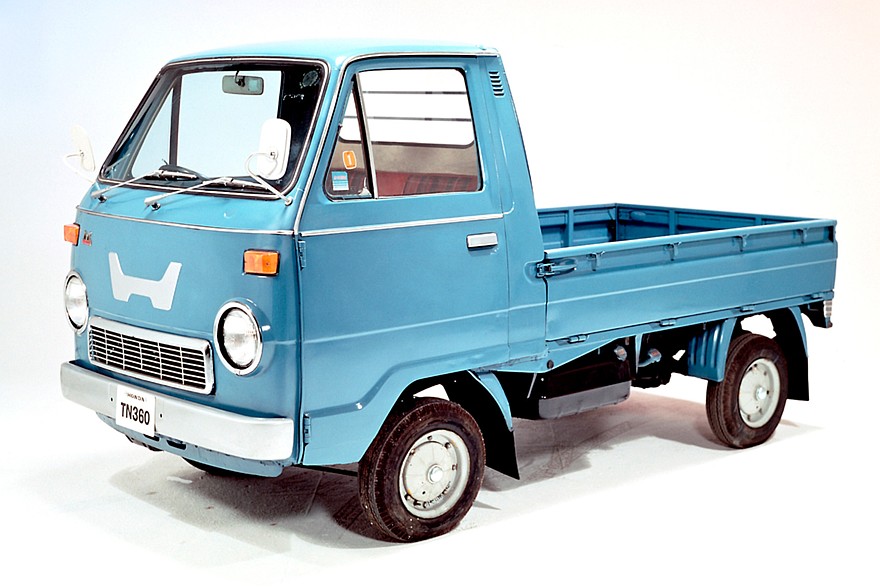
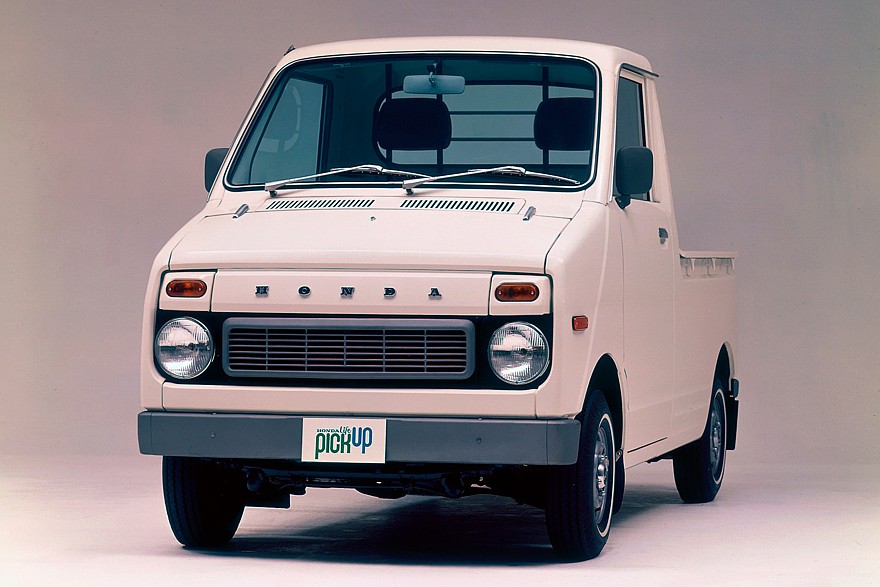
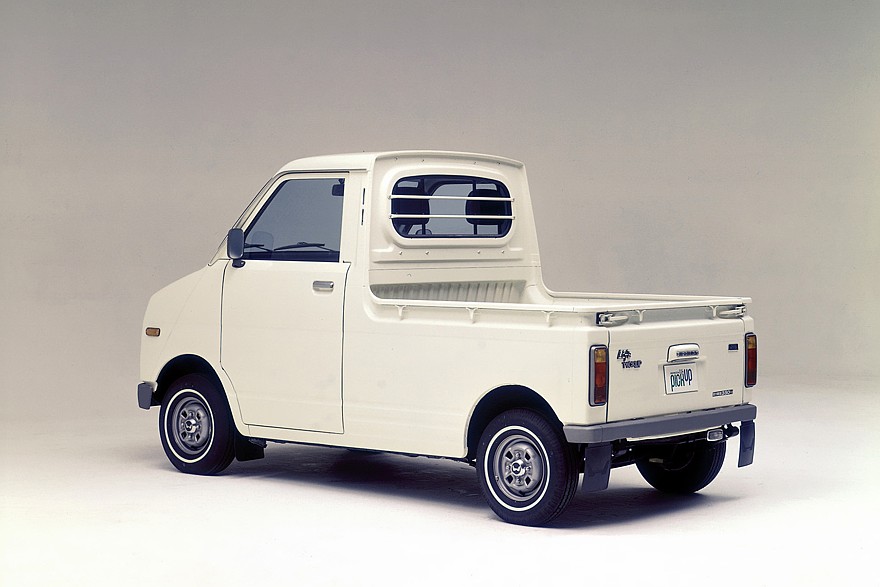
However, all of these were cab-over or semi-hooded vehicles. The only exception to the rule was the rear-wheel-drive Honda Tourmaster for the Thai market, which was a retouched version of the Isuzu TFR (Rodeo) body-on-frame truck with an extended SpaceCab and a 2.5-liter diesel engine. The project turned out to be a failure, as the car cost more than the original Isuzu pickup.
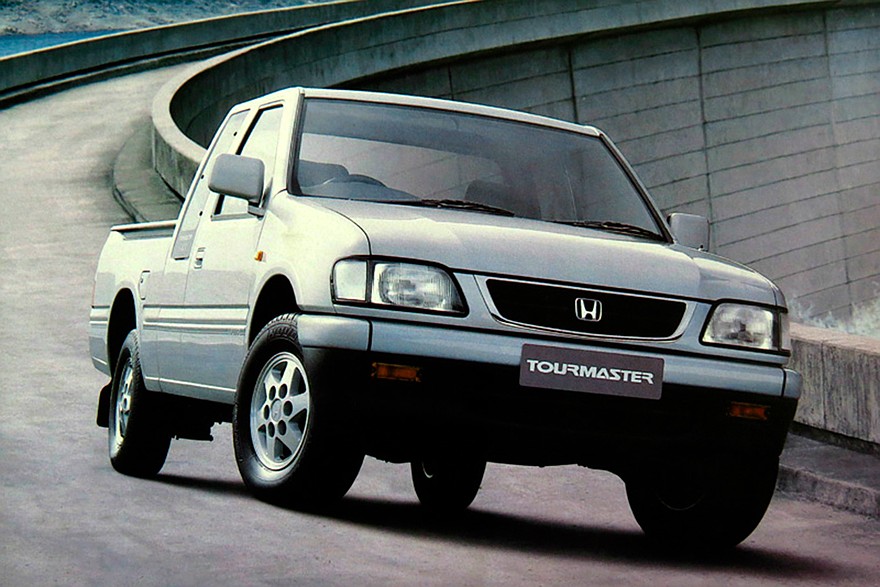
Well, in the American market, where Honda felt quite comfortable with its sedans, crossovers, and coupes, the Japanese could offer absolutely nothing in one of the most popular segments.
However, at the turn of the century, at the 1999 Tokyo Motor Show, Honda showed an unusual concept, the Spocket – a kind of symbiosis of a sporty coupe and a pickup truck.
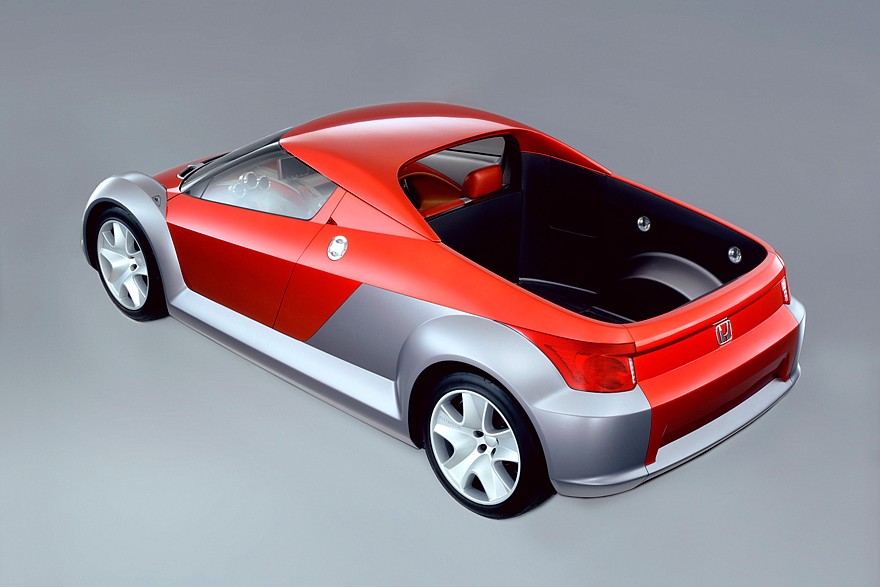
Of course, it was a bit “off the mark,” but it indicated the search vector, that is, the exploratory direction in which the minds of the brand’s designers and engineers were moving at the time.
Breaking the Mold
Others’ developments on the Isuzu pickup did not become the starting point for creating their own true pickup, while the MDX crossover from the premium brand Acura, in this regard, came in handy, so to speak.
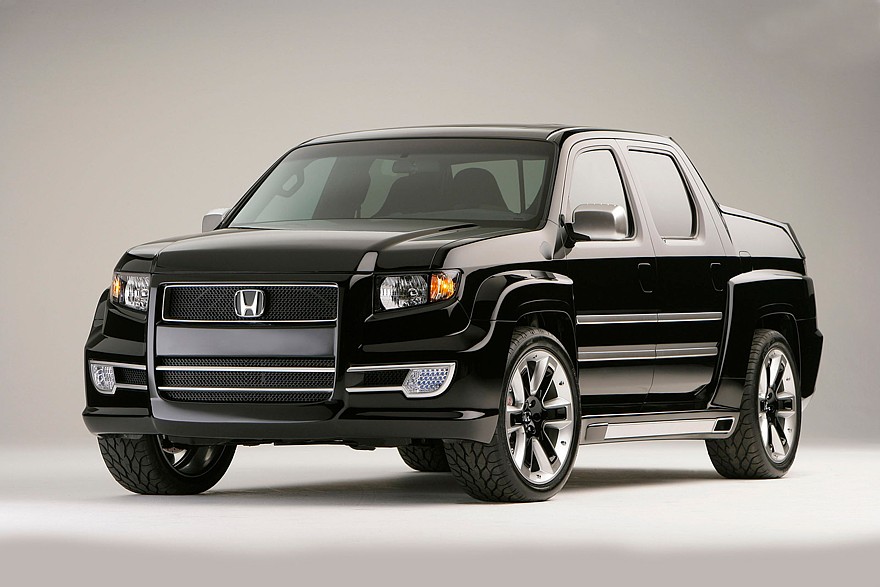
As a result, at the 2004 North American International Auto Show (NAIAS), Honda presented the SUT pickup concept, which simply could not go unnoticed. No small feat: the brand’s first full-size pickup, created with a clear focus on the audience of the country where the debut took place. The car looked striking, powerful, and fresh, conforming externally to the latest design canons in general and “pickup building” in particular.
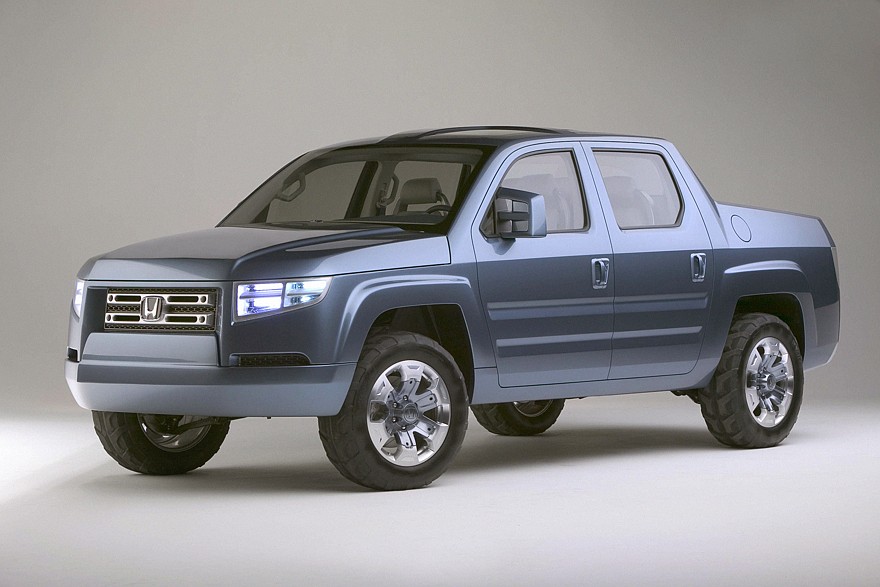
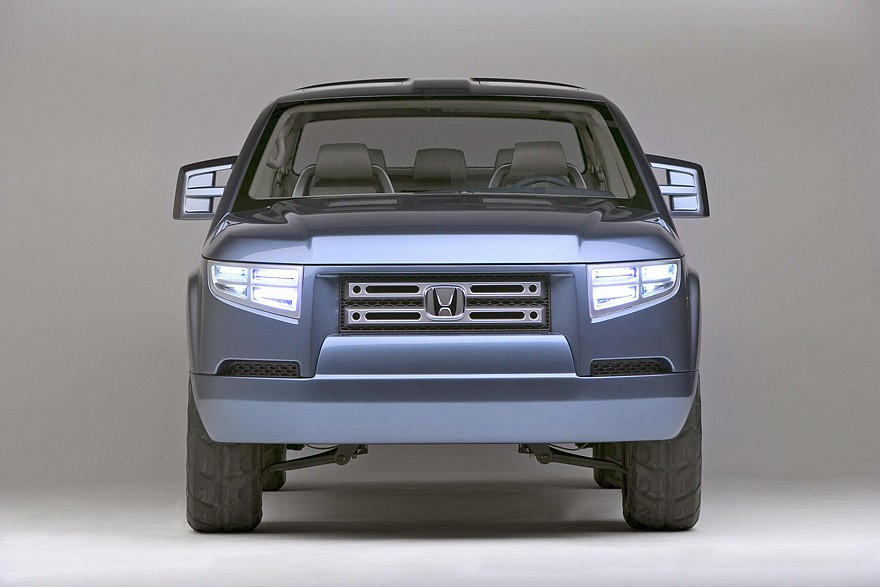
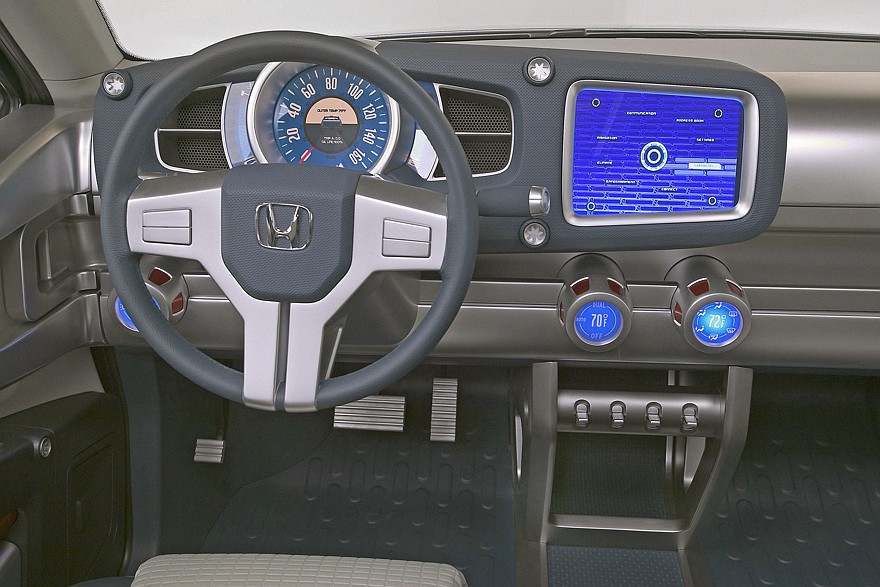
Only the almost complete absence of chrome hinted that this was still a Japanese prototype, not another product stamped “Made in USA.” Later that same year, Honda presented an updated version at the Specialty Equipment Market Association exhibition and announced the official name of the car – Ridgeline.
But behind the attractive and simultaneously brutal exterior lay something that could be called the loud word “challenge.” After all, contrary to established canons, the engine was located not longitudinally, but transversely – quite atypical for a pickup, right? And the VTM-4WD (Variable Torque Management 4-Wheel Drive) all-wheel drive system, developed with the participation of the American company BorgWarner, was infinitely far from the primitive “part-time” systems characteristic of many American pickups. And it deserves a more detailed description, because at the rear, separate sets of multi-plate clutches (electro-hydraulic couplings) were provided for each wheel, which connected the hypoid final drive to the wheels and allowed transferring up to 55% of the torque to the rear axle, including operation in normal differential mode, as well as simulating a rigid locking of the inter-wheel differential in Lock mode.
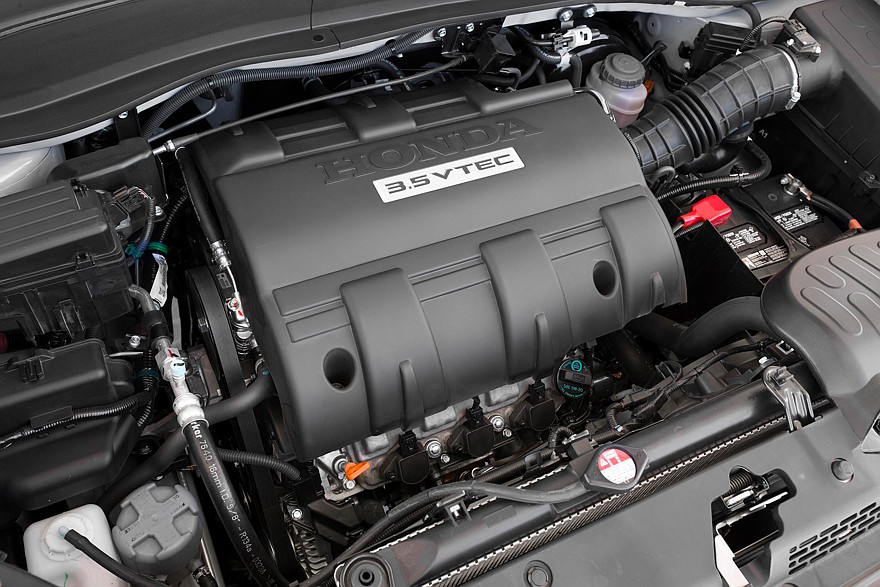
Under the hood – a V-shaped 3.5-liter “six” with the proprietary Honda VTEC variable valve timing system, providing 259 hp of maximum power and 342 Nm of torque. As they say, feel the difference with ordinary American body-on-frame trucks!
By the way, there was no traditional ladder frame in its usual sense. Rather, one can speak of frame-like structural elements integrated into the unibody.
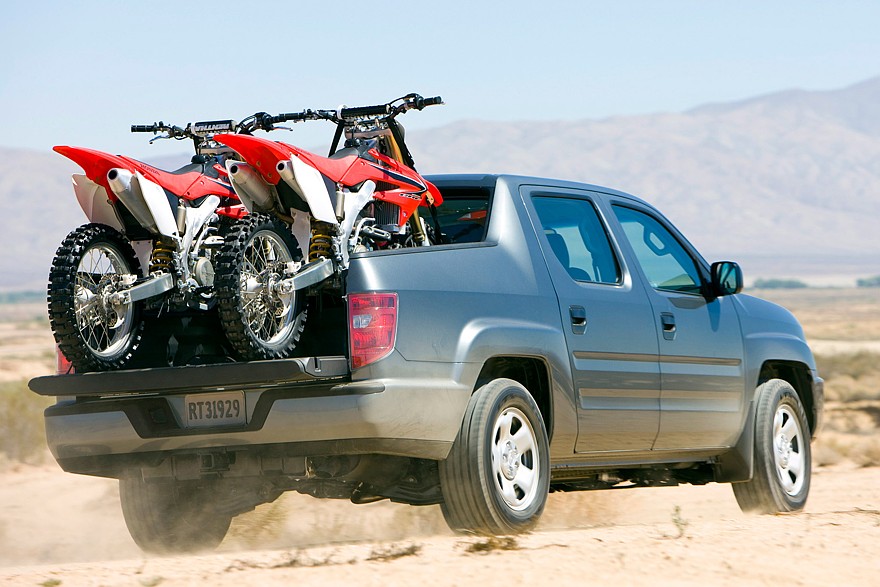
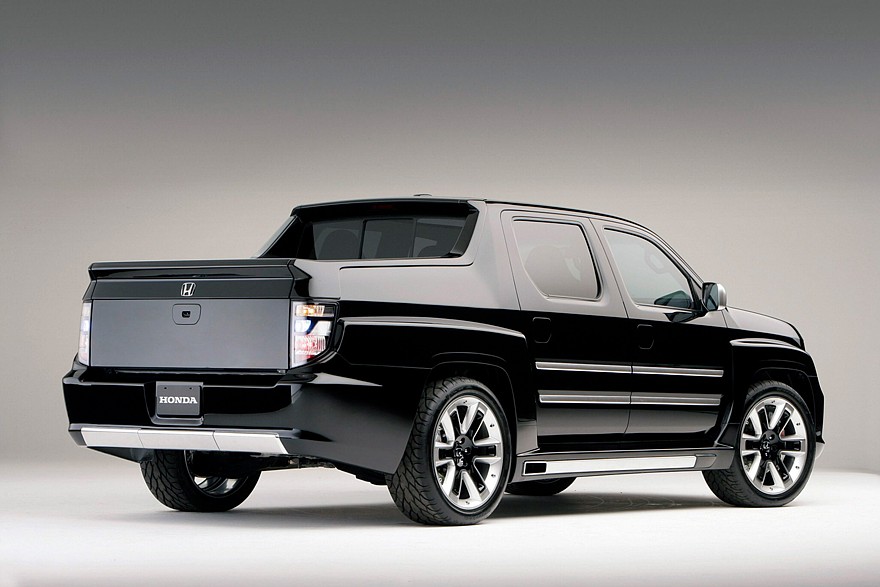
Even to such a seemingly simple thing as the cargo bed, Honda approached with imagination, because under its floor was provided a second trunk-organizer, the In-Bed Trunk, and the Dual-Action tailgate could both fold down and swing open to the side.
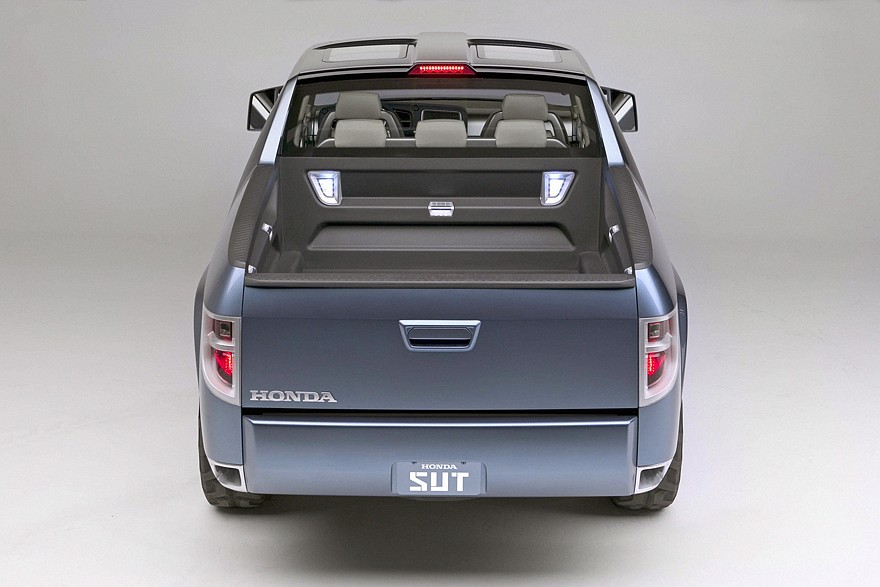
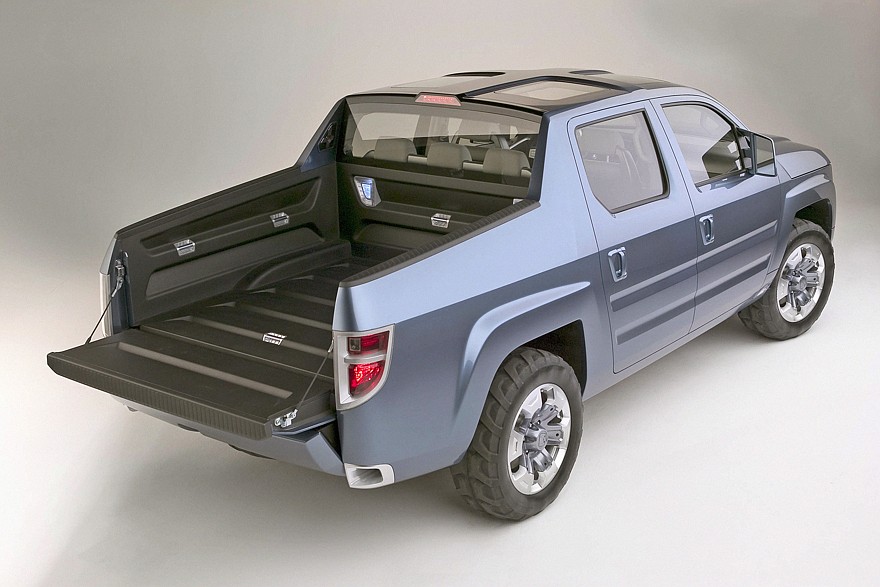
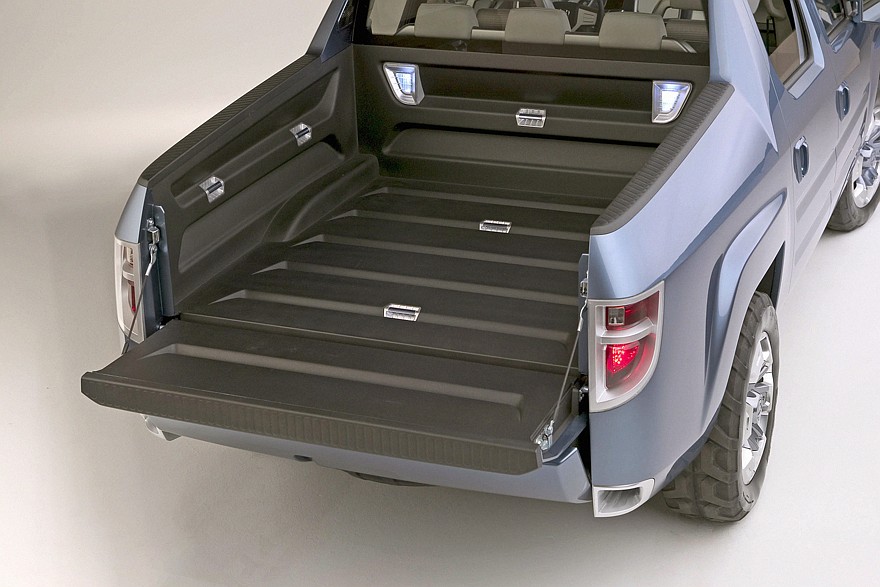
At the same time, two and a half hundred “horses” could dynamically tow a 2.3-ton trailer, and the independent suspensions promised decent handling – by pickup standards, of course. In short, the bid for success turned out to be interesting and promising. Especially considering that the SUT was a precursor to the production pickup.
The Shot Named Ridgeline
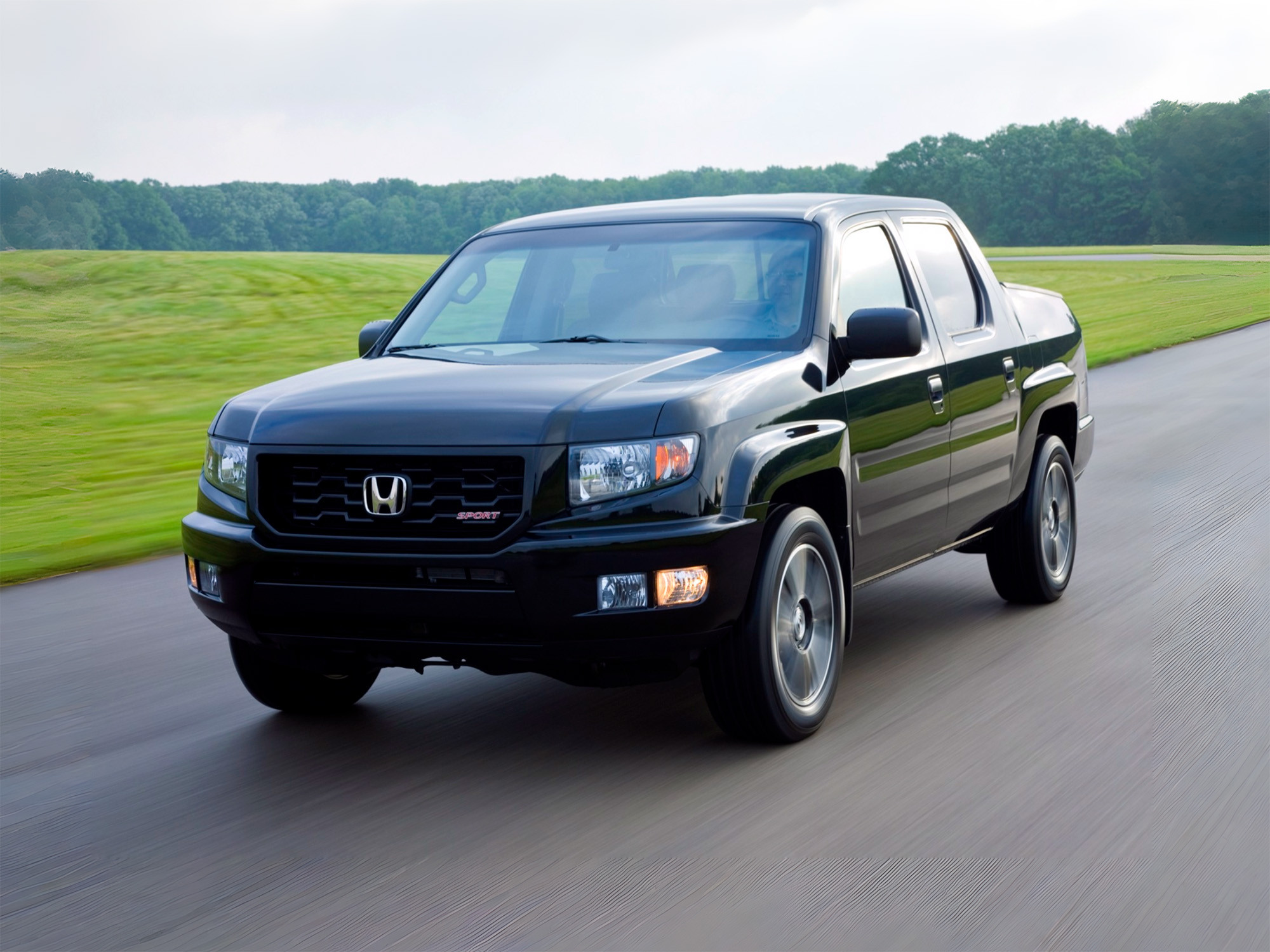
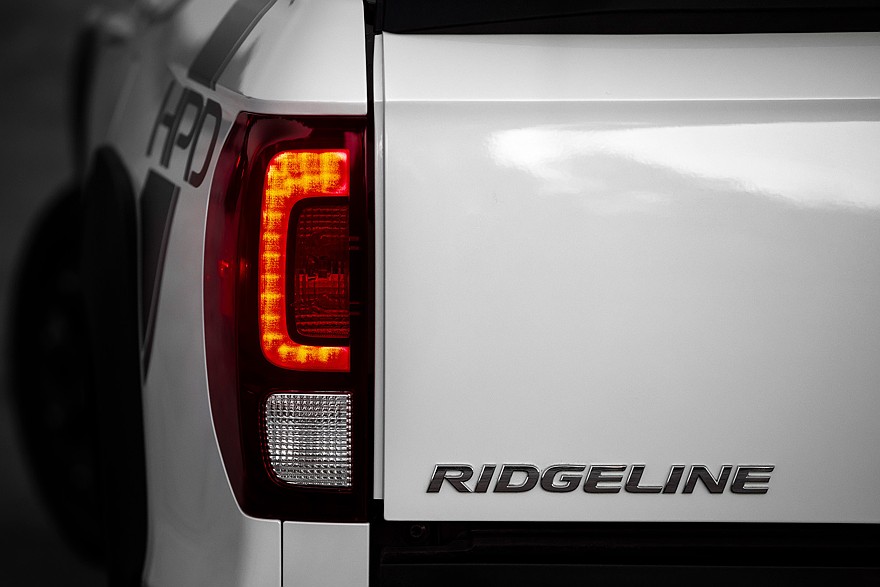
In 2005, the production pickup with a double cab under the already known name Ridgeline went on sale as a 2006 model year vehicle. In the annual publication on new concept and production cars from around the world, Car Design Yearbook, it was called “Honda’s first step into the true heart of the American automotive lifestyle – the pickup.”
The word “ridgeline” literally translates from English as “line of the ridge,” and it is most often used to denote a mountain crest, a chain of mountains, or a line of elevation that connects the highest points of a mountain range. In a broader sense – any clear crest line. For instance, the junction of slopes on a house roof or a conditional line of fortifications on a hill.
The car was developed by an engineering group from Honda R&D Americas under the leadership of Gary Flint. According to Jeffrey Rothfeder, author of the book “Driving Honda,” the target audience for the new product was buyers who wanted to switch from sedans, minivans, and SUVs to a pickup truck. And, of course, it primarily concerned owners of Honda vehicles who previously did not have such an alternative.
At the same time, Honda itself claimed that the new pickup shared only 7% of common components with other Honda vehicles, and the powertrain, although reminiscent of the original unit from the Acura NSX, was reconfigured considering potential cargo transport and heavy trailer towing.
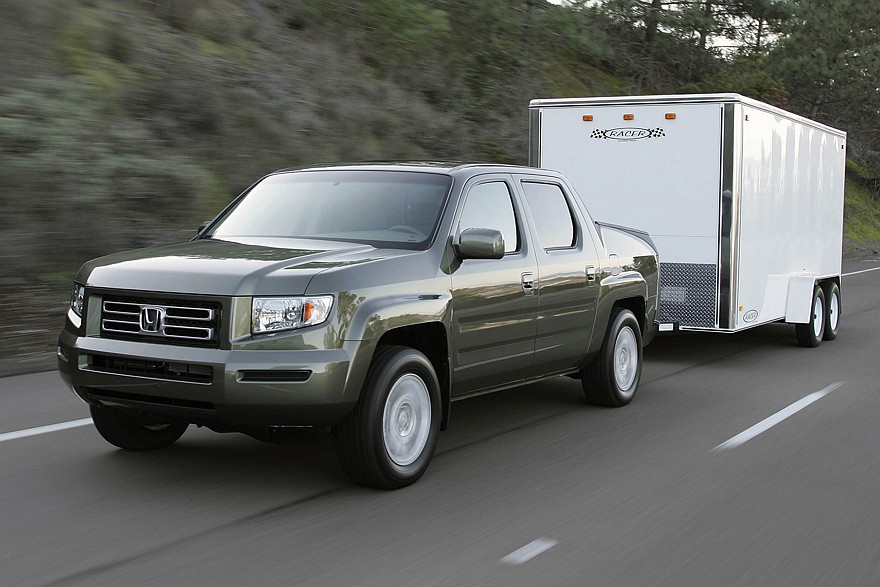
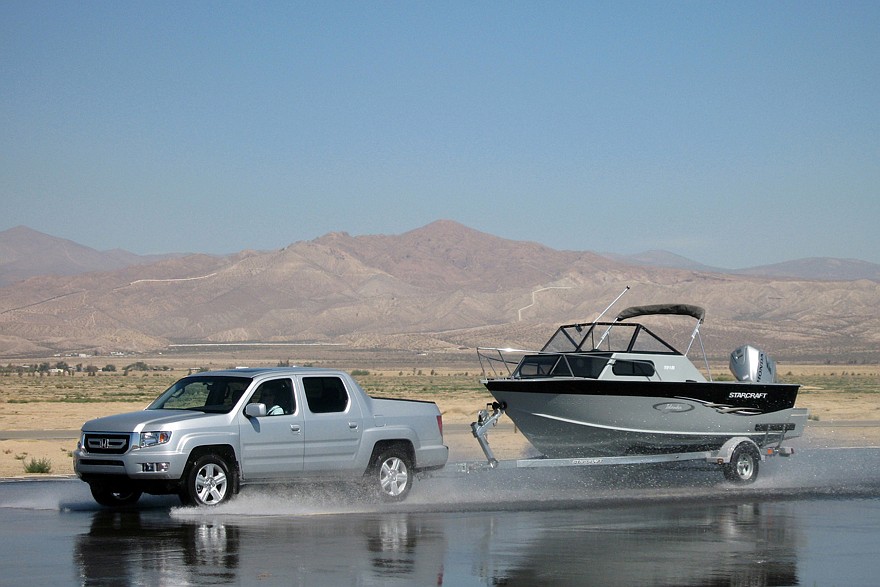
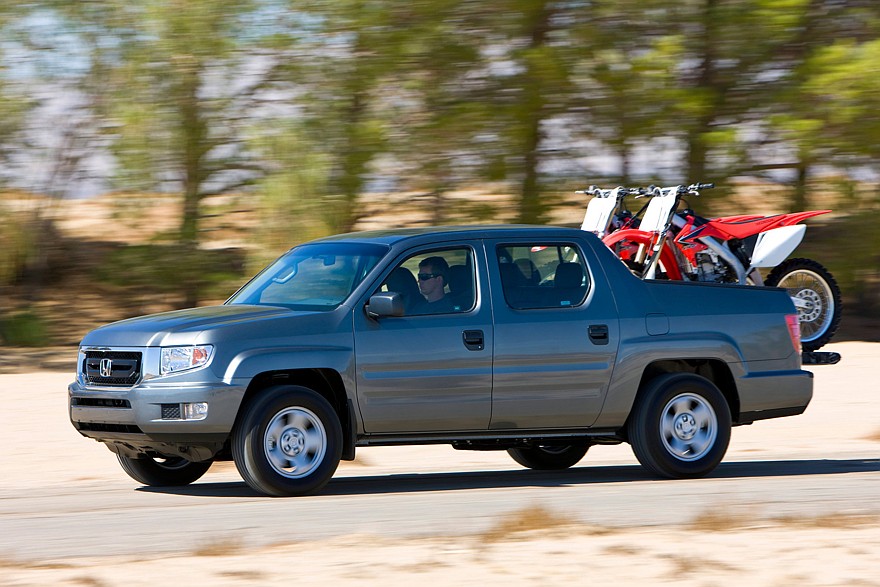
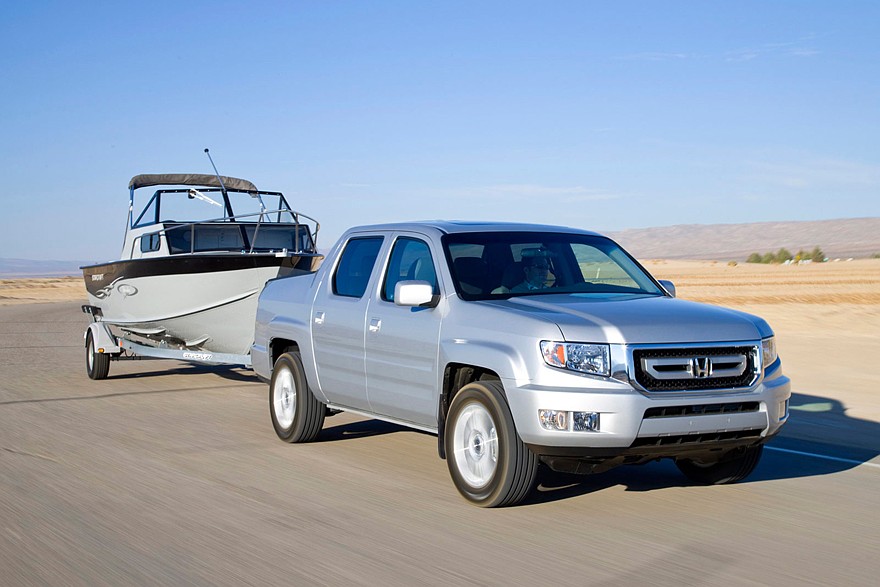
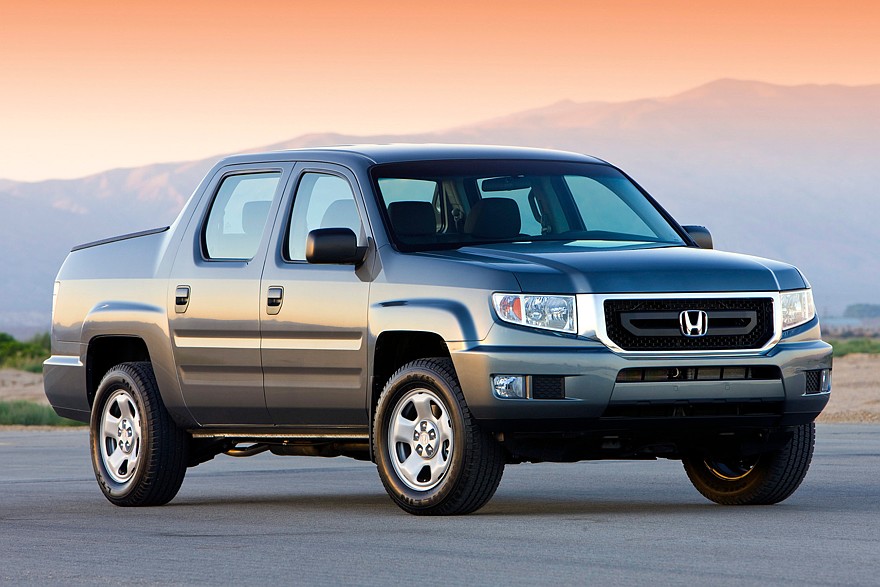
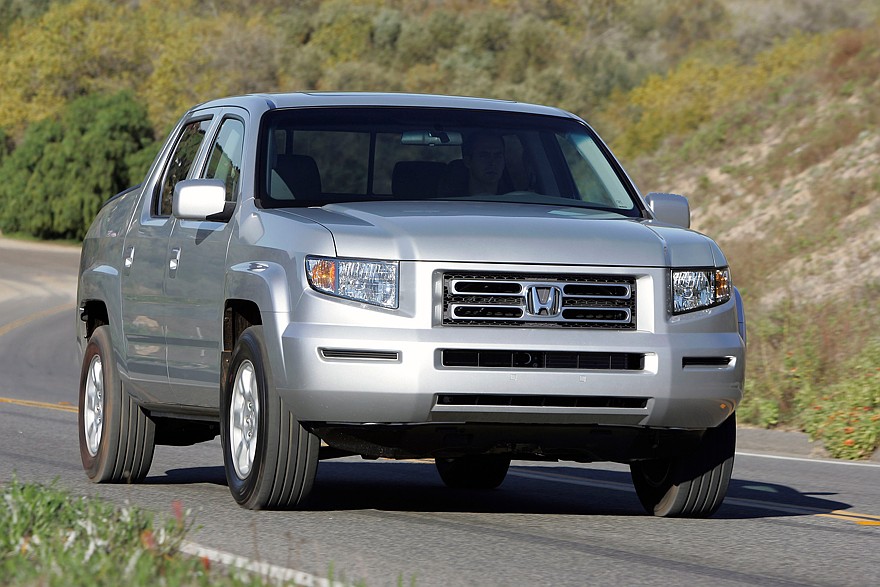
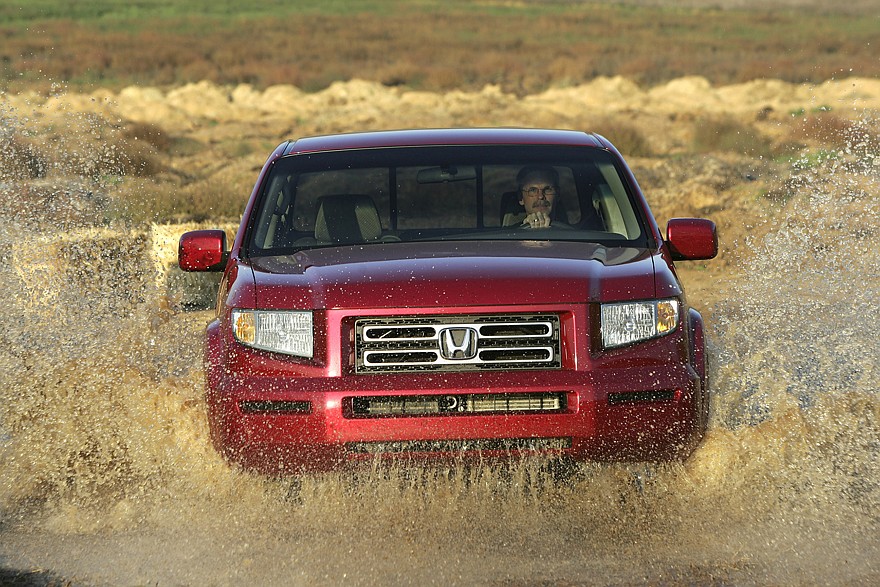
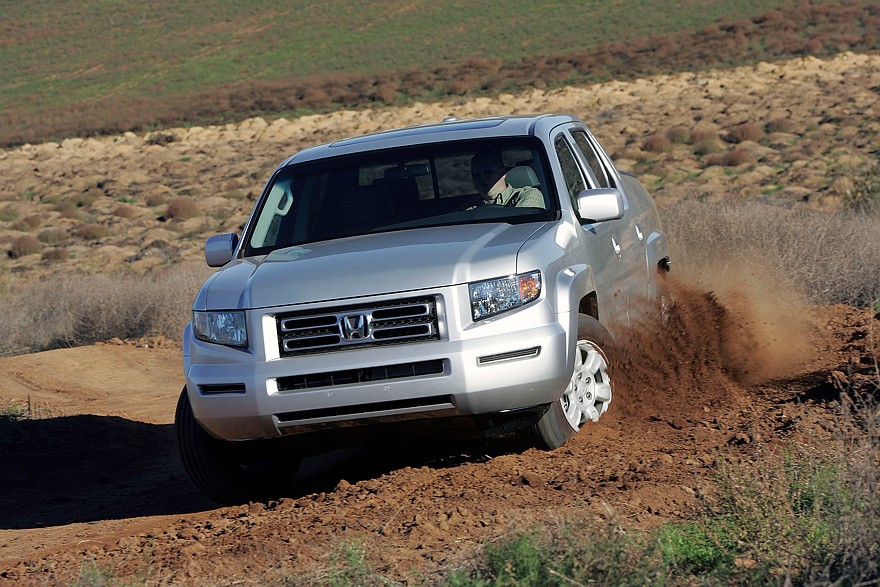
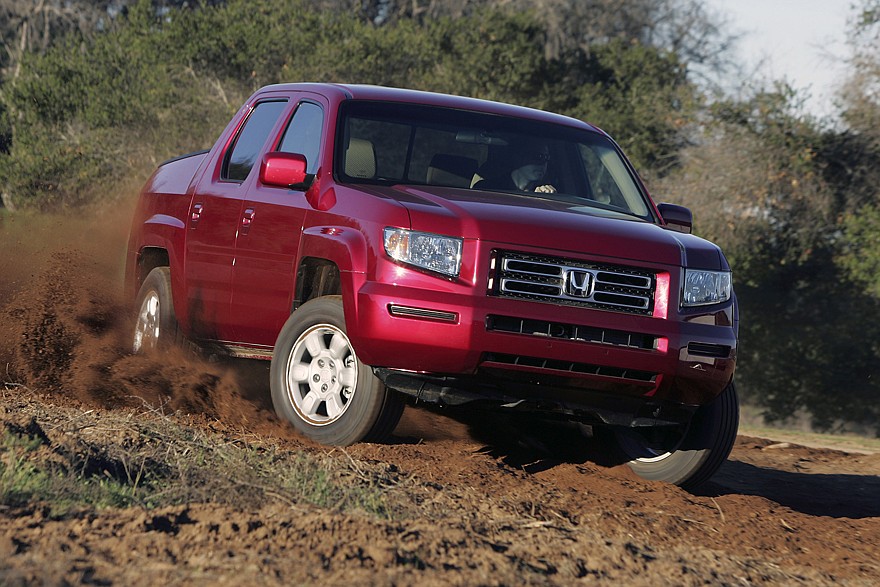
So, what did the first-generation production pickup look like? The Ridgeline wasn’t overly angular, yet it lacked the previous bio-design smoothness. The car looked imposing, serious, and distinctive. The lower line of the front headlights rose towards the front fenders – somewhat like on the first-generation Fabia.
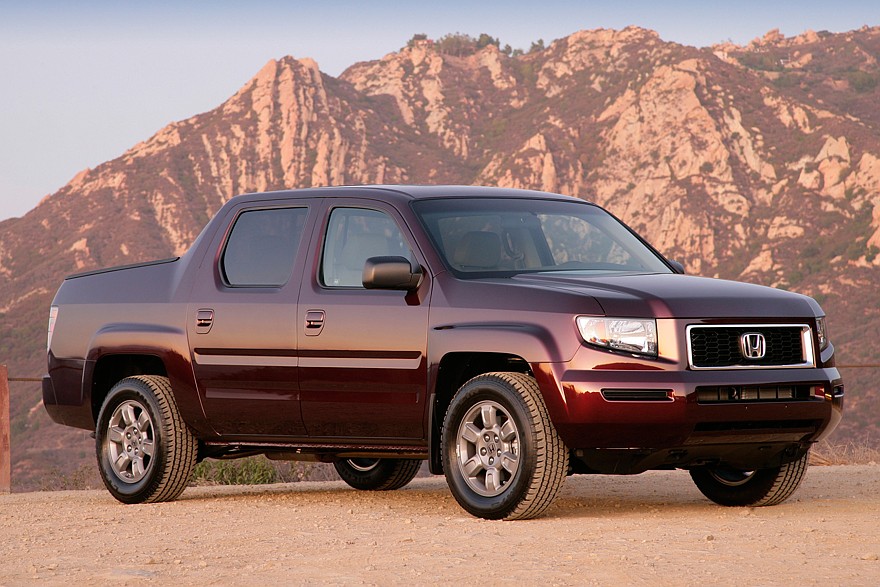
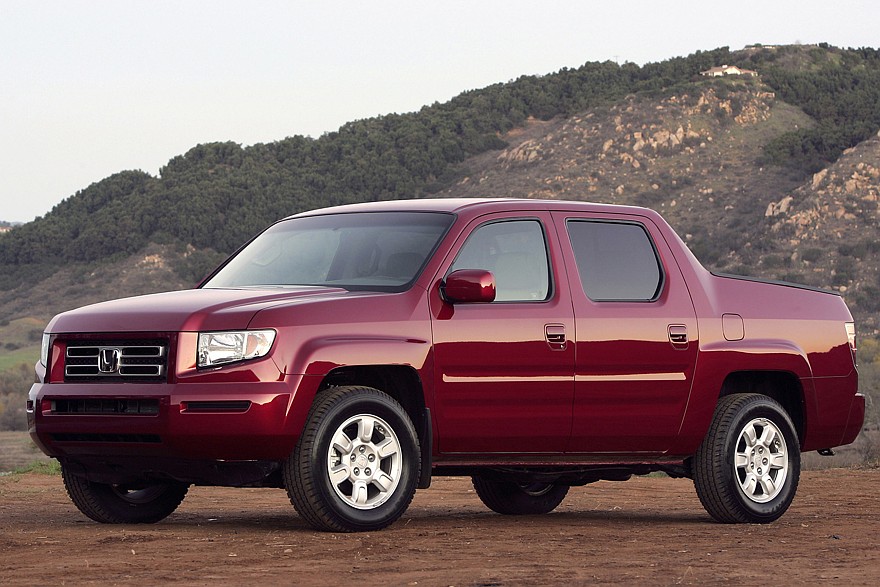
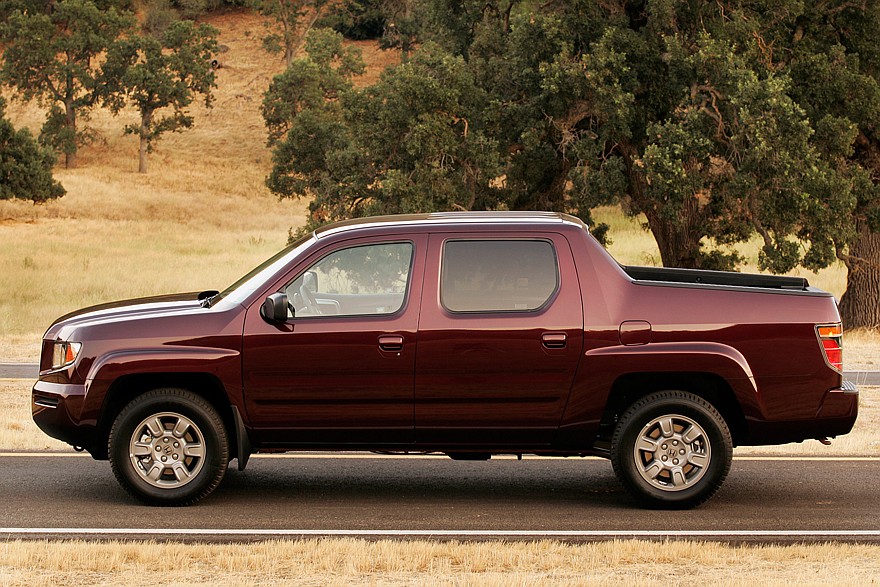
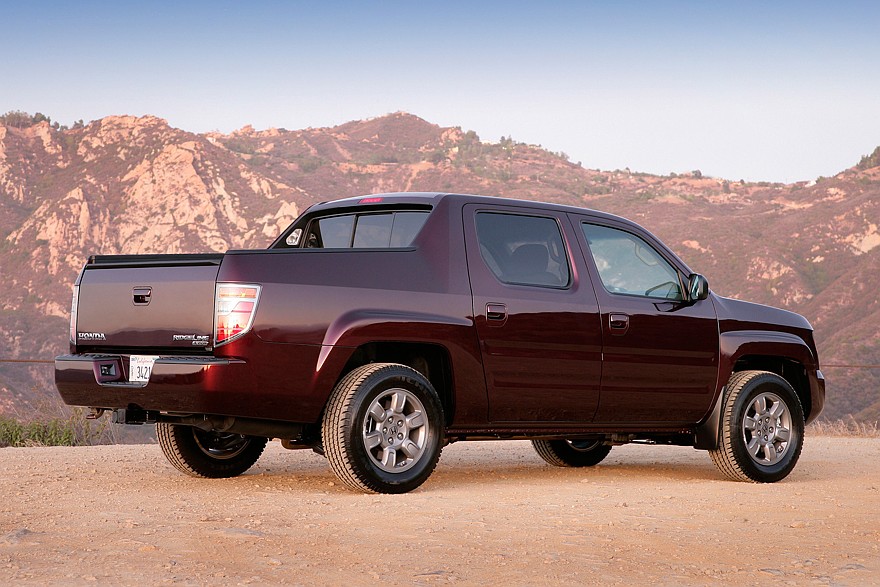
Interest was also added by the long longitudinal stampings on the front doors. At the same time, the car felt mature, without any hint of “toyishness.”
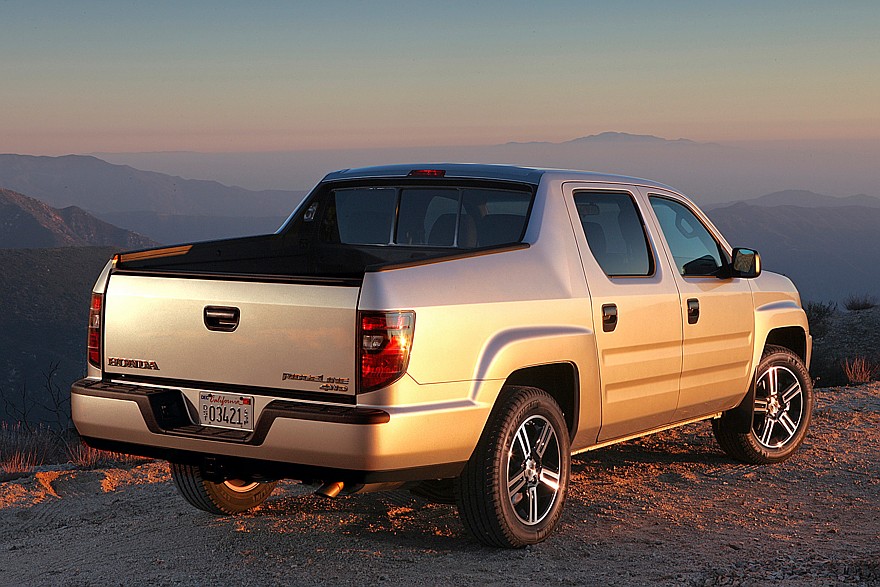
True, some contemporaries did not like the rear pillars combined with the rising side panels of the body, evoking associations with the notoriously designed Pontiac Aztec, and they did somewhat complicate using the bed for its intended purpose.
Journalists from Car and Driver magazine, during a long-term test, decided to change the radiator grille because the stock one reminded them of “a fifties deep fryer heating element.” In the end, they installed a part from the RTX trim level costing $299 at a dealer for $67, with art department employee Dan Winter comparing this procedure to “putting lipstick on a pig.”
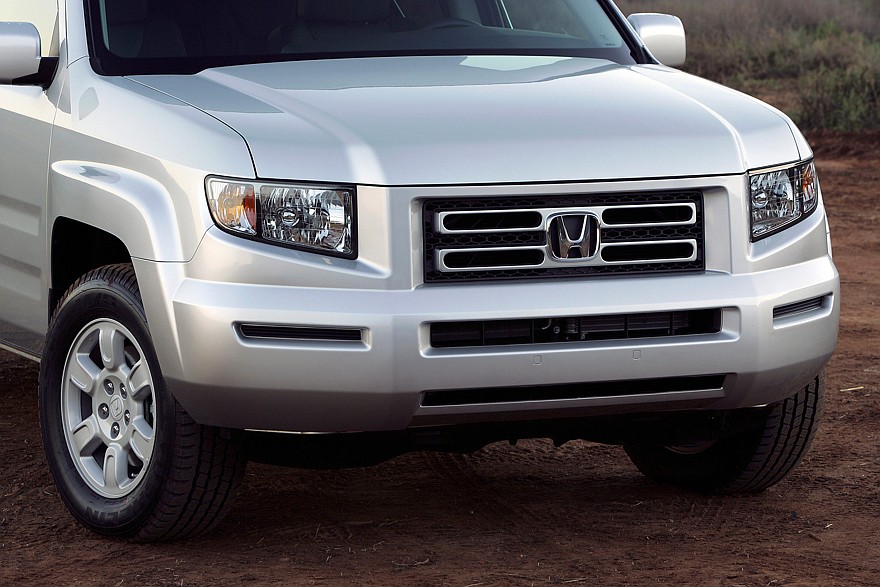
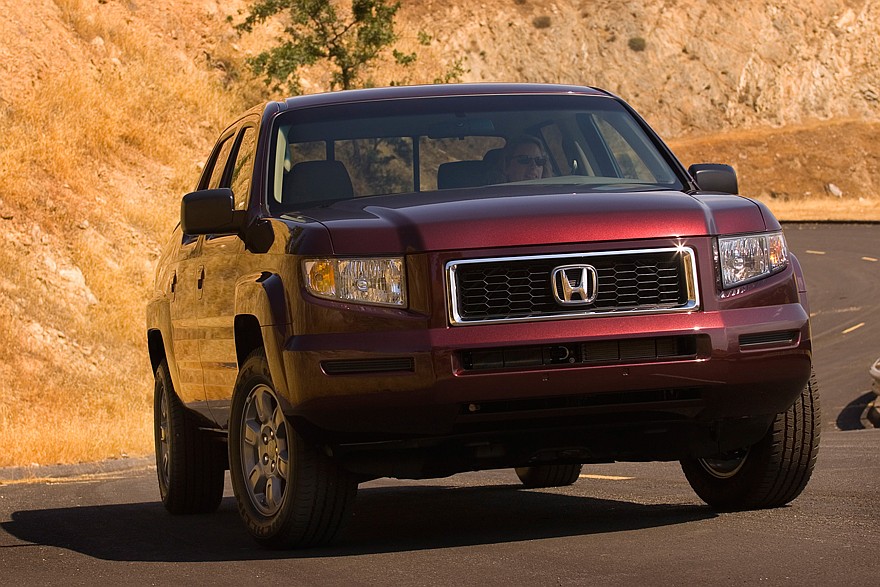
Incidentally, it is by the grille that one can easily distinguish the earlier version of the first generation (2005-2008) from the middle (2008-2011) and late (2011-2014) ones, with the final execution looking the most balanced.
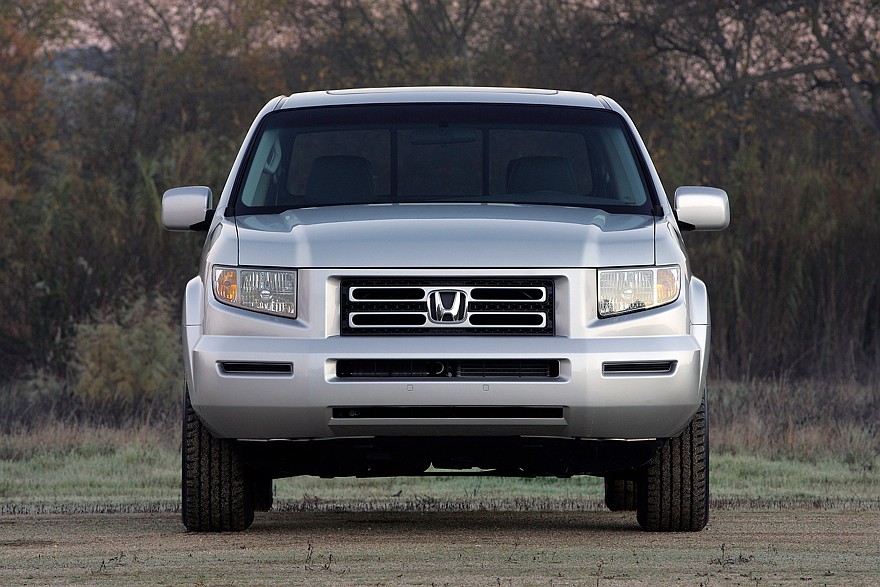
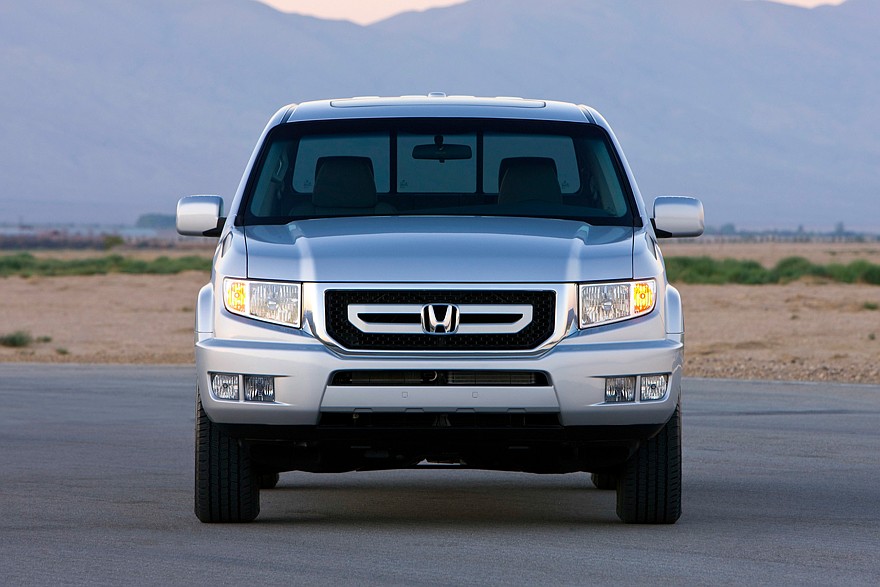
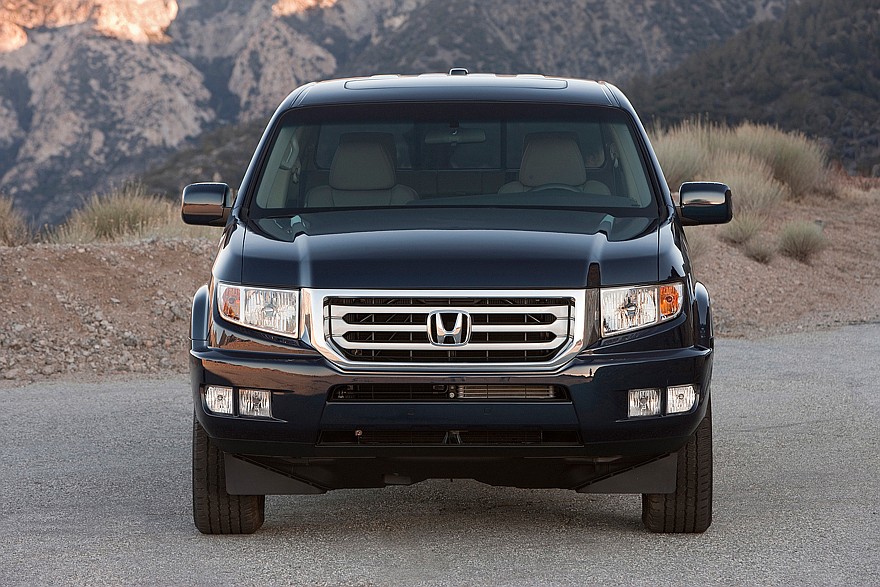
Summarizing what has been said about the appearance, one can draw an unambiguous conclusion that the Ridgeline looked distinctive, yet serious and attractive.
Unlike many analogues, the car, costing around $30,000 on the US market, was offered only in the Double Cab configuration, i.e., with a double five-seat cab, and the transmission invariably featured all-wheel drive and lacked a low-range gear.
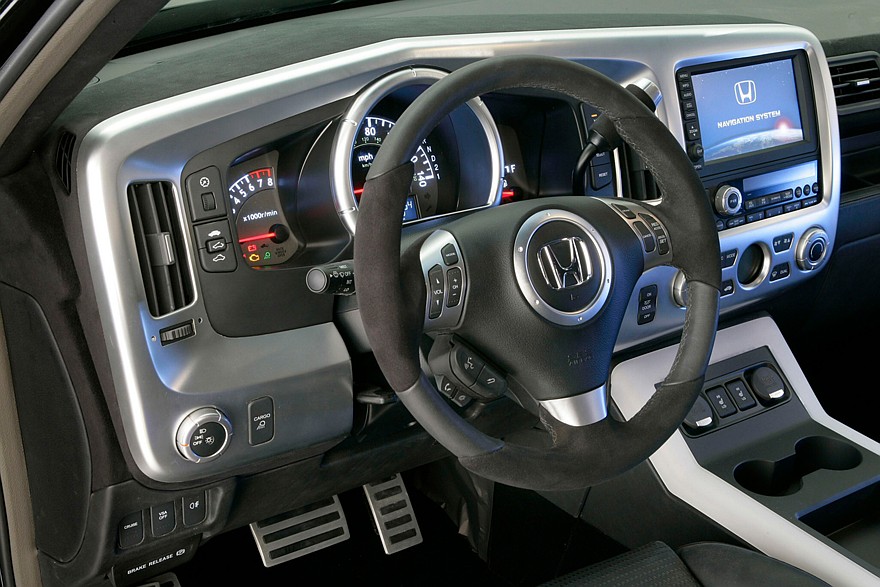
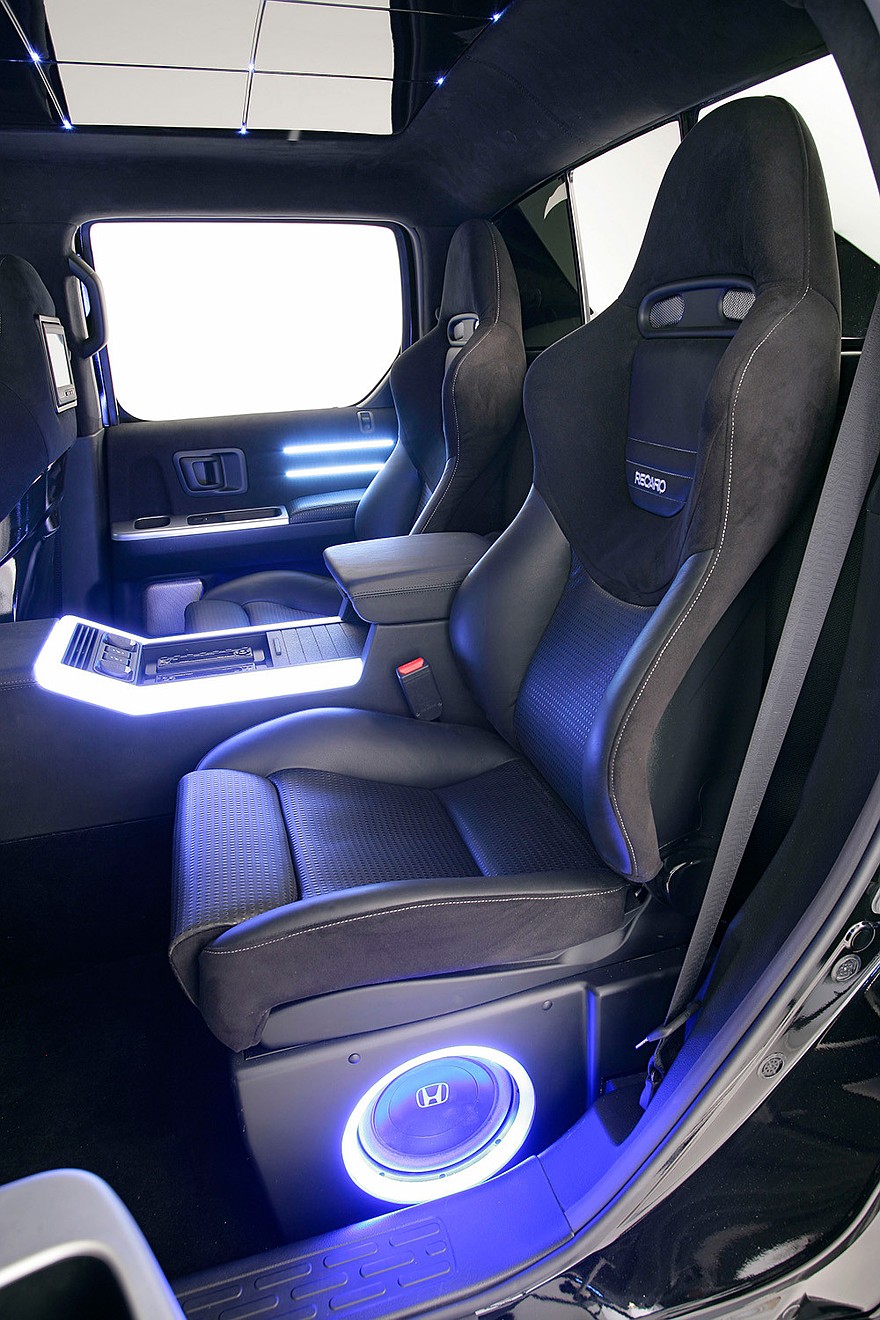
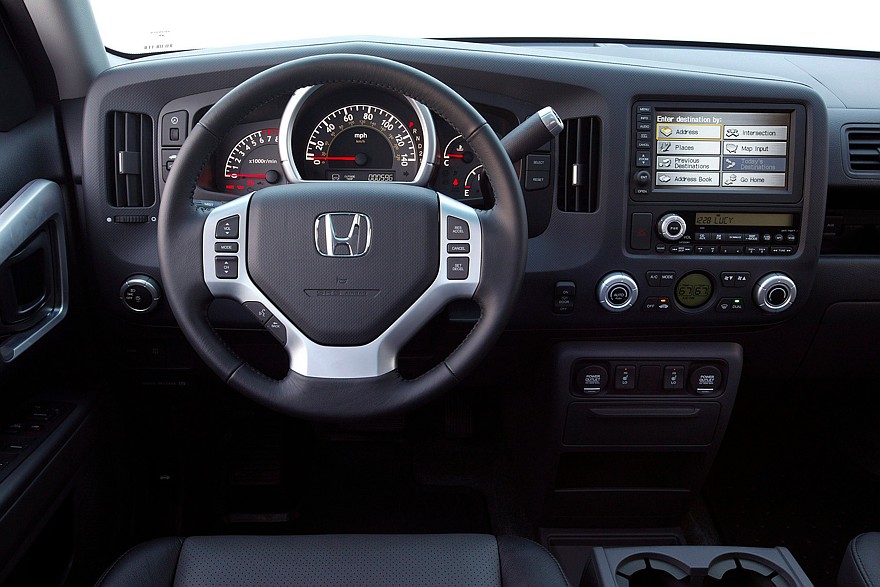
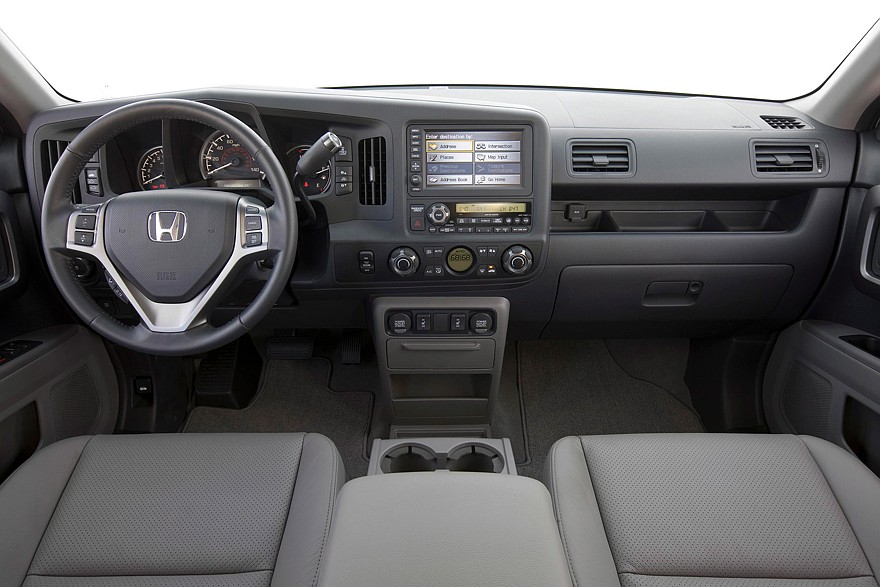
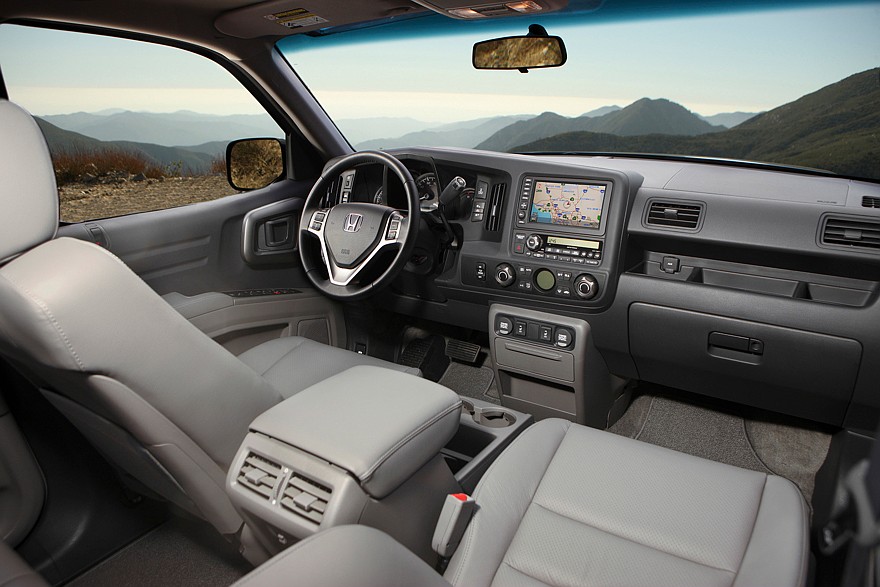
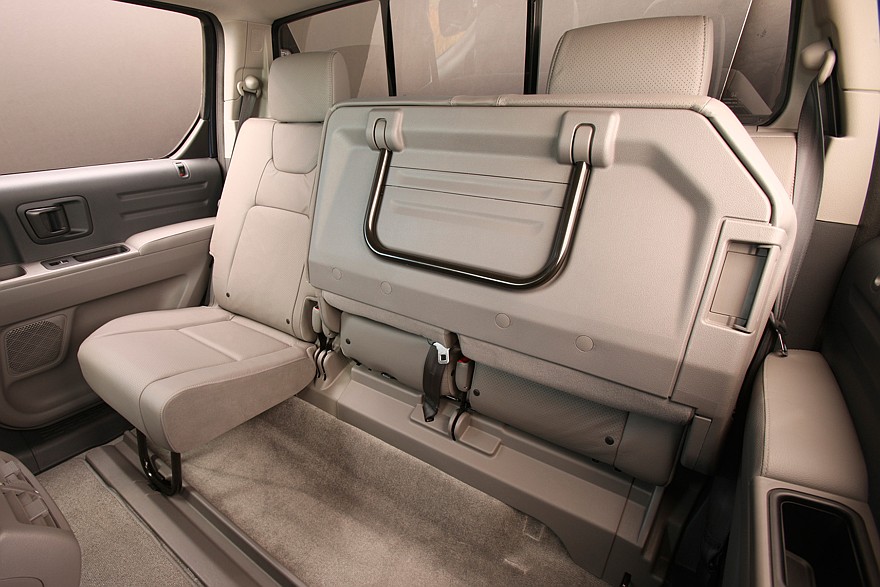
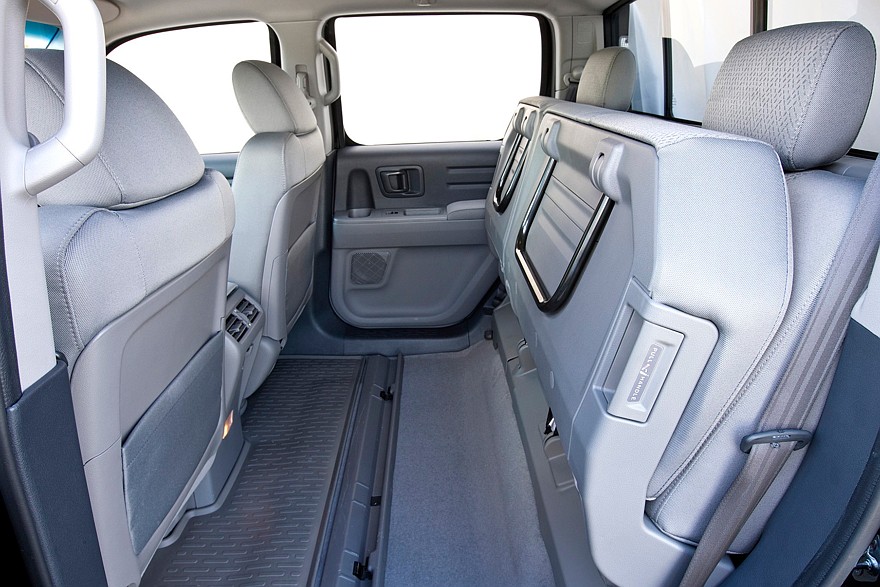
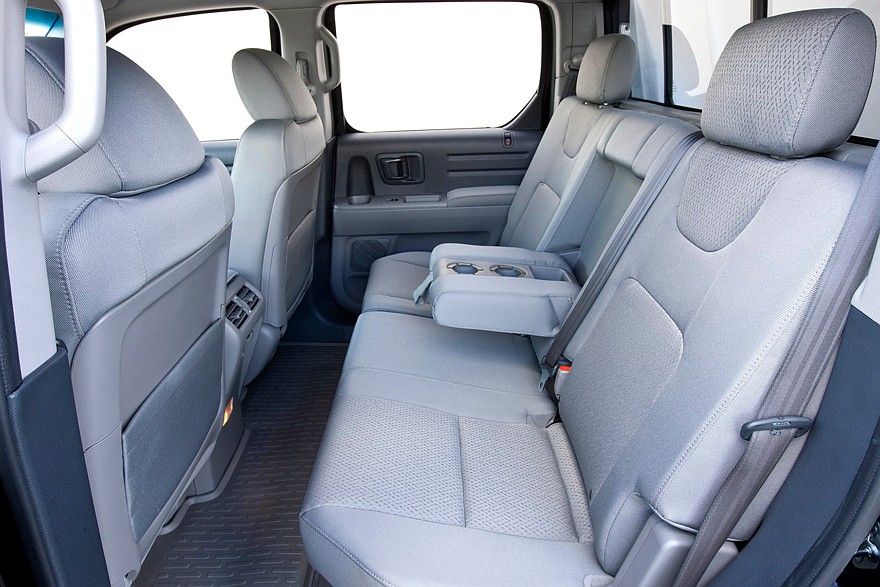
The interior was quite solidly executed and well-equipped, and in terms of cabin space, Honda surpassed its competitors, having no obvious ergonomic flaws.
How did the Ridgeline drive? Journalists from C&D, during a comparison test with the Chevy Colorado, Dodge Dakota, Nissan Frontier, and Toyota Tacoma, noted good dynamics – about 8 seconds to 60 mph, which was an excellent indicator for a two-ton vehicle, and almost car-like handling.
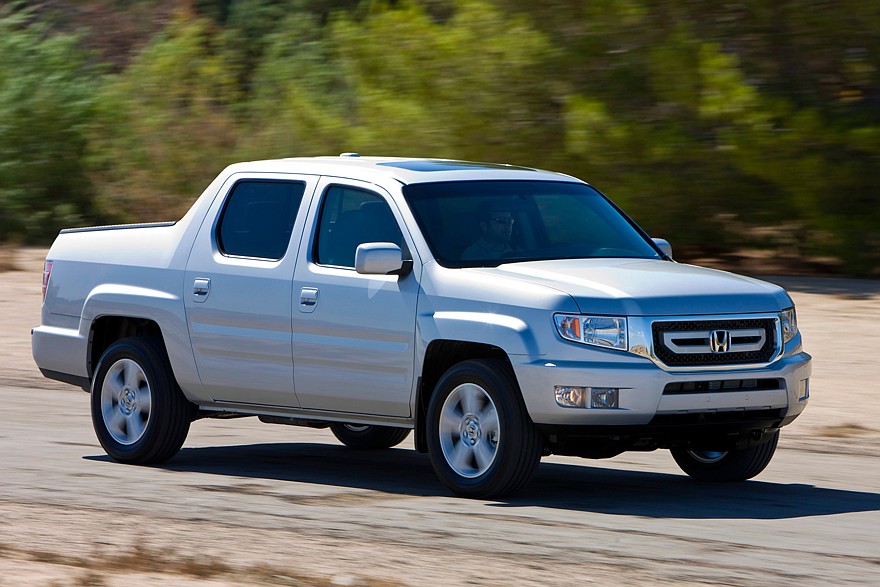
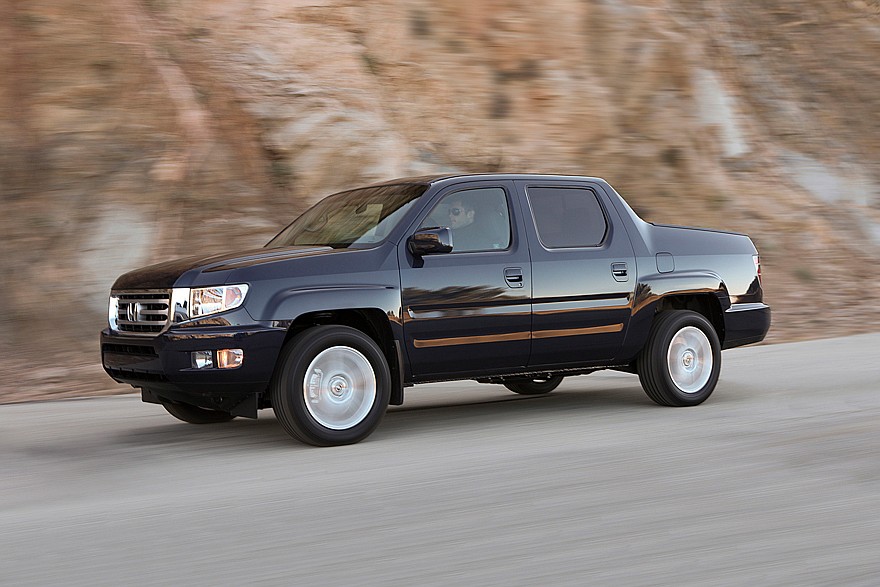
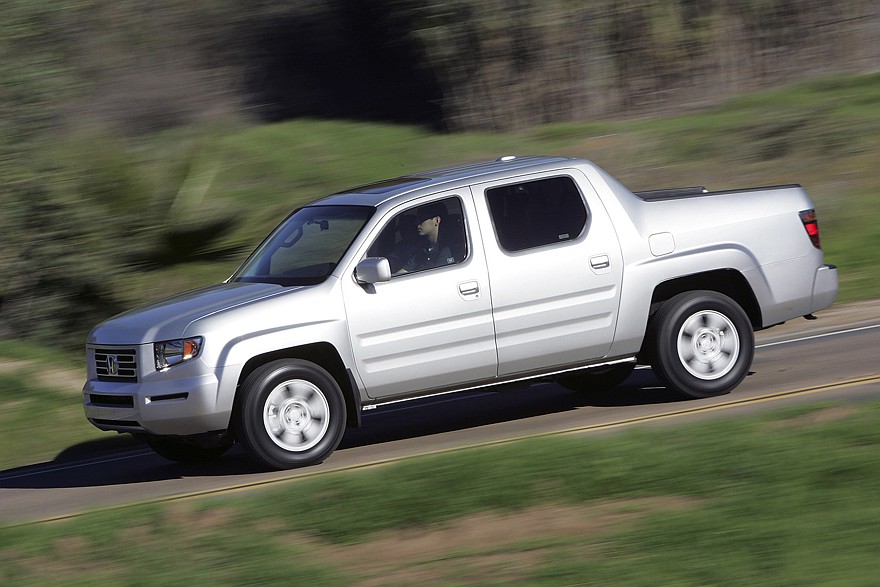
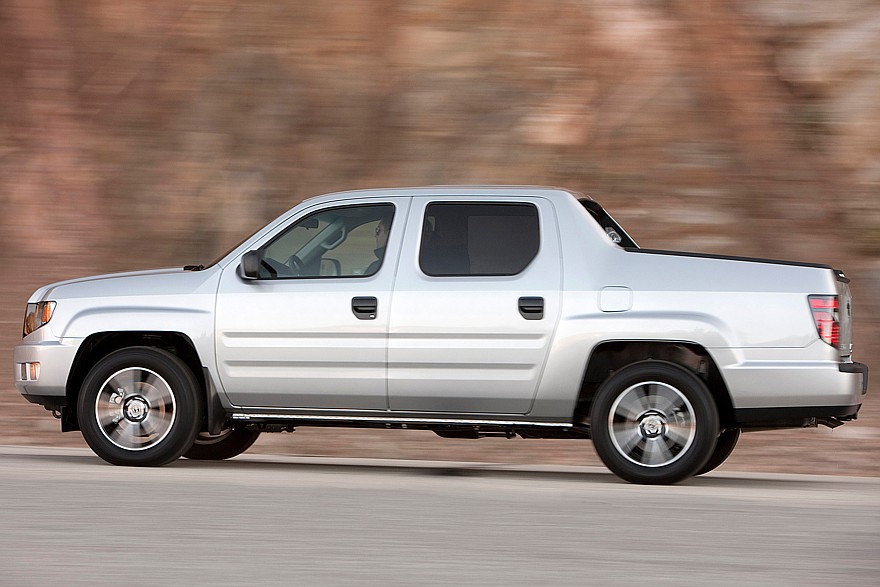
During a long-term test of this pickup, they also highlighted high reliability – over 40,000 miles, even the Michelin tires didn’t wear out, and the only breakdown over the entire mileage was the hood release lever, which an employee, in a fit of frustration, pulled out of the cable trying to forcefully open the hood due to frozen washer nozzles; the breakdown was fixed free of charge under warranty. This means the Ridgeline was more reliable than any other American pickup. Incidentally, this car was not only created for the North American market but was also produced in Ontario, Canada (2004-2009) and Alabama, USA (from 2008).
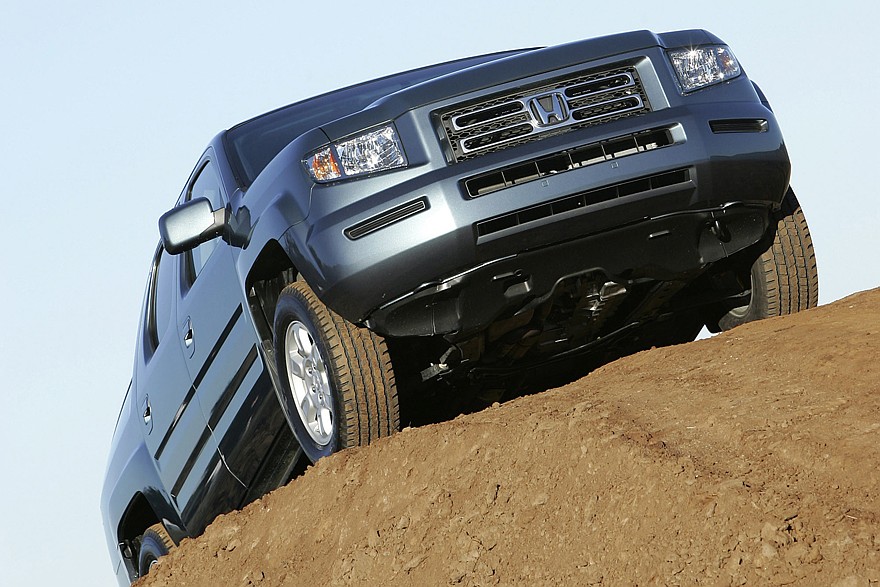
Despite the fact that all-wheel drive is standard equipment, the car does not have a low-range gear for off-road driving… Our 2005 comparison test showed that the Ridgeline is less suitable for off-road driving than other pickups. And, of course, no one – neither a real long-haul trucker nor a poultry specialist – ever called the Ridgeline beautiful. In fact, the “u” word – ugly – appears frequently in the logbook of our test vehicle.
But beauty comes in different forms, and by the time the Ridgeline’s mileage exceeded 40,000 miles, our drivers had come to appreciate its – let’s try another “u” word – unique appearance. It all comes down to its excellent practicality. Special praise goes to the lockable trunk with a volume of nine cubic feet (almost 255 liters – ed. note), built into the floor of the pickup bed, as well as the volume of the rear half of the cabin, sufficient for passengers and suitable for transporting fairly large cargo.
Tony Swan, Car and Driver, July 1, 2007
Expectations and Reality
Thanks to the balance of consumer qualities, the Ridgeline won that comparison test against a couple of purebred “Americans” and competitors from Toyota and Nissan. As American journalists aptly summarized, “the combination of chassis, body, and spacious cabin with a smooth, quiet, and sufficiently powerful engine – that, in fact, is the winner. The bar has been set high.” Does this mean that the Ridgeline, in its status as a winner compared to its competitors, was doomed to unconditional market success?
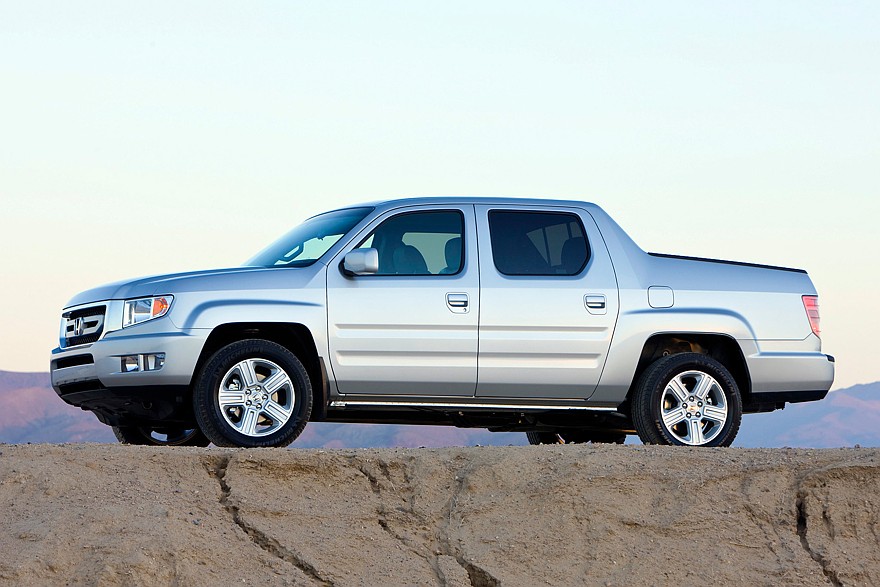
Not at all. Only in 2006 were about 55,000 units sold, after which sales began to fall, and then completely collapsed to 15-20 thousand. For example, in 2010, 16,142 units were sold in the US, while the Toyota Tacoma gained over a hundred thousand new owners in the same year. The situation was not radically changed by two exterior and interior updates in 2008 and 2011, during which the car received about fifty changes in appearance and cabin. In the pursuit of better elasticity and a flatter torque curve, power was reduced to 253 hp, but the problem was something else.
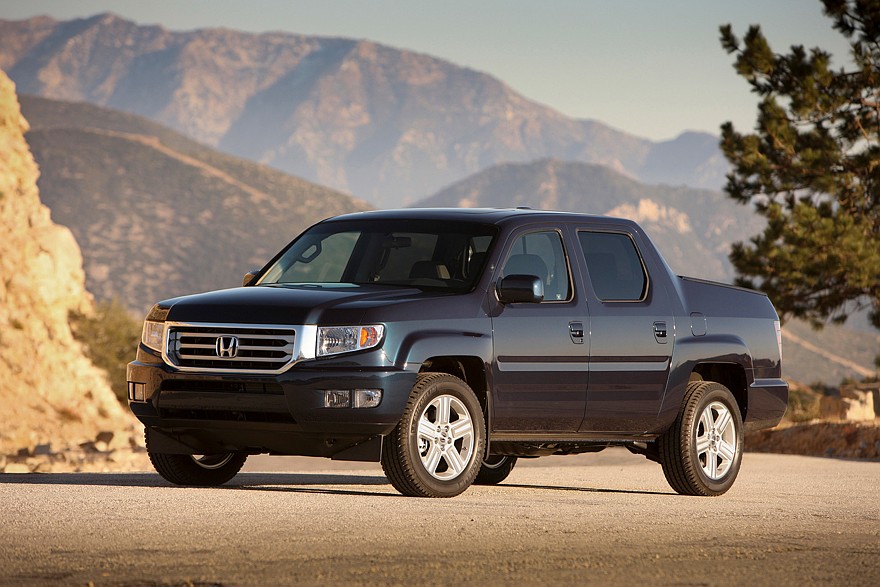
The US pickup truck market is a separate story with its own “pillars” like the Ford F-Series. And even though some people derogatorily call their owners “rednecks,” the drivers of such compact trucks, also called “truckers,” have their own icons, and the Ridgeline, with its intelligent distinctiveness and VTEC system under the hood instead of a solid axle under the body, didn’t quite fit into the existing and very conservative coordinate system. Although, in terms of pure functionality, we repeat, this car was at least as good as its competitors. And maybe even better.
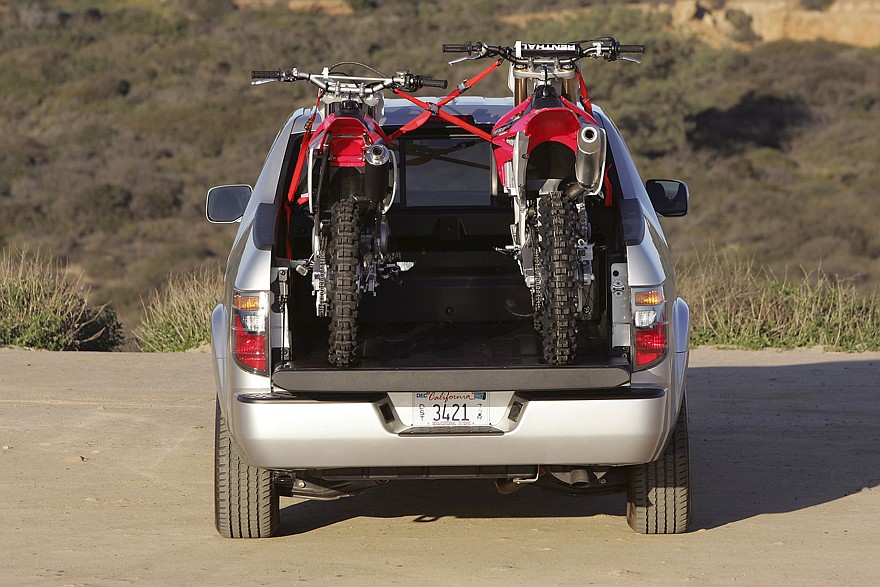
And yet: Is the Honda a passenger car or a truck? It depends on what you mean by the word “truck.” Actually, it’s neither, and who really cares anyway, since clear boundaries are no longer relevant. Let’s evaluate the Ridgeline for what it is: a new type of SUV.
Car and Driver, 2005
The trouble is that luring ordinary owners of Honda passenger cars into the ranks of pickup drivers using the Ridgeline didn’t really work out, and the “truckers” for the most part stayed where they were – in the cabs of their Chevrolets and Fords. And even such a strong feature as the unconditional reliability of the Ridgeline did not play a decisive role in this case. The traditional conservatism of Americans did not allow them to seriously perceive a pickup with a transversely mounted engine, independent suspensions, and an advanced but “reduced” transmission without a low-range gear.
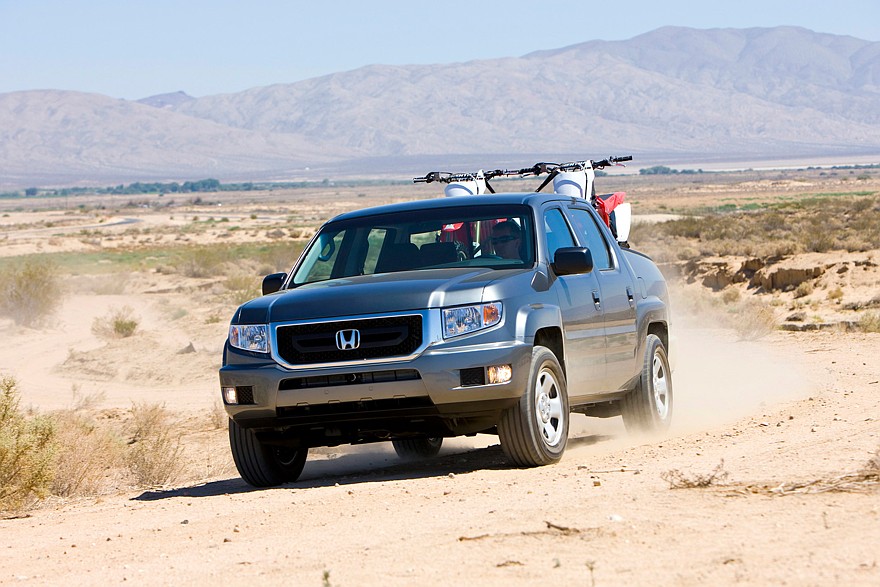
As if justifying the situation, Honda representatives stated that the Ridgeline was not designed to take sales away from traditional pickups sold in North America, but was created to “give the 18% of Honda owners who also own pickups the opportunity to turn their garages into parking lots for Honda vehicles only.”
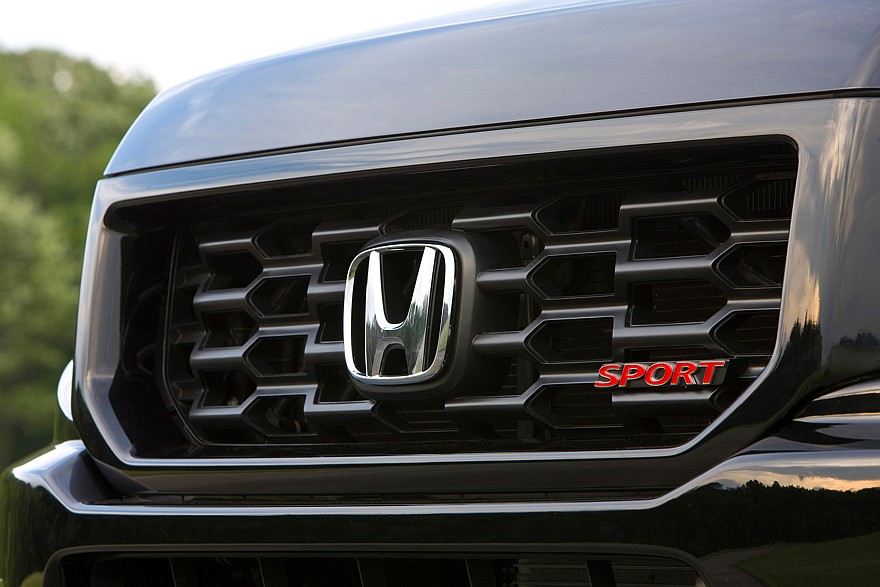
Well, the nearly 300,000 first-generation vehicles sold over 10 years cannot be considered a failure for Honda, if only because, as the author of the book “Driving Honda” said, this mid-size pickup was one of the most profitable vehicles for the Japanese brand.
Most likely, this is why Honda did not stop with the first generation but released a second-generation vehicle, which conceptually remained true to itself but offered potential buyers a more contemporary appearance.
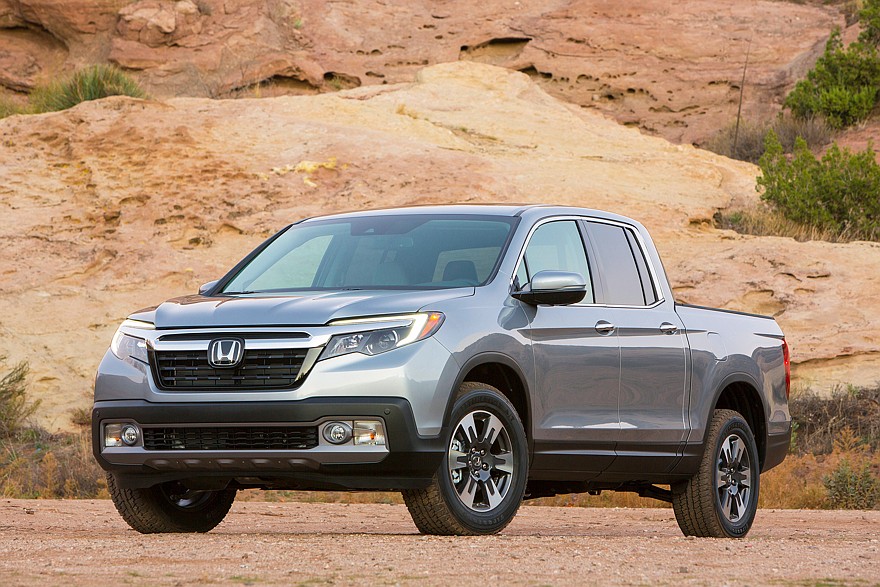
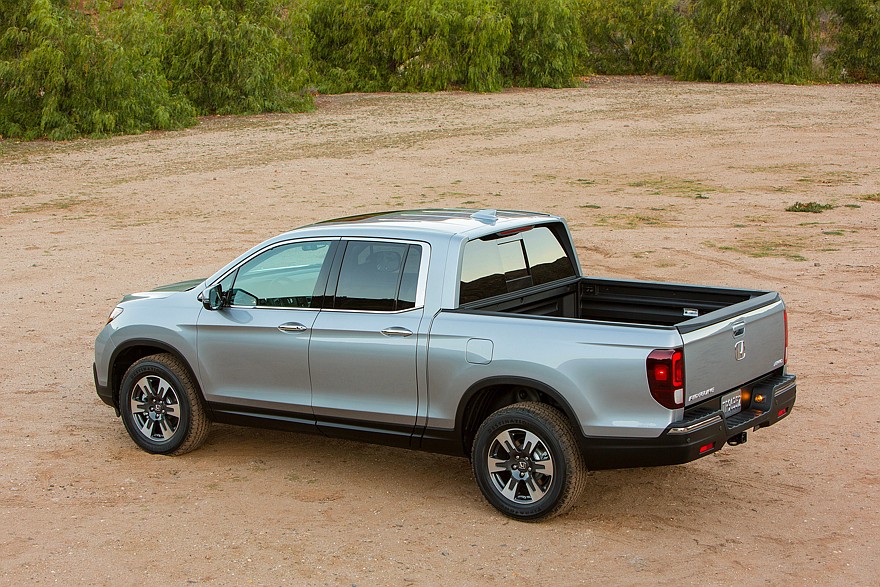
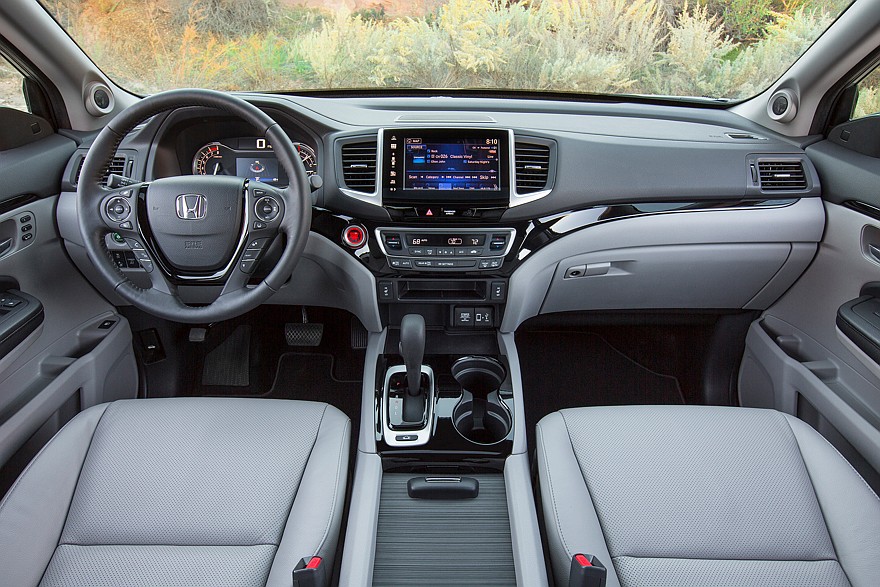
Sales of the new pickup started at 26,000 units in 2016 and steadily increased, reaching a peak in 2023 with 55,000 vehicles, with at least 45,000 units sold annually in the subsequent years 2024 and 2025. This means that over twenty years ago, Honda did everything right by releasing the first Ridgeline, and then not only confirmed but increased its success with the second generation. It seems that the recipe of not following the usual ingredients for making their own pickup allowed the Japanese to climb a new peak called Ridgeline. And, despite all the vicissitudes in the modern automotive industry with its downsizing and electrification, for now, the Japanese have every chance of holding onto the height they have achieved.