






































Pros and Cons of Nissan X-Trail
Bursting onto global markets at the turn of the millennium, the Nissan X-Trail, together with the Toyota RAV4, Honda CR-V, and Subaru Forester, formed the cohort of the first mass-market Japanese crossovers. But, unlike its class rivals, the X-Trail’s entire appearance proclaimed: “Look, I’m a real SUV! Or at least almost real.” Many still regard these crossovers this way: it looks serious, so it must be capable off-road. Whether this is actually the case and what the owners think about this car is what we will be figuring out today.
Indeed, until 2015, Nissan’s Russian representative office positioned the model precisely as an SUV, emphasizing its excellent geometric off-road capability (particularly the near-equality of approach, departure, and ramp angles) and the ability to forcibly lock the rear axle coupling.
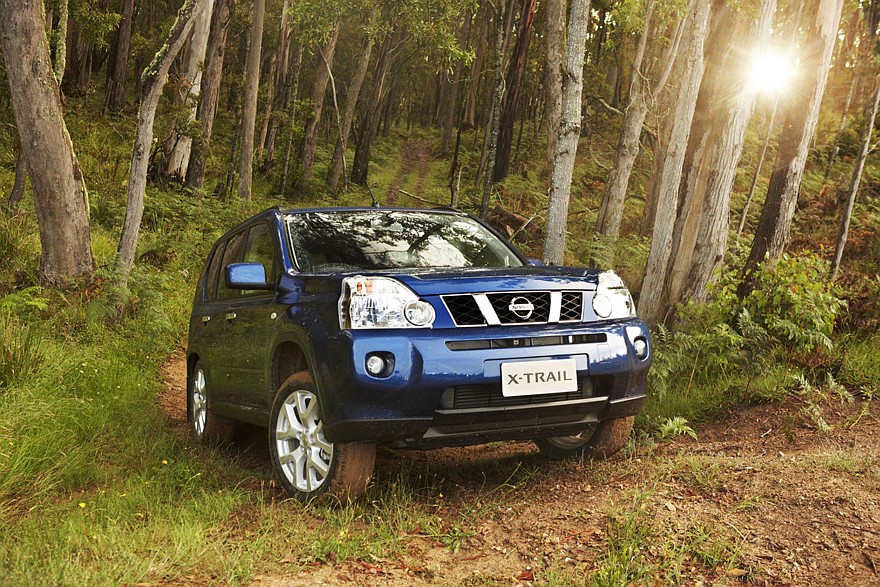
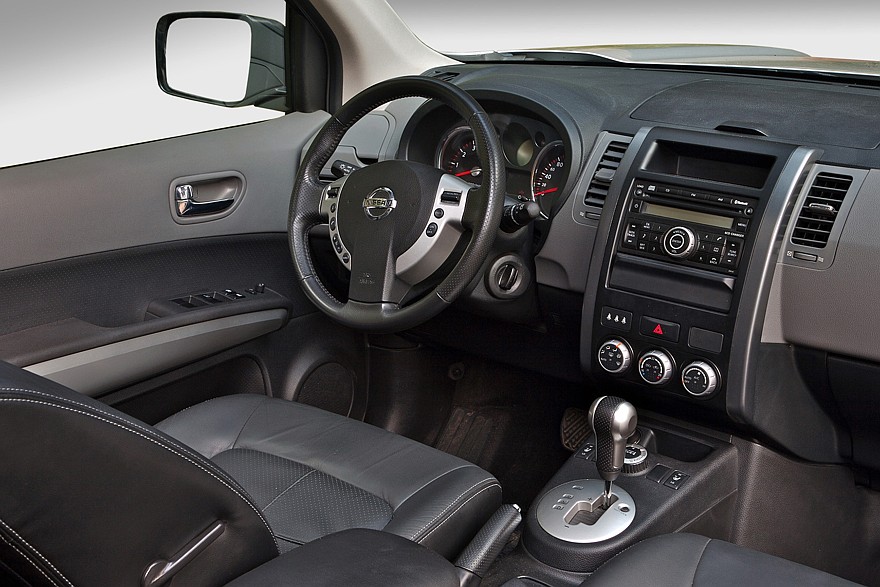
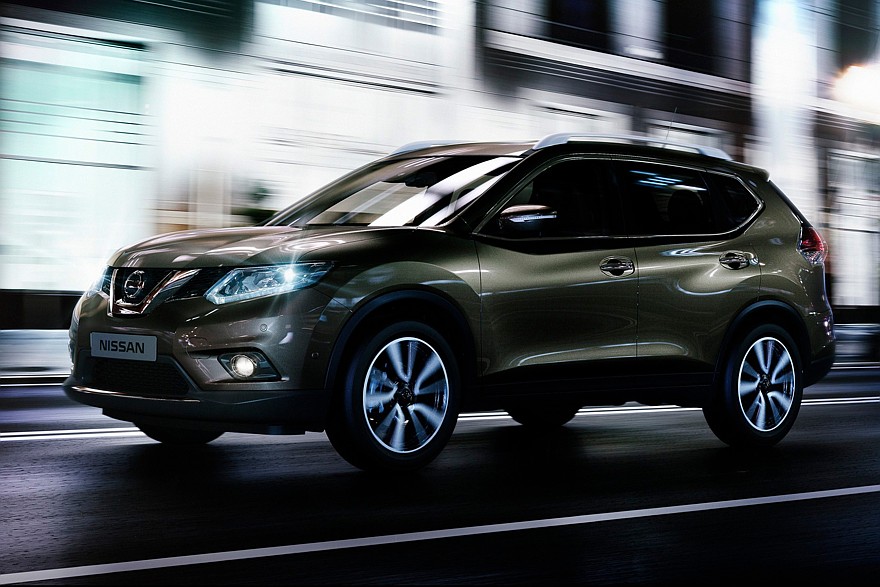
Everything changed in the fall of 2013, when the third generation of the Nissan X-Trail, with the factory code T32, made its debut. Its main difference from cars of previous generations was the use of the CMF-C/D modular platform shared by Renault and Nissan. Notably, the new generation of the much more budget-friendly Nissan Qashqai was also built on this same platform. The exterior image also changed radically: instead of “brutal SUV” contours, the body became more “car-like.”
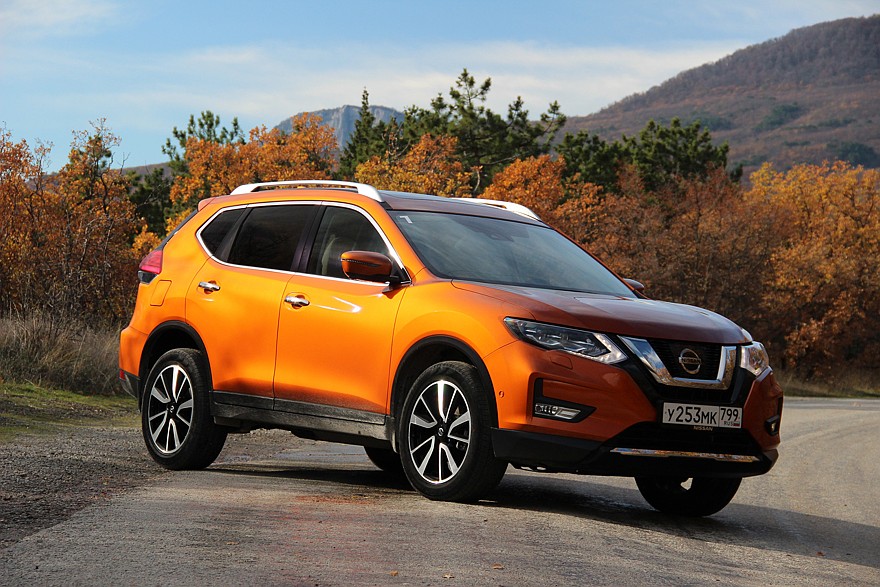
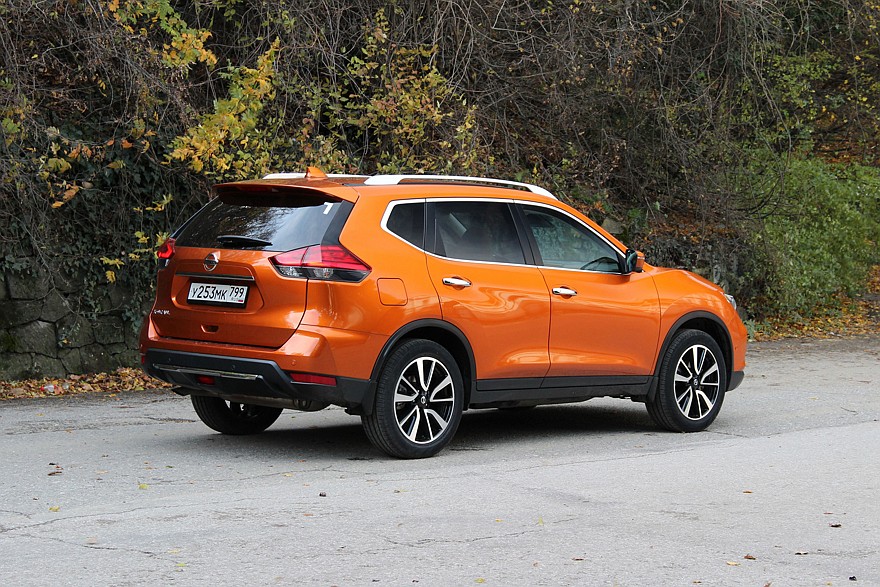
The model was created as a global one, but for promotion in the Russian market, its assembly was launched in December 2014 at the company’s plant in St. Petersburg, where the previous generation X-Trail was already being assembled. Sales of the X-Trail T32 in Russia started in early 2015. To best suit Russian conditions, the crossover received a number of changes – in particular, the list of “warm options” was expanded, and the engine lineup was reduced to only two naturally aspirated four-cylinder gasoline engines and a 1.6-liter R9M turbodiesel producing 130 hp. Diesel versions were offered exclusively with all-wheel drive and a 6-speed manual transmission; variants with the 2.5-liter naturally aspirated QR25DE (171 hp) came only with the XTronic CVT (also known as the Jatco JF016E) and again all-wheel drive; while cars with the 2.0-liter MR20DD engine producing 144 hp could have either front-wheel drive or all-wheel drive, with all-wheel drive variants equipped only with the CVT, and front-wheel drive variants with either the CVT or a manual transmission.
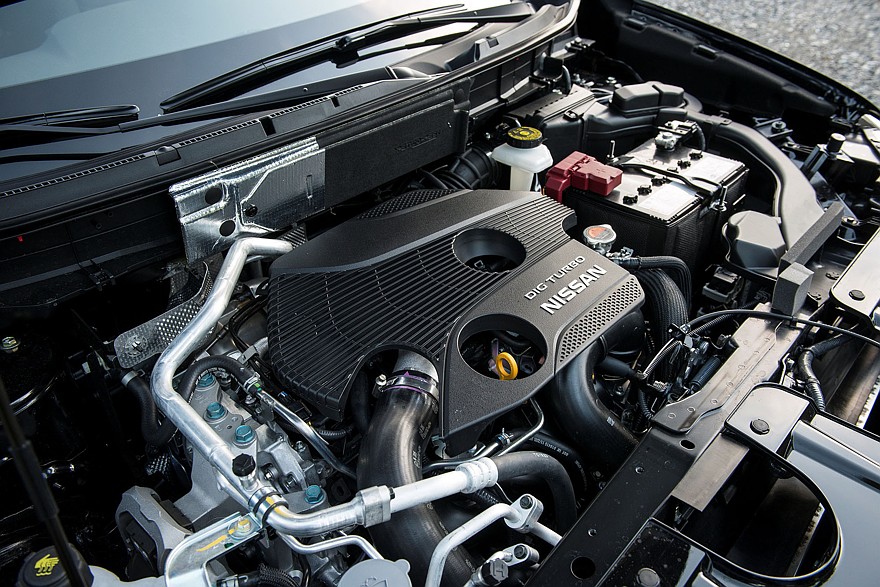
In the summer of 2017, the model underwent a significant update, primarily affecting the interior equipment and design. However, the facelifted version only reached the assembly line at the St. Petersburg plant a year and a half later. In addition to new Zero Gravity seats developed with assistance from NASA, a new three-spoke steering wheel, improved sound insulation, and higher quality interior trim materials, the model gained a suite of Nissan Intelligent Mobility electronic assistants, and later, the Yandex Auto media system. Initially, this system was less reliable than the proprietary Nissan Connect system, but within a year, the “childhood diseases” were almost completely eliminated.
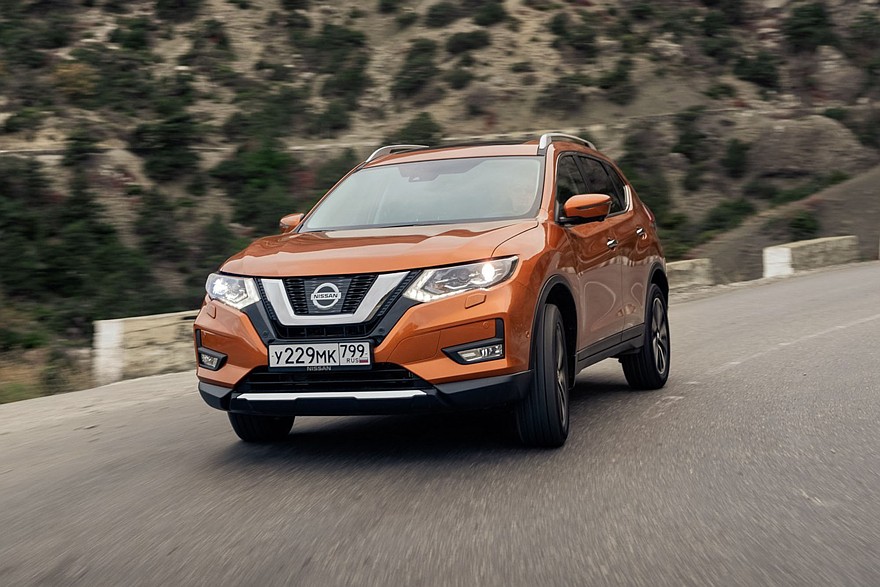
In 2021, the company introduced the fourth generation of the Nissan X-Trail with the factory code T33, which entered European markets after Nissan had left Russia. However, on the secondary market, the third generation X-Trail is available in substantial numbers. From now on, we will only talk about post-facelift versions of the car, as their age falls within the acceptable range for purchasing used cars of this class. Prices for these cars range from 1.4 to 3.7 million rubles.
Front-wheel drive variants with the 2.0-liter engine and CVT cost from 1.4 to 3.6 million rubles; with a manual transmission, from 1.55 to 2.8 million; all-wheel drive versions are offered at prices from 1.4 to 3.7 million rubles. Strangely enough, variants with the 2.5-liter engine cost almost the same – from 1.6 to 3.6 million rubles.
Well, to understand the real advantages and disadvantages of the model, it’s worth reading what their owners write. And right away, it’s worth noting that among the authors of reviews, there are many for whom this is not the first, not the second, and not even the third X-Trail. One of them, noting quite a few shortcomings in his review, ended it like this: “The hedgehogs pricked themselves, but kept eating the cactus… And all because the cactus isn’t bad at all!”
There are cars that are bright, unusual, often possessing a whole bouquet of flaws, but every ride in them gives a real fountain of the brightest emotions. Well, the third-generation Nissan X-Trail definitely does not belong to this category. It’s no coincidence that many owners who put their car up for sale answer the question about the reasons for this decision simply and clearly: “Got bored.” Not plagued by breakdowns, not found unsuitable for performing some important functions, but simply got boring: “The car is boring. Bought it new in 2019, drove 40 thousand, got bored – selling it.” And even people quite loyal to the brand write: “Either I’m tired of this brand, or I’m being picky… This car doesn’t give me emotions. There’s nothing to scold it for and nothing to praise it for. Everything works properly, it transports from point A to point B without problems. The car is worth its money. Such a solid middle-of-the-roader, not causing trouble for the owner.”
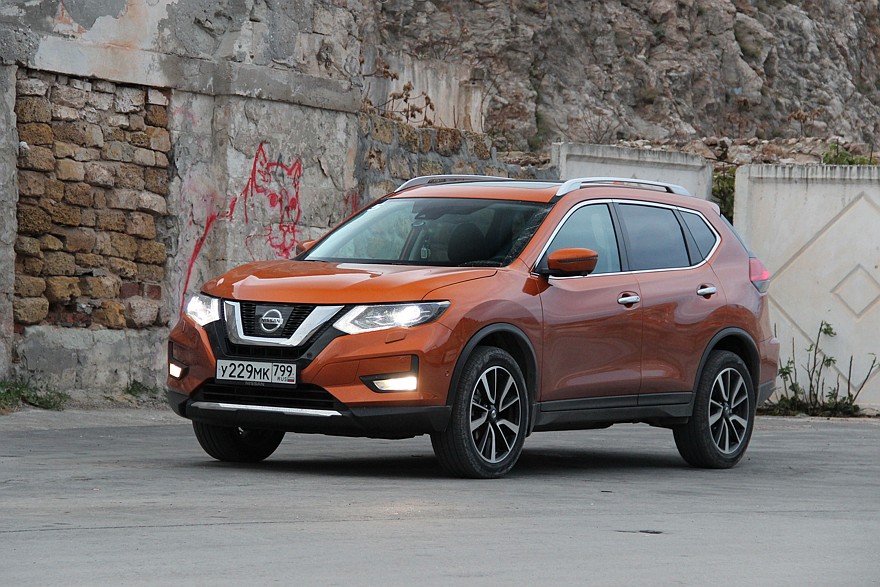

Well, it all starts with an assessment of the appearance. Here, the authors of the vast majority of reviews agree that the car is “nice-looking,” although overall it “looks rather modest.” But many believe that the previous generations of the crossover looked more distinctive: “It’s a pity that the new X-Trails have lost their former brutal look. The T30 and T31 bodies had their own unique angular individuality, but now not everyone can confidently say what just passed by in the traffic flow – a Qashqai or an X-Trail.” And also: I didn’t come across a single review where the decision to buy this model was described in the style of “saw it, fell in love at first sight, and bought it.” However, many review authors talk in great detail about how they arrived at their choice through a completely rational comparison with competitors in the same class, with the main roles played by interior space, comfort, and value for money.
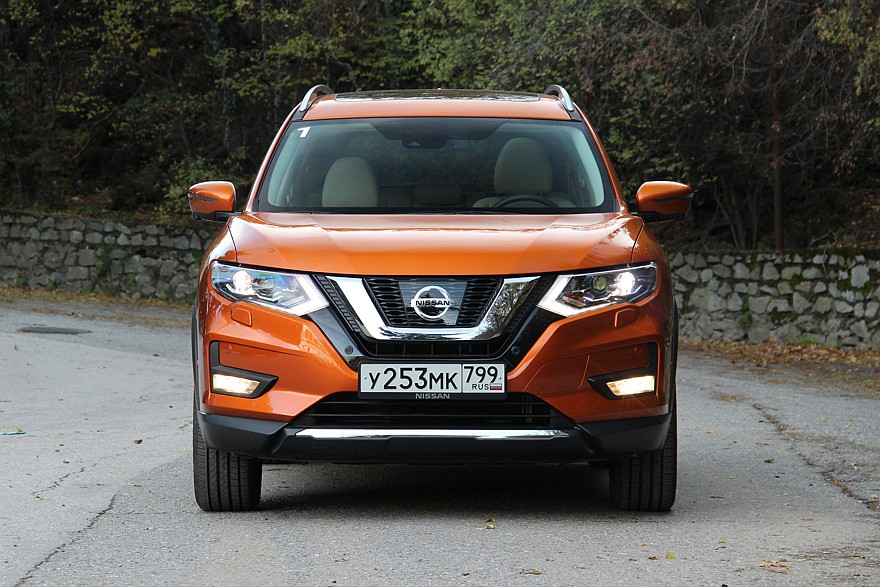
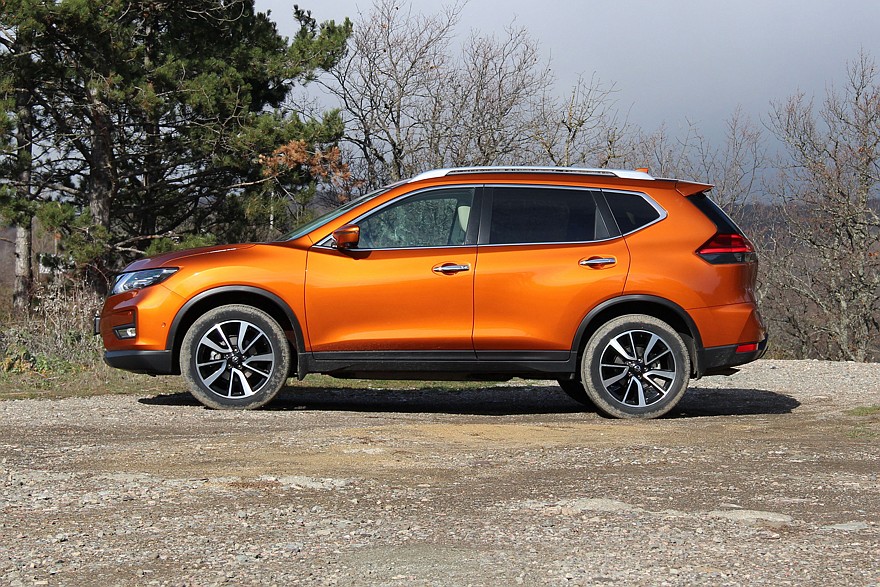
But even when discussing disappointments, appearance is not the main factor. The greatest dissatisfaction is expressed by those who expected the car to provide fun, drive, and that very fountain of bright emotions: “This is not a car for thrills, but a reliable, comfortable, and very practical family car. Perfect for those who value predictability, comfort, and practicality above drive and flashy design,” “The pleasure from the car is exactly zero. No emotions or desire to step on it just for adrenaline arise. Just a creaky rattle-trap for moving from point A to point B.”
But those who truly prioritize predictability, comfort, and practicality over drive and flashy design are quite satisfied with this model: “It won’t give you emotions, won’t surprise you with new technologies, won’t impress passersby. It just takes you and your family from A to B, and does it comfortably and confidently. If that’s the task, it’s worth taking.”
People choosing a family car primarily expect reliability from it. And for those eyeing a particular model on the secondary market, it’s also very important to understand what to expect from it. And in this regard, the third-generation Nissan X-Trail deserves the highest marks. While reviews written in 2018-2019 still contained quite negative ones from those who got a bad example, closer to the present day, such reviews have practically disappeared. Instead, a huge number of authors give the car’s reliability the most positive assessment: “The main plus of the model is reliability”; “With proper maintenance, it doesn’t cause problems or surprises”; “In 65 thousand kilometers, nothing broke, I did scheduled maintenance and changed the front pads”; “I drove two X-Trails, put about 130 thousand on each, nothing broke or let me down at all, did maintenance every 10 thousand, changed the front brake discs at 80 thousand”; “Mileage 265,000 km. Did the CVT at 190 thousand – cheap repair, replaced the cones and some minor things… Changed brake discs and pads at 200 thousand km. Oil – once a year, batteries – 3 pieces in 10 years, and tires in 2020.” Such statements could be quoted further – there are many of them.
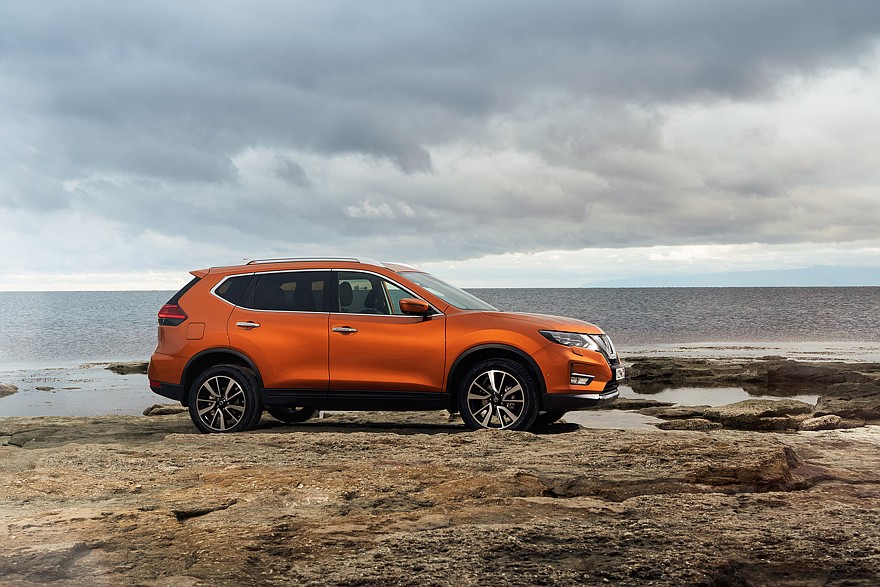
At the same time, cars older than five years may start to show certain problems. These include the heater fan motor and the drive belt with tensioner pulley. There are complaints about the durability of the paintwork: “The paintwork is weak, paint protection film helps! Don’t forget the sleek design. The hood, bumper, and pillars suffer. Quite a lot of chips appeared in a short time.” But there are absolutely no complaints about the engines: “The engines are bulletproof, like a Kalashnikov rifle,” “Doesn’t burn oil. One autumn I decided to top up the washer fluid and realized I hadn’t opened the hood since last winter.” Approximately the same is written about the electrics: “The electrics are flawless – no glitches.” And one owner wrote a very telling phrase in his review: “If this X-Trail lasts as long as the previous one, then after 200,000 km I’ll have to go for a Nissan again.”
The topic of the CVT appears very often in discussions about the Nissan X-Trail. There is a prevailing opinion that the CVT will inevitably fail if not after 50, then certainly after 100 thousand kilometers, and there are specific cases that confirm such fears: “The CVT lasted only 40 thousand in 4 years and completely fell apart. Right after the warranty ended.”
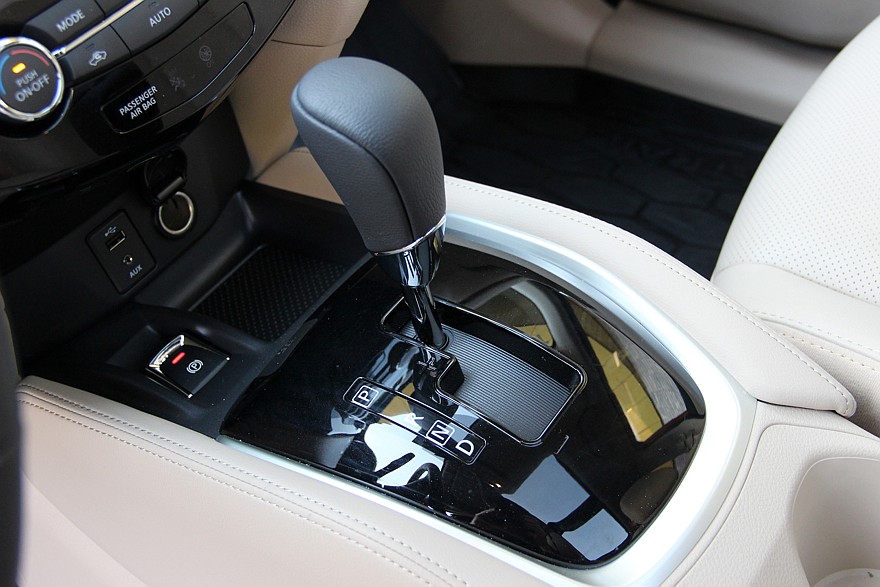
But owners who consider this opinion a prejudice are still in the majority: “After 2018, the CVTs were refined and are considered quite reliable with timely fluid changes (every 60-80 thousand km)”; “Specifically, a Jatco CVT is installed here, which is considered one of the most reliable”; “Honestly, I didn’t have a great attitude towards the CVT, but relatives in Tyumen own an X-Trail in the previous body, and their mileage has exceeded 300 thousand.”
The CVT behaves predictably: smooth acceleration, economical mode. And indeed, there are a number of rules and limitations, non-compliance with which leads to premature CVT failure. It doesn’t like driving at high speeds for a long time, can’t stand prolonged and vigorous wheelspin, and isn’t designed for constant “pedal to the metal” starts. This is why many consider it strange to equip all-wheel drive versions of the model exclusively with CVTs: “Nissan is strange – a CVT on 4WD, meaning only gentle operation, you absolutely cannot spin the wheels, but the manual is only 2WD. How is that possible??!”
Again, not everyone knows that in winter, for the CVT to work correctly, it must be warmed up before driving: “The car needs to be warmed up for 10-15 minutes in winter. The working fluid needs to reach the required temperature. Driving on an unheated CVT is killing it in a perverse form.” But overall, it can be stated that when buying an X-Trail on the secondary market from a responsible and calm owner, you can quite reasonably expect the CVT to last up to 150-200 thousand kilometers. Naturally, provided proper maintenance and adherence to all the mentioned limitations. And then you too can write in a review: “Personally, I’m delighted with the CVT. Just a wonderful transmission!”, “I’m surprised, but after a classic automatic and a robot, I liked it. It shifts smoothly, without jerks.”
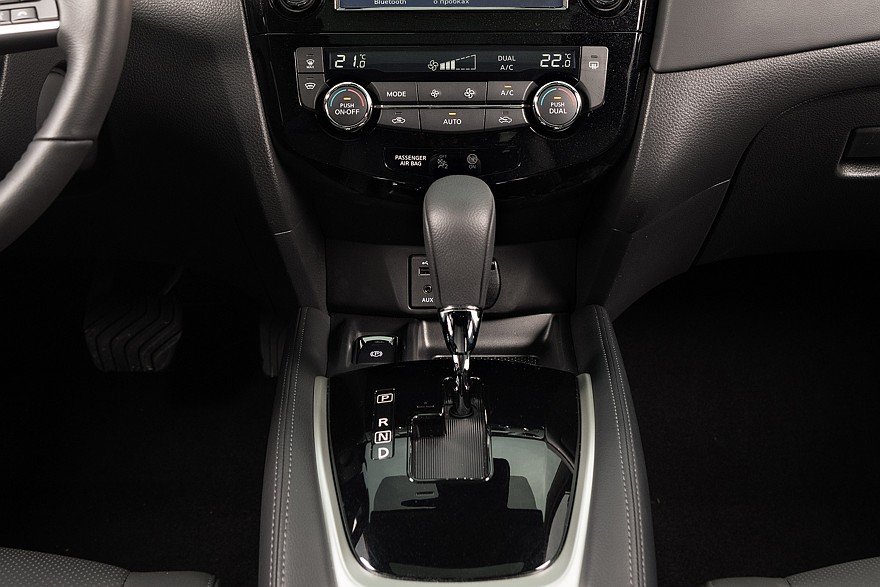
Comfort is a very capacious word, and the phrase “comfortable car” can encompass many different topics and points. Nevertheless, most authors in their reviews call comfort one of the main advantages of the third-generation Nissan X-Trail, and they consider the excellent optional equipment to be one of the main manifestations of this comfort. “There are different trim levels, you can find well-equipped examples: panoramic roof, blind spot monitoring system, intelligent cruise control, 360-degree camera, dual-zone climate control”; “Pleasant features include cruise control, climate control, the ability to open and close the trunk just by waving a foot (hands are often full of bags), generally decent music, leather interior and power seat adjustments, sunroof, panorama, heated front and rear seats, and steering wheel.”
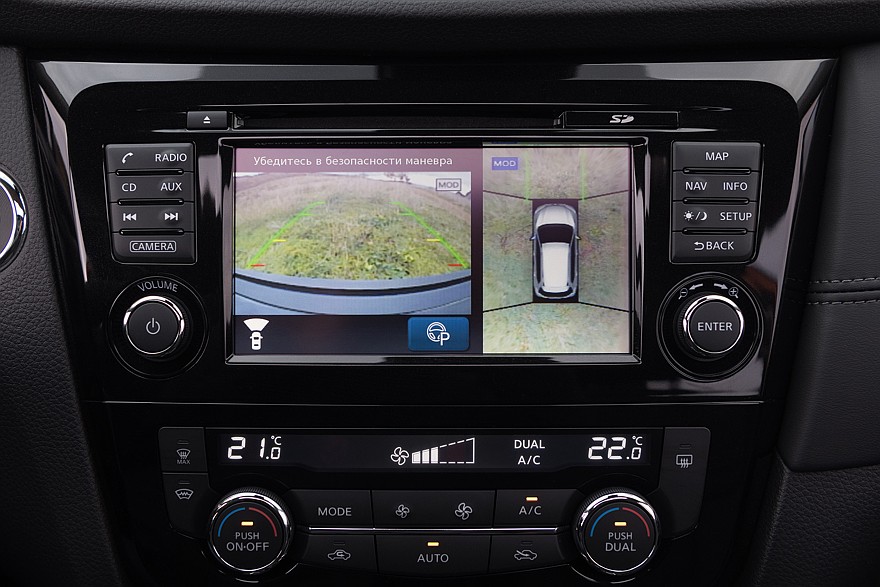
Attitudes towards electronic assistants vary greatly. Some may simply find them annoying: “Blind spot monitoring works, although I managed without it in previous years. It beeps when changing lanes in heavy traffic. There’s lane keeping assist. Tried turning it on… Constant unnecessary beeping. Turned it off. Forward collision warning sensor. Hope it won’t be needed. I watched tests and reviews, realized that all these systems in Nissan are not the smartest or most reliable, but still better than nothing.” And some believe they saved, if not life and health, then money and nerves: “My modification has adaptive cruise control. An indispensable thing on the highway, especially at night,” “Driving through an intersection, I heard a crunch and crack, similar to wooden sticks being stuck into all four wheels and breaking. The car stopped dead in its tracks. First, I looked back, thinking someone had hit me, but there was no one behind. Only then did I see a red Matiz a meter from my hood and a female driver with her eyes squeezed shut. A minute later it turned out she had confused the pedals and rolled out into the intersection on a red light. In short, if it weren’t for the collision prevention system…”
There is no consensus regarding acoustic comfort. Some write that “the sound insulation is decent” and “the soundproofing is good, driving on gravel – you hear almost nothing, occasionally the noise of small pebbles.” And also that “the soundproofing is bad. I want more soundproofing everywhere and double-glazed windows.” Well, and quite often in reviews there are complaints about creaks from the hard plastic panels of the interior, as well as the sunroof: “The interior design is conservative, lots of hard plastic. The quality of some trim materials is cheap, and over time it starts to creak”; “The sunroof needs to be lubricated periodically, it creaks on bumps”; “The trunk started creaking after 500 km, fixed by lubricating the joints with WD-40.”
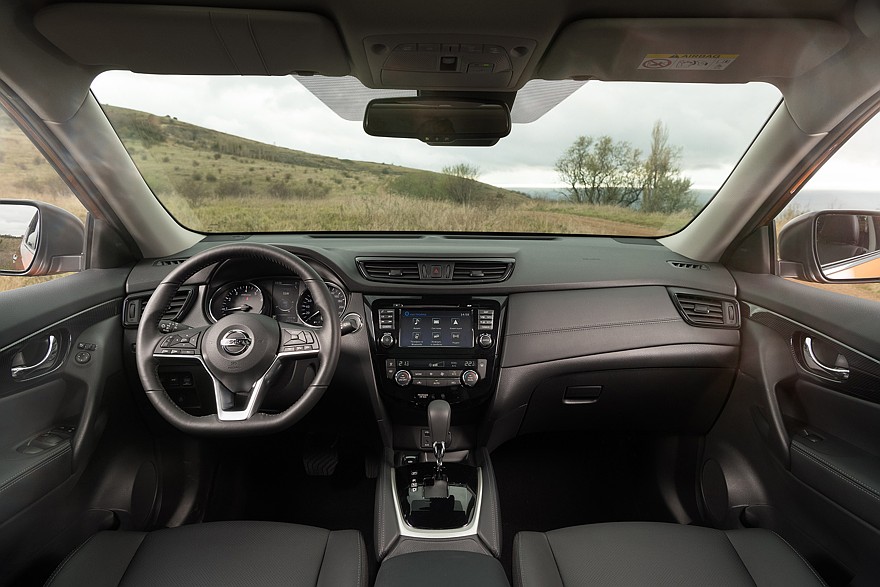
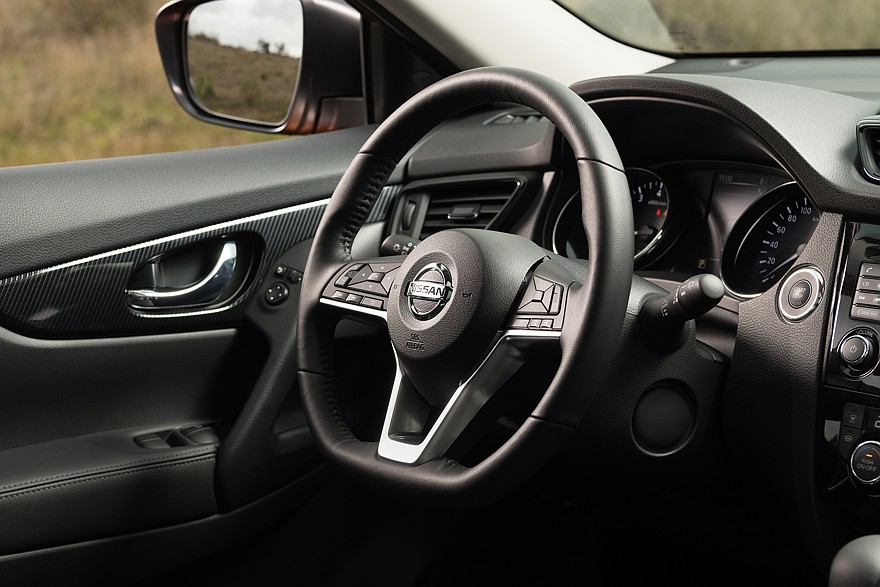
Ride smoothness and suspension performance receive almost unanimous approval: “The suspension handles both large and small road irregularities well,” “The little Nissan swallows bumps and potholes easily, almost doesn’t notice them, as if flying over them. When you need to go on dirt roads – the suspension is soft, when you’re flooring it on the highway – it’s firm, everything is well thought out.”
Many reviews contain praise for the headlights, especially the LED ones: “Cornering lights and automatic high beam. It shines well in any weather. You can always see everything perfectly.” True, there are also complaints that LED light sources are not available for all trim levels and cannot be selected as an additional option.
Another factor of driving comfort, according to review authors, is good visibility: “After this seating position, you don’t want to go back to sedans,” “I want to note that the side mirrors are conveniently made. They are at the right height, and the viewing angle is good.” The only thing that might draw criticism is the massive front pillars: “Two old ladies could hide behind the front pillar. I checked myself, but fortunately, it ended well.”
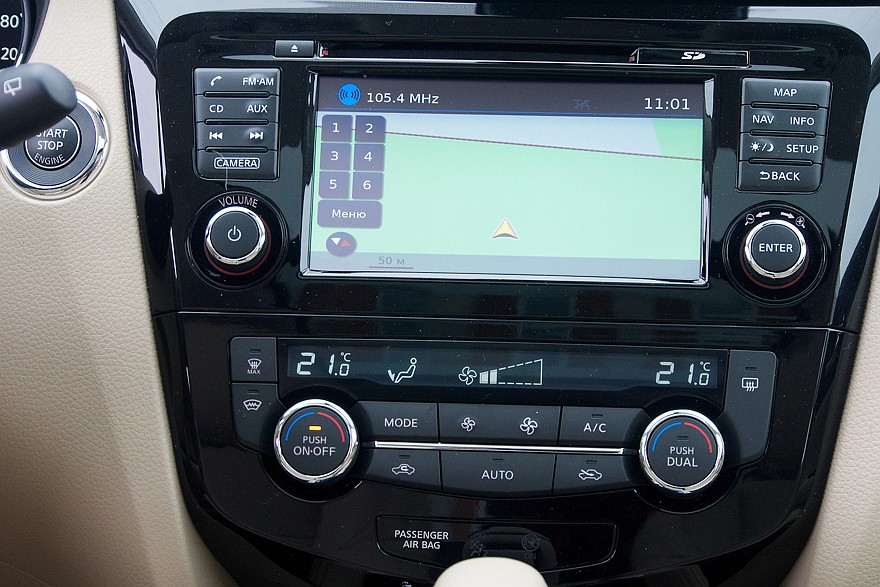
Variants with Yandex Auto deserve a separate discussion. There are complaints about its operation: “Yandex Auto lags and glitches in places”; “An extremely raw thing. Something is constantly happening with it. Either it doesn’t turn on, or it turns on where I wasn’t listening before. The CD player works every other time, the flash drive similarly.” And yet, it is more often praised: “Yandex Auto automatically syncs with the phone and displays the route I built while still in the elevator,” “I am an active user of Yandex services, and it’s very convenient to use these amenities both on the phone and in the car. Favorite music, familiar navigator, real-time traffic jams.” And also this observation: “The speakers in the X-Trail are mediocre, like in the Qashqai, both cars are generally budget-friendly, but Yandex Music even sounds on these speakers as if it were Harman Kardon.” But the standard monochrome system of cheap trim levels is unanimously recommended by owners to be immediately replaced with an Android device.
Finally, almost all review authors literally shower compliments on Nissan’s proprietary Zero Gravity seats: “The seats are comfortable, plenty of space, driving long distances is a pleasure”; “The seats are comfortable, after 12-14 hours on the road, your back doesn’t fall off”; “”Zero Gravity” is a powerful thing… even if you drive 500 km, your back almost doesn’t get tired”; “Comfortable seats for long distances. 3 thousand km, and my back didn’t get tired at all.”
Judging by the reviews, overall, the comfort of the X-Trail deserves a positive assessment. But there are a number of points that prevent it from being considered ideal. Owners dislike some ergonomic solutions, for example, the control of a whole range of functions placed on a button block to the left of the steering column: “The interior is a bit sad in the little things. Opening the fuel filler flap is a lever down by the pedals, which is not visible in the dark, and the hood release is nearby. The steering wheel heater is hidden right there too, a button under the steering wheel next to the ESP off button and other rarely used functions”; “Of the serious complaints – only the location of the Eco and steering wheel heater buttons”; “The left block with buttons (trunk open, steering wheel heater). You use them often, but pressing them is very inconvenient.”
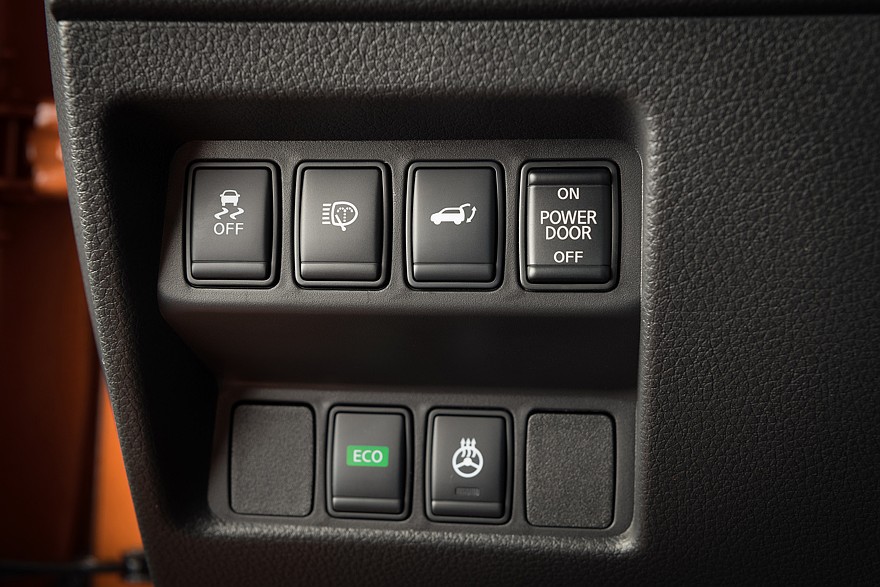
Another drawback noted by review authors is the lack of backlighting on many functional buttons: “They saved on backlight LEDs, and in the dark you have to light it up with your phone to open any window other than the driver’s, or to lock/unlock the doors. The same applies to the interior light buttons: we take out the phone and, lighting it up, find the button for the overhead light.” The fact that only the driver’s door has an automatic power window also causes bewilderment: “Everything is done so that you remember you bought a budget car and suffer. All power windows except the driver’s do not have an auto-close function.”
Functions that are generally approved of can also throw up unpleasant surprises. For example, the hands-free trunk opening: “The ‘kick’ trunk opening works inconsistently. You need to practice to better hit the spot where the sensor is looking.” Or, say, the automatic emergency braking function. It saved someone, but for others it can cause irritation: “The ‘Emergency Braking’ function in the ‘Driver Assistance’ system works incorrectly. This is a completely harmful function that can lead to unjustified braking of the car, for example, due to a cloud of soot from a passing truck or a flying piece of paper.” In several reviews, owners say that if you use the remote engine start function in winter and then turn off the engine, you won’t be able to start it again. Moreover, the engine stalls when opening the doors! This mainly applies to versions with 2.0-liter engines: “It’s annoying that the engine stalls when opening the car if you started it with remote start. So much for keyless access!”; “At sub-zero temperatures, until you warm up the engine, you can’t turn it off, otherwise you won’t start it”; “Engine 2.0, Pandora alarm. Started with remote start, outside it’s minus 27. When opening the door, the car stalls. It’s unclear why such a function is needed.”
The inability to opt out of the panoramic roof while keeping the rest of the top-level trim also draws criticism: “If you want roof rails, you have to buy a car with a panorama. But why do I need a panorama if, after putting a box on the roof rails, I won’t see anything except the dirt dripping from the box? If I put four bicycles or a snowboard with skis on the roof rails, I’ll only see road dirt dripping from the board and skis in the panorama! Why not put roof rails on any trim level?”
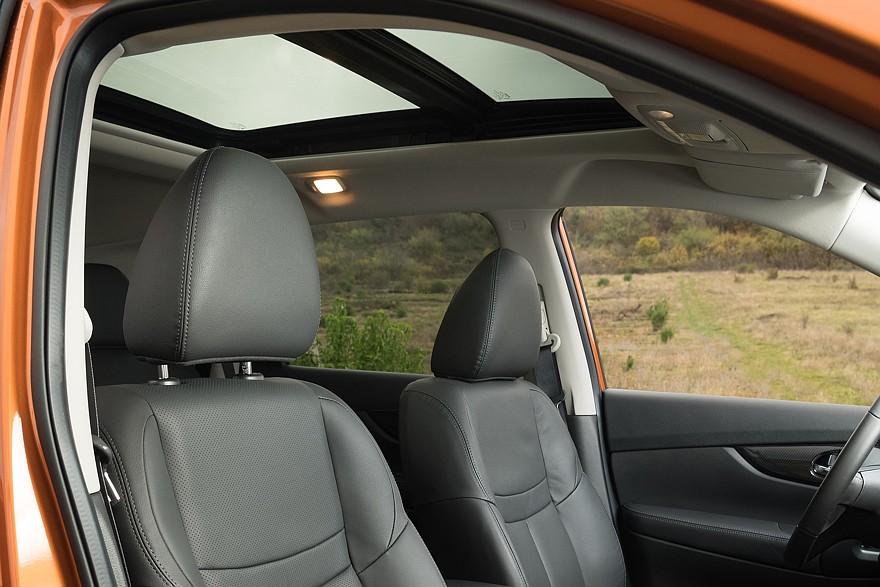
Owners also consider the uncovered door sills as an ergonomic drawback: “In winter and rain, the sill is dirty, and you often wipe it with your pant leg,” “In winter, I wouldn’t really want to dirty my pants, but it seems I’ll have to get used to getting behind the wheel and lifting my legs.”
Owners also note other minor shortcomings – for example, there isn’t a single hook in the cabin or trunk where you could hang a bag so the contents don’t spill. There are also comments about the cruise control operation and complaints about the incorrect operation of the climate control: “The climate control isn’t very adequate in terms of airflow strength. I haven’t found the optimal mode for myself. Either it blows you away, or you don’t feel it.” In a word, there are indeed many minor complaints.
The open sills mentioned above are, of course, unpleasant, but overall, judging by owner reviews, the third-generation Nissan X-Trail is quite well adapted to our winter conditions. Firstly, it starts reliably even in severe cold: “Starts in any frost with half a turn! Quick warm-up in winter.” Secondly, even those who think the cabin takes too long to warm up write that the car is warm: “Cons: takes a long time to warm up in winter, but when the heater kicks in – it’s just hot! Holds heat perfectly,” “Warm cabin. Heats up quickly, and options like heated windshield, steering wheel, and seats bring the cabin temperature to a comfortable level quite quickly. Again, compared to the T31, this one is much warmer.”
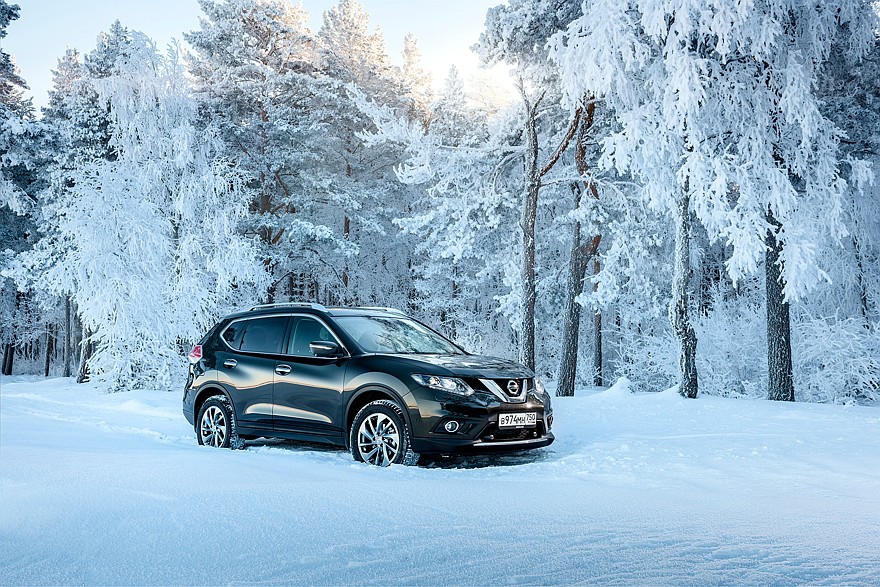
Thirdly, review authors highly rate the seat heaters, because while the first row is heated in many models, not all can boast heated rear seats.
But what pleases owners the most is the heated windshield: “What I like is the windshield heating: it really quickly clears snow while the engine hasn’t warmed up yet,” “The filament windshield heating instantly turns ice into water. Forgot what a scraper is in winter. While you’re clearing snow off the car, everything has thawed, the cabin is warm, and you’re off on your business.”
It can’t be said that fuel consumption is the main drawback of the Nissan X-Trail, but this parameter shouldn’t be included in the list of advantages either. Rather, it can be called debatable, because owners cite quite different figures, and online debates about fuel consumption are quite common. Let’s note right away that the relatively few owners of diesel versions are left out of the discussion. Everything is clear with them: “Highway consumption is 6 liters (but you can crawl so it’s 4.9), in the city 8.2 liters per hundred (but you can crawl at 7.5)”, “Diesel X-Trail on 18-inch wheels with a gutted DPF and disabled EGR valve, chipped to 160 hp. Easily get under 5 liters on the highway – speed no more than 130 km/h, five adults in the cabin. If you crawl for minimum consumption, my record is 3.6 l/100 km.”
Owners of 2.0-liter gasoline versions are quite unanimous: “Consumption is low, average 8.7. If you drive on the highway at cruise control 130 km/h, it’s exactly 8.5. You can even drive unhurriedly outside the city, and it will be 6.7-7 liters at speeds up to 90. Of course, if you drive 150, consumption increases significantly”; “I’m especially pleased with the consumption, less than many sedans. The range is enough for 855 km”; “Consumption on the manual on the highway is 7-8 liters of 95 gasoline.” Overall, they are satisfied with this parameter.
But owners of cars with the 2.5-liter engine are not so unanimous. Some are quite satisfied with the fuel efficiency: “2.5 L, 4WD, 7.4-8 l/100 km on the highway (up to 130 km/h), city – 11-13 l/100 km. I consider it a very economical car!”, “I note the low fuel consumption: in Moscow – 9-11 L and on the highway 7-8 L/100 km.” Others say the consumption is a bit high, but only in city driving conditions: “Consumption is a bit disappointing, 13-14 liters in the city,” “The fly in the ointment is fuel consumption in city traffic jams. It reaches 15 liters per 100 km.” Well, a third group generally considers the X-Trail a gas guzzler and writes that city consumption never drops below 15-17 liters per hundred: “On one hand, it consumes inexpensive fuel (AI-92), on the other hand, quite a lot – 12-14 liters. The same amount was consumed by a 3.5-liter Highlander at the same speeds,” “It has fuel consumption 2 (!!!) times higher than a diesel Mercedes (GLS 220d, 194 wild ‘horses’)”, “In city traffic jams, real consumption is about 15-16 liters per hundred (in normal mode) and 12-13 in ECO mode.”
Naturally, in each specific case, fuel consumption depends on driving style, speed, and the heaviness of the foot on the gas pedal during acceleration. But in any case, when choosing a car on the secondary market, it’s worth taking all of the above into account.
The majority of new Nissan X-Trail T32 sales were for all-wheel drive versions, and on the secondary market, they make up at least ¾ of the total supply. Owners are clearly pleased with their choice of all-wheel drive: “All-wheel drive is very helpful in winter, in the snowy courtyards of St. Petersburg you feel confident”; “In winter, it’s convenient to drive even into the highest snowdrifts”; “All-wheel drive easily handles muddy forest roads.”
But it’s worth clearly understanding a few points. Firstly, it’s a crossover, and owners are usually aware of this: “It’s not suitable for off-roading, it’s a front-wheel drive platform with a connectable rear axle. It will help you get out of a snowdrift, and that’s it!”, “It’s somewhat suitable for light off-roading, but geometric off-road capability doesn’t allow overcoming serious obstacles.” But for some, the X-Trail’s inability to handle extreme mud comes as a surprise: “It doesn’t drive in mud at all (absolutely not).” But further, the same author writes: “Off-road capability in terms of potholes and uneven roads is 5+, it flies over all curbs.”
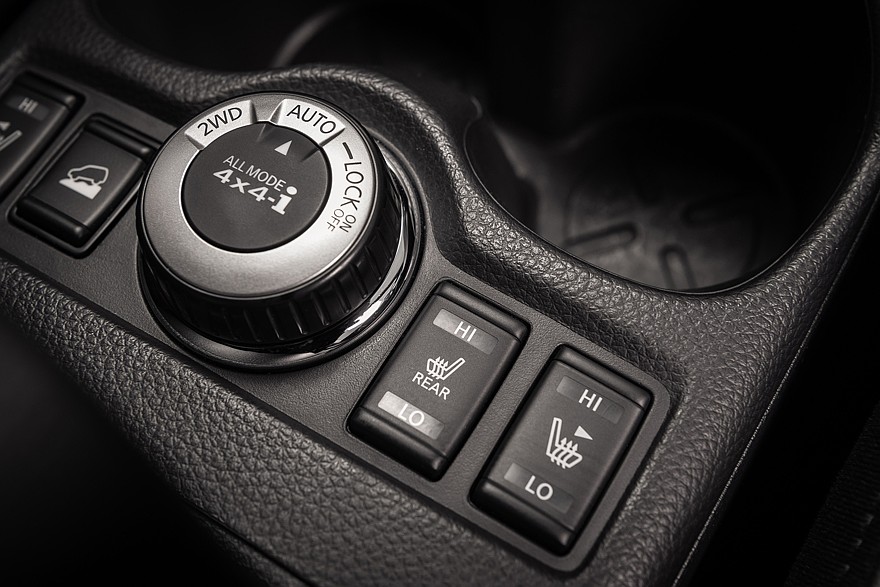
The off-road arsenal of the Nissan X-Trail includes the ability to lock the rear axle coupling (Lock mode). But you need to remember that after engaging Lock mode, the rotary controller knob doesn’t lock in place but returns to the Auto position, and only a small icon on the instrument panel indicates that the coupling is locked. Well, if you accelerate to 40 km/h, the mode automatically disengages, and the same happens if you drive in this mode for long enough and the coupling overheats. This is why owners dislike the car’s behavior in situations where you’re driving on asphalt with normal traction but periodically encounter snow-covered sections: “I really didn’t like the Nissan’s handling on roads with snow drifts, you have to constantly catch and control it.” The reasons for this are quite clear: the suddenly engaged rear axle sharply changes the handling, and the automatic system doesn’t allow you to constantly drive in all-wheel drive mode at a sufficiently high speed.
Lack of dynamics most often irritates T32 owners. Owners of 2.0-liter versions complain most often: “A car for calm driving. Dynamics are non-existent. Acceleration is measured, overtaking on the highway requires calculation”; “It doesn’t go, the engine is high-revving plus the CVT, to accelerate you have to press the gas pedal very hard”; “The 2.0 L engine is a bit weak for this car to have fun.” However, assessments largely depend on the driver’s character and temperament: “The dynamics, of course, are not like a passenger car, but sufficient.”
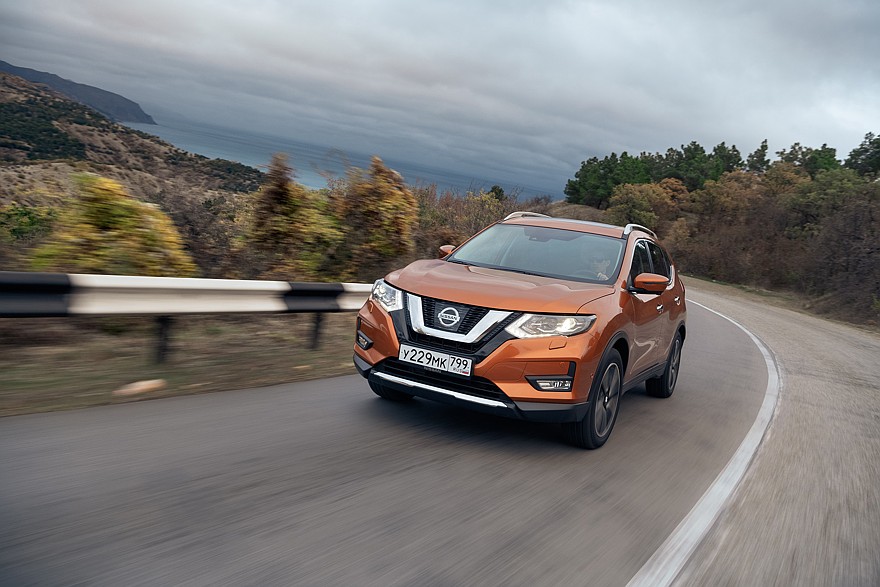
Naturally, the more powerful 2.5-liter engine draws far fewer complaints, and those who are quite satisfied with the dynamics are significantly more numerous: “Naturally aspirated 2.5-liter engine, 171 horsepower under the hood. This is quite enough for comfortable movement and overtaking on the highway. And it handles mountain serpentines without strain, unlike the trendy small-displacement turbo engines”; “The 2.5-liter engine pulls excellently, on roads with long climbs of several kilometers, it carries four people and a full trunk of luggage.”
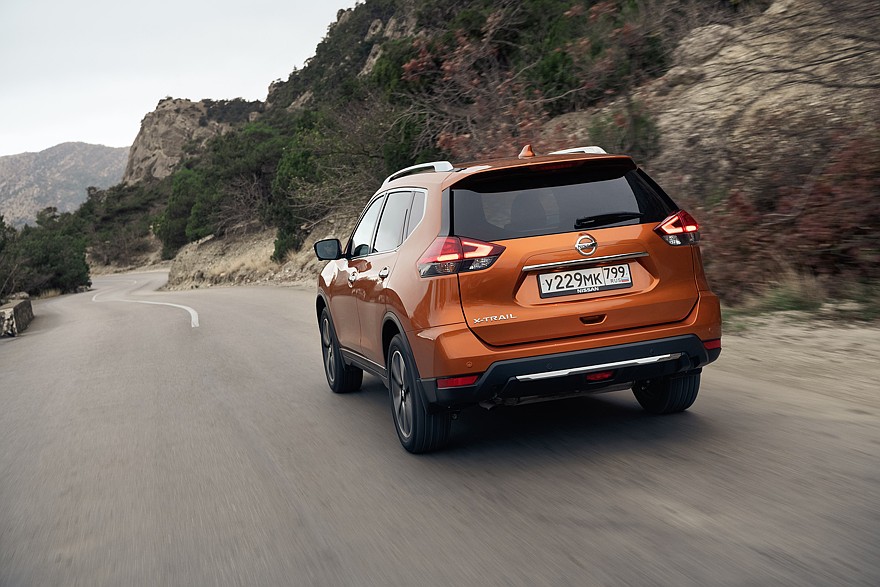
However, there are also plenty of those who didn’t get along even with the top 2.5-liter variants. “I would say it doesn’t go even with the 2.5. That is, it creates a feeling of briskness at speeds up to 80 km/h, and then that’s it”; “Dynamics are a separate letdown, there are none compared to the same CRV 4 with the same engine power, not to mention the ‘Germans'”; “Lacks speed when overtaking, but overall I’ve adapted.”
The button for switching to Eco mode received a separate discussion: “I used ECO a couple of times and forgot about it. Yes, on the highway with calm driving it saves about 0.5-0.7 liters per hundred, but you can’t overtake with it on, and it’s inconvenient in the city: by the time you accelerate from traffic light to traffic light, you’ll get a hundred honks from behind. And if you drive with it for a couple of days and get used to it, then turning it off, you start to tear the CVT, sharply starting from a standstill,” “This button is only relevant in traffic jams, especially when you’re driving your wife and child, so as not to jerk, but to squeeze through smoothly. On the highway, it saves absolutely nothing, only causes extra hassle during maneuvers.”
Surprisingly, only the few owners of diesel versions are completely satisfied with the dynamics: “Why exactly the 1.6 DCi – this French (Renault-Nissan alliance development) diesel is much more economical than the 2.0 and 2.5-liter gasoline engines, and just as peppy as the two-liter. There’s a feeling it’s even livelier and faster. The car with the diesel is definitely not a slug, neither in the city nor on the highway.”
And yet, it is precisely the “family values” embedded in the car’s concept that make owners put up with the fairly serious (and quite real) shortcomings of the third-generation Nissan X-Trail and not pay attention to the little things. “It’s a workhorse for the family. It won’t give you driving emotions, but it will faithfully and without surprises do its job: carry children, a dog, bags from the supermarket. You should choose it if you need a spacious and comfortable crossover, a reliable simple engine, and maximum practicality for reasonable money,” “Just an awesome car, for a family with children – the best choice.”
Indeed, what qualities make a particular model an ideal family car? First of all, interior space – both the passenger cabin and the trunk.
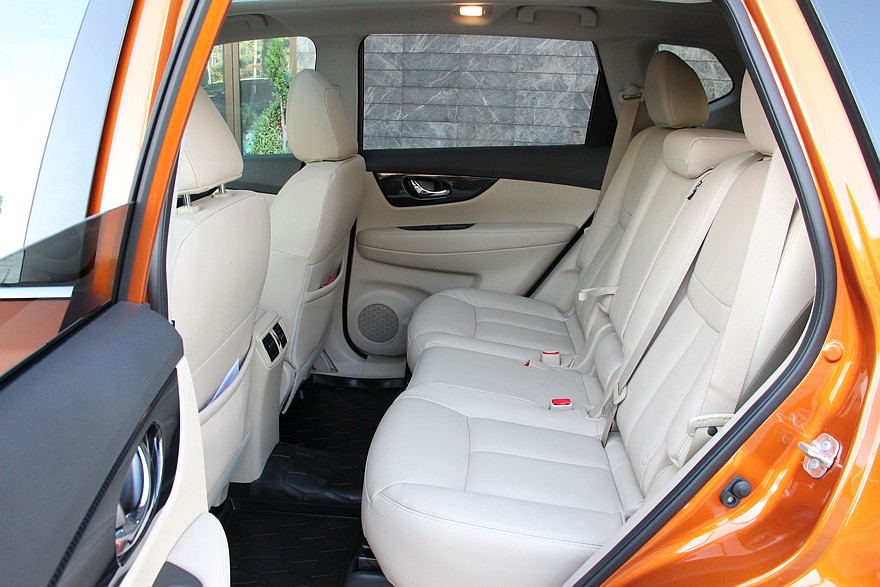
With the volume and comfort of the cabin, it’s really true: few of its classmates can offer comparable space in the second row of seats. “The cabin is very spacious, especially in the second row. Three adult passengers travel without problems. Special thanks for the ‘flat floor’ – your feet don’t hit the tunnel,” “The cabin is a song! If you have two children, the distance between the rear seat and the maximally pushed-back front seat (either of the two) is simply huge,” owners rejoice.
The situation with trunk volume is somewhat more complicated. Authors of some reviews write that they are completely satisfied: “For travel, it’s generally top: the trunk is huge, everything fits,” “Spacious trunk. The rear row folds down. Once I transported a refrigerator.” But there are also plenty of those who, for some reason, didn’t use the ability to change the trunk volume by moving the rear seat. So in reviews, you can also come across assessments like: “The trunk in the X-Trail disappointed me a bit. It’s small for such a car, although it’s enough for me for now,” “There’s a lot of space in the back, but not so much in the trunk.”
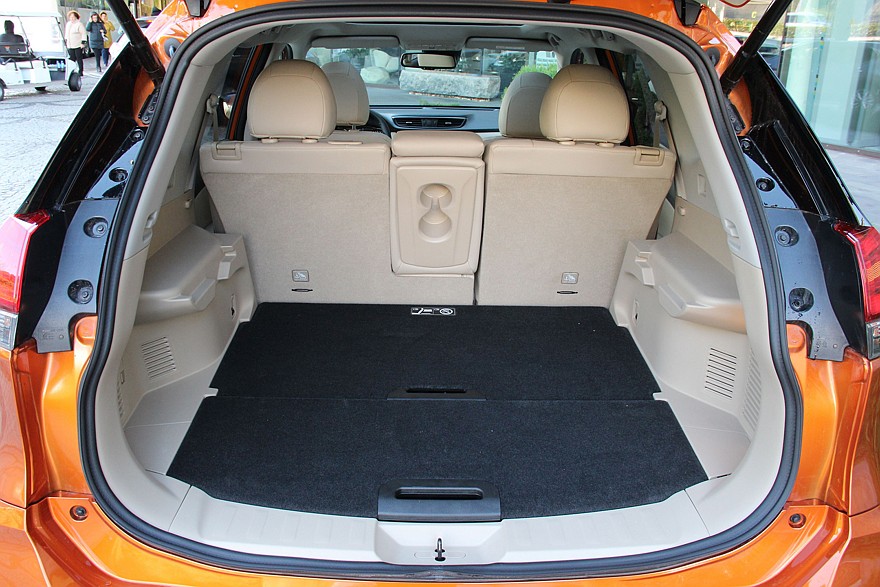
However, those who love to travel with their family are very pleased that by folding the rear seat, you can organize a proper sleeping area: “We went on a trip, the rear seats fold down like a double bed. A 2000 km trip for the whole family was convenient and comfortable!”, “The trunk is fire, folds almost flat (slept in it fishing about 6 times).” The pass-through in the rear seat backrest allows transporting long items: “A convenient option is the armrest/pass-through in the rear seats. When we went to Arkhyz to ski, everyone really appreciated it. We pushed the skis through the pass-through, and 4 people traveled in maximum comfort with armrests.”
And in general, the X-Trail has proven itself excellent for long trips. Everything plays a role here: ride smoothness, a comfortable driver’s workspace, and a wealth of comfort features. Here’s what review authors write about this: “A solid family car. The car is quite soft, and this adds comfort on the highway, plus very comfortable seats. I drove to St. Petersburg on the toll road, the whole way without stops for stretching – my back felt very good,” “It’s quite comfortable to drive on the highway: set the