































Xpeng reportedly building a yacht, adding another piece to its ‘land, sea, and air’ layout?
In early June, reports emerged that XPeng Motors had secretly launched a yacht research and development project, with the internal codename “Flying Fish.” Subsequently, XPeng responded, saying it was “not yet aware of the matter.”
This set of rumors and responses pushed the tech company, which started with smart electric vehicles, into the center of discussions about a “land, air, and sea” three-dimensional layout.
The Outline of the Rumor and Official Silence
According to multiple sources, XPeng Motors formed an internal yacht R&D team in early 2026, with a team size approaching 100 people. The project is led by Qian Zhanwei, the head of XPeng’s vehicle architecture. The project’s internal codename is “Flying Fish.”

It is reported that, unlike the R&D paths of traditional yacht manufacturers, XPeng is focusing its core competitiveness on chassis algorithms. Leveraging its accumulated capabilities in dynamic response, perception fusion, and coordinated control from the smart EV field, it aims to achieve intelligent regulation of hull attitude, power output, and steering angle. The target customers are described as the high-net-worth family market, focusing on private vacation scenarios.
After the rumor fermented, in response to multiple inquiries, XPeng stated it was “not yet aware of the matter.” As of now, XPeng Motors has not released any official statement regarding the yacht project, and key information such as related technical parameters, product form, and production timeline has not been disclosed.
Notably, the timing of this rumor is quite specific. On June 10, XPeng Group Chairman He Xiaopeng sent an internal letter announcing that he would personally serve as the CEO of the robotics business, going all out to achieve mass production and delivery of the humanoid robot IRON in the fourth quarter of 2026.
Additionally, in the first quarter of 2026, XPeng Group changed its Chinese corporate name from “XPeng Motors” to “XPeng Group,” shifting its strategy from a smart EV company to a “Physical AI Company.” Within this transformation framework, the flying car “Land Aircraft Carrier” is planned for mass production in 2026, and the Robotaxi is also scheduled to begin demonstration operations this year. The emergence of the yacht rumor coincides with a period of intensive simultaneous advancement across multiple business lines for XPeng.
In fact, since the name change at the beginning of the year, XPeng’s pace of transformation has noticeably accelerated.
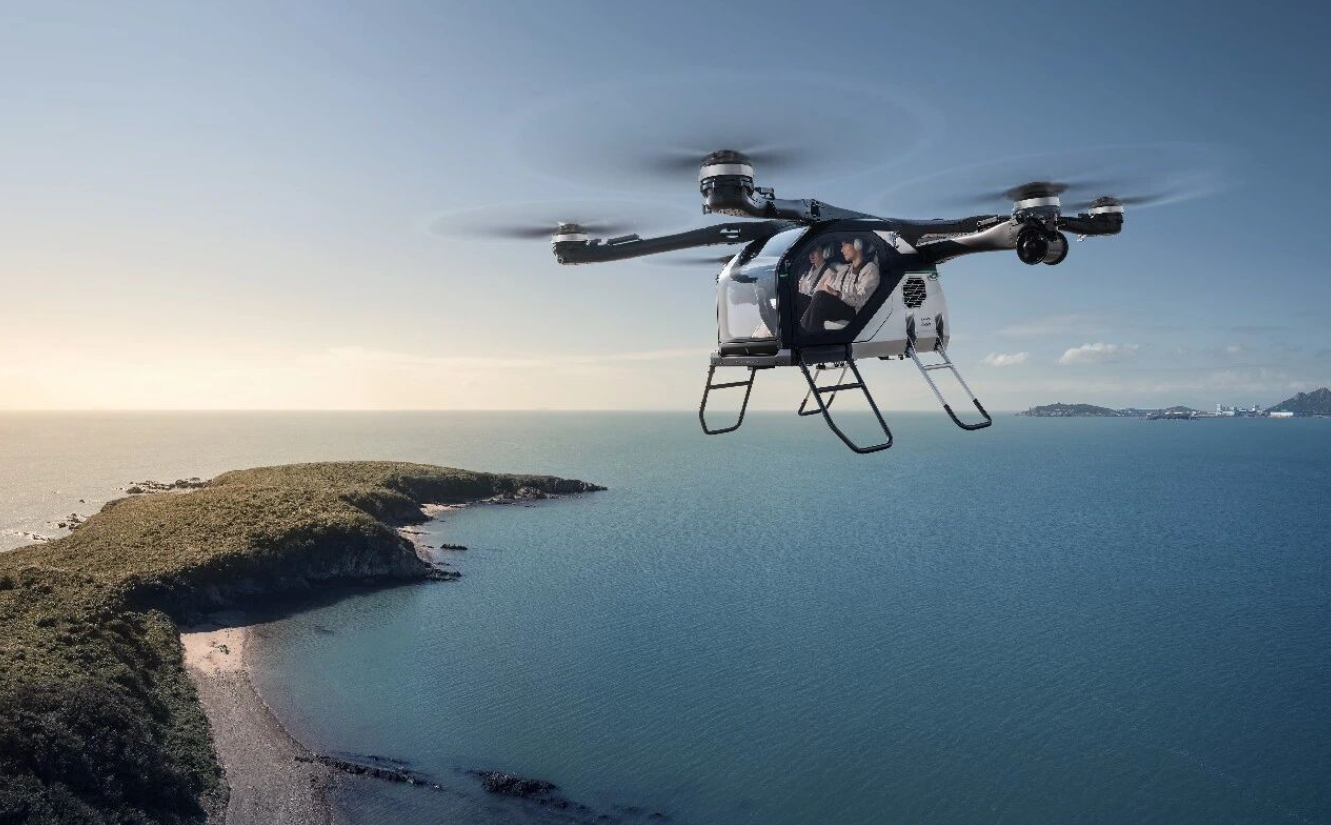
In the low-altitude field, pre-sale orders for the split-type flying car “Land Aircraft Carrier” have exceeded 7,000 units. Its world’s first assembly line flying car factory in Guangzhou has entered the production preparation stage, planning to produce one aircraft every 30 minutes, paving the way for mass production and delivery in 2026.
In the more forward-looking robotics track, the IRON project, now personally led by He Xiaopeng, is also entering a sprint phase. This humanoid robot, equipped with three self-developed Ling chips and boasting 2250 TOPS of computing power, is advancing towards the goal of mass-producing a thousand units by the end of the year.
Even in the fiercely competitive automotive core business, XPeng’s product pace has not slowed down. Since 2026, it has intensively launched multiple facelifts and all-new models. In May, deliveries reached 32,158 units, hitting a new high for the year. Meanwhile, its fully self-developed Robotaxi has already rolled off the production line in Guangzhou and is about to commence commercial operations.
At a time when the flying, robotics, and ground transportation lines are nearly simultaneously entering mass production or sprint stages, the emergence of the yacht rumor undoubtedly provides a new footnote for outsiders observing the strategic depth of this company.
Automakers Venturing into Yachts: Not a New Industry Phenomenon
XPeng is not the first automaker to venture into the yacht sector. Brands like Mercedes-AMG, Lamborghini, Porsche, and Lexus have already entered this field.
For example, Lexus collaborated with Marquis Yachts to launch the LY series luxury yacht; Mercedes-AMG partnered with Cigarette Racing Team to produce the Tirranna AMG Edition high-performance speedboat.
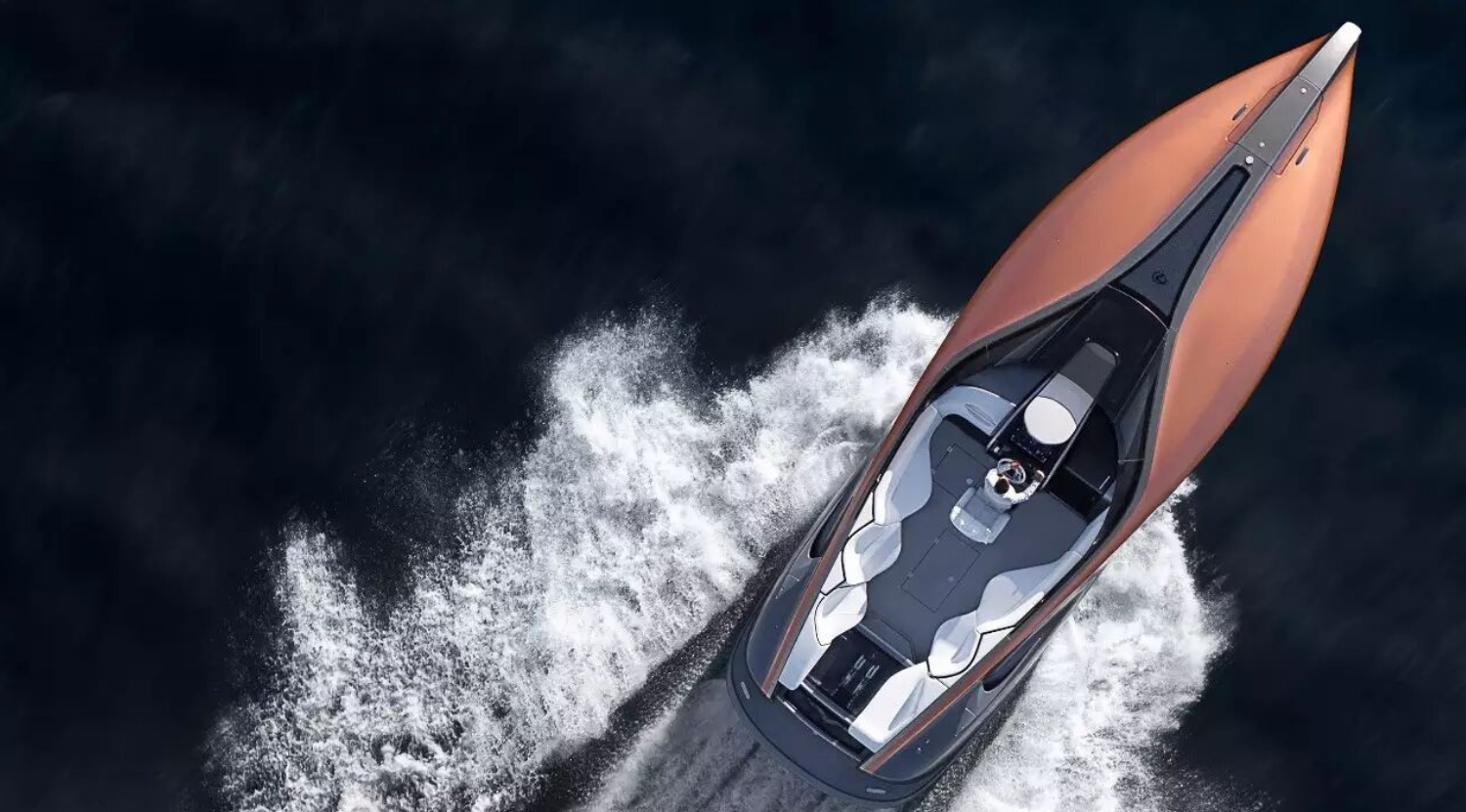
Looking at these cases, when automotive brands enter the yacht sector, they tend to participate through co-branding collaborations or partial development involvement, rather than independently leading the entire construction process.
Based on the rumors surrounding XPeng, its chosen path seems to be one of deep self-research and technology reuse—directly importing smart car technology into yacht development. In the industry’s view, whether this differentiated path can succeed remains to be verified over time.
From an industry environment perspective, the development of automotive electrification provides a supply chain foundation for the electrification of yachts.
There are also movements on the policy front: At the end of 2025, the Ministry of Transport stated that the average annual growth rate of newly registered yachts in China over the past three years exceeded 40%, and yachts are evolving from high consumption towards mass consumption and scaled development. These factors collectively form the macro backdrop for automakers venturing into yachts.
In early 2026, JD.com founder Liu Qiangdong personally invested 5 billion yuan to establish the yacht brand “Tanhai Yacht.” Several business figures focusing on the water market almost simultaneously also reflects the changing attention the yacht industry is experiencing.
However, the electric yacht track still faces many practical challenges.
Technically, aspects like range, battery safety, and charging speed need further improvement. In terms of marketization, economic viability, standard systems, and business models are still being explored. These are challenges that any company entering this field must confront.
Conclusion
As of now, the “XPeng building yachts” matter remains at the level of unofficial information from multiple sources, without official confirmation from XPeng. The specific form, technical route, and implementation timeline of the rumored “Flying Fish” project still await the disclosure of more authoritative information.
Until the company releases clear information, this incident is better understood as an industry trend worth noting: it shows the potential for smart EV technology to extend outward, and also reflects the changes and opportunities currently occurring in the yacht industry.