




































New Russians: how cars are produced at the new site of the AGR holding in Shushary
Not long ago we managed to visit the production facility of the AGR holding company in the Kaluga region, in Grabstevo. By and large, the new site in Shushary is very similar to what we have already seen: a full-cycle production process that includes welding, assembly, and painting, a huge number of robots, and strict control at every stage… But the site in Shushary, where the Jeland J6 and Jeland J7 crossovers are currently being produced (in the near future the model lineup will expand, but more on that below), has some distinctive features. Generally speaking, they are pleasant ones. Let’s take a look at what and how things work here, and what to expect from the plant in the future.
What does it take to build a plant
It’s no secret that the plant was not built from scratch: previously, companies that later decided to leave Russia operated at this location near St. Petersburg. But that doesn’t mean the new owners got a production-ready site. The fact is that some gentlemen were in such a hurry to leave their long-occupied premises that when dismantling their equipment, in some rooms they tore it out along with the floor. And by and large, the holding company got only the roof and walls – even the floor was missing in places, let alone the machinery. But at the same time, the site’s location turned out to be very advantageous from a logistics standpoint: nearby there is a highway connecting Moscow and St. Petersburg, a railway, and even Pulkovo Airport is close by. And no one has cancelled sea deliveries either: there is a port nearby as well. All of this is very convenient, since the plant requires about 1,100 parts daily to produce a single vehicle, and with a capacity of 100,000 cars per year, it’s not hard to imagine the required volume of transportation.
The second advantage of the location is the ability not to limit oneself in terms of production area. The building footprint alone is 128,000 square meters, and the entire territory is more than 6,000 hectares. This made it possible to organize not only vehicle production, but also storage of finished products for 5,000 parking spaces.
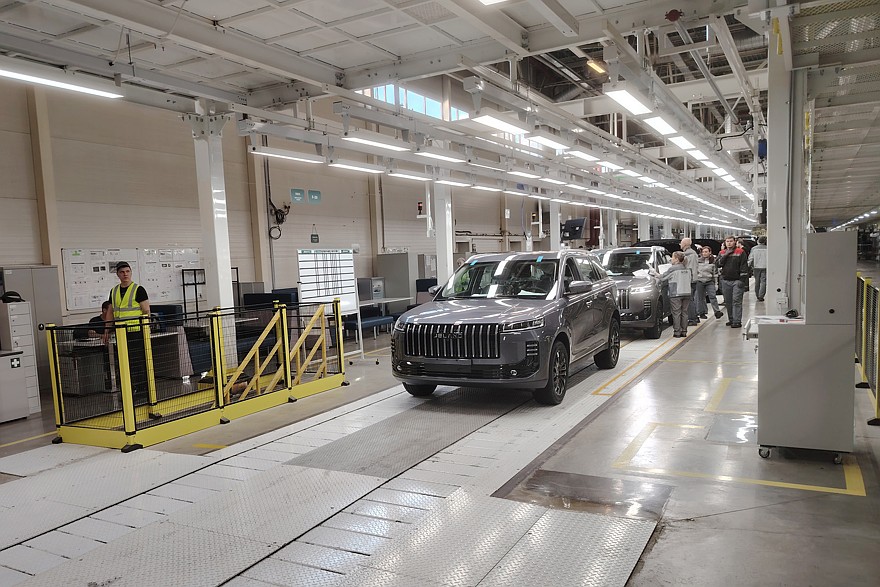
It should be noted that, in essence, the construction and launch of the new production facility were carried out in a very short time frame: in May 2025, construction itself began; from June of the same year through January 2026, equipment was delivered, installed, and commissioned; and already in April, the first vehicle was produced and full-cycle production of the Jeland J6 crossover began. Currently, 2,500 employees work at the plant, and they are already ready to produce two more models: the Jeland J7 and J8. By the way, another pleasant feature of the Shushary site is related to the fact that at one time GM, Ford, Nissan, and Hyundai plants operated in St. Petersburg. This means that there are enough people with experience in this field in the Northern capital to quickly assemble a team of specialists in any discipline. Well then, let’s see how this team works at the new AGR holding site in Shushary.
Carts, robots, control
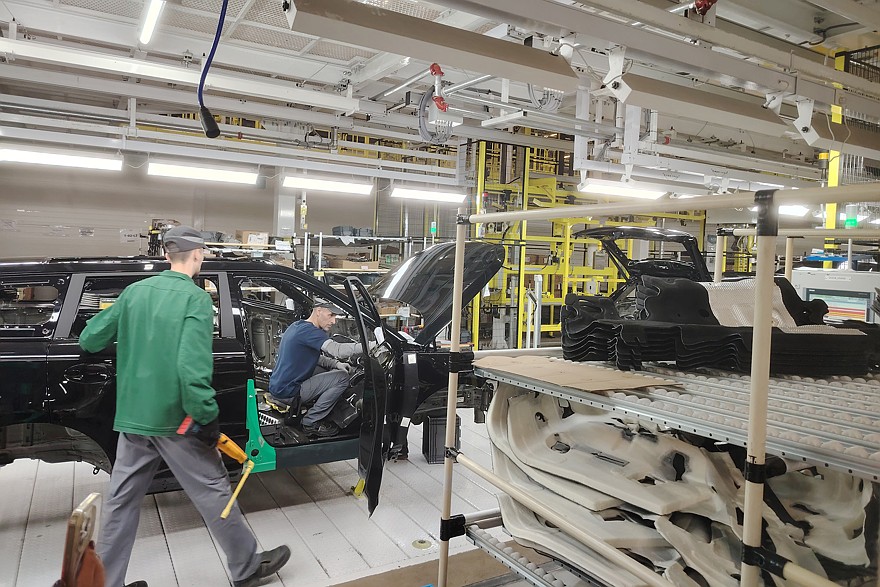
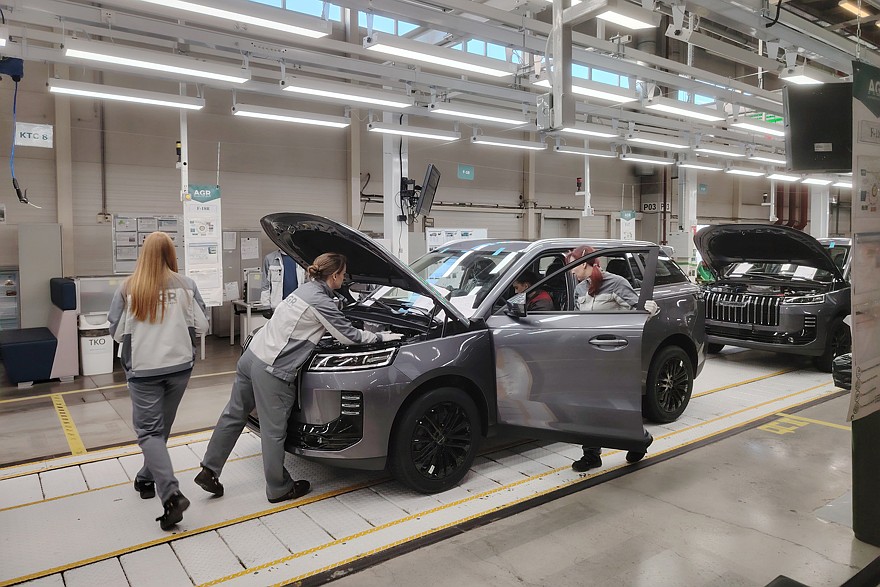
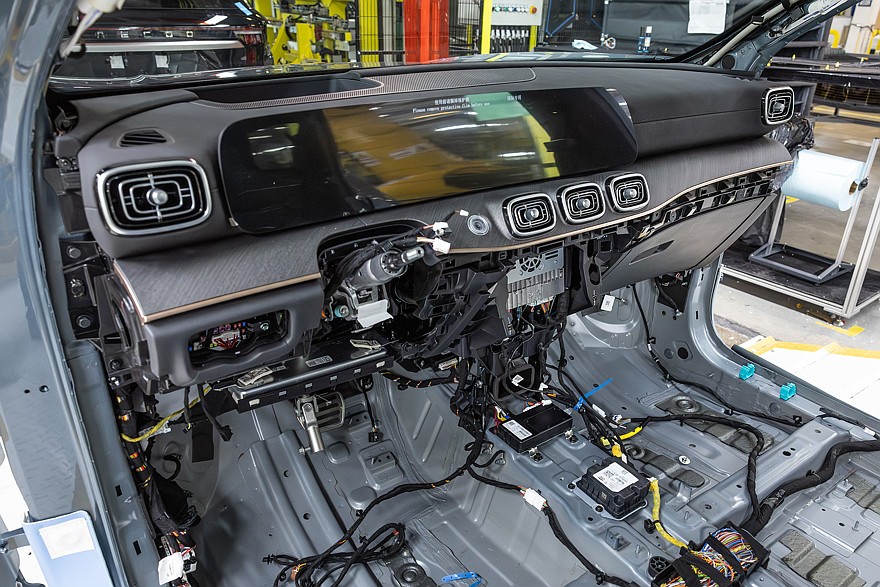
We start not from the very beginning of production, not from welding, but from the assembly shop. There’s probably no point in saying that it doesn’t resemble the gloomy workshop from horror movies that even Schwarzenegger’s Terminator couldn’t survive: it’s clean, very bright, and even somehow unusually cheerful. By the way, some equipment did remain here, but it was dismantled, so now everything in this shop is new as well. New means five conveyor lines with 88 workstations, dozens of manipulators, and robotic complexes. And this is also perhaps the most crowded shop: despite the abundance of machinery, manual labor is used quite intensively here. But not because of a shortage of robots, but in accordance with the accepted standards of any automotive production: there are operations that are more economically advantageous to perform by hand. At the same time, nearly three dozen robotic carts (also known as AGVs, automated guided vehicles) run along the shop floor pathways, so there’s no need to carry anything from the warehouse by hand. And all components arrive at the workstations just in time and exactly those that are needed at a specific moment. Naturally, more than one model can be assembled here – several can.
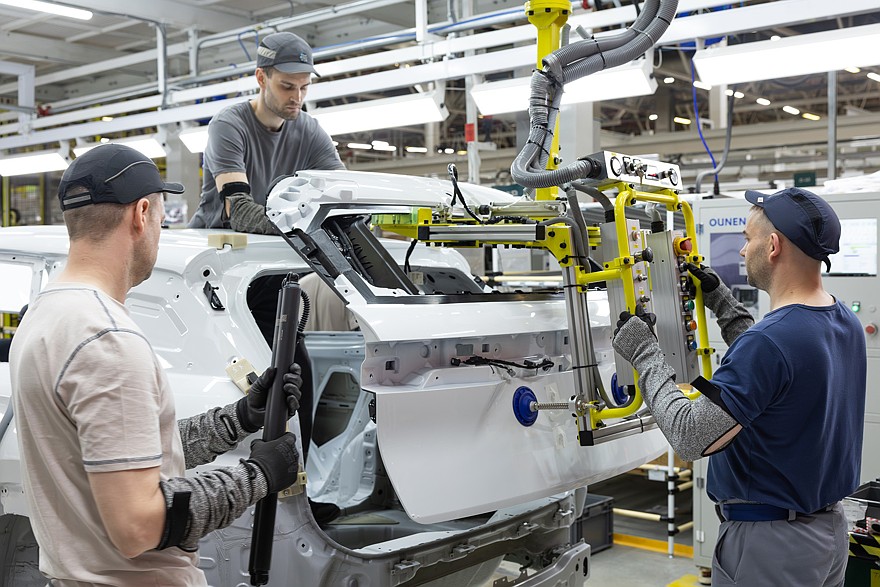
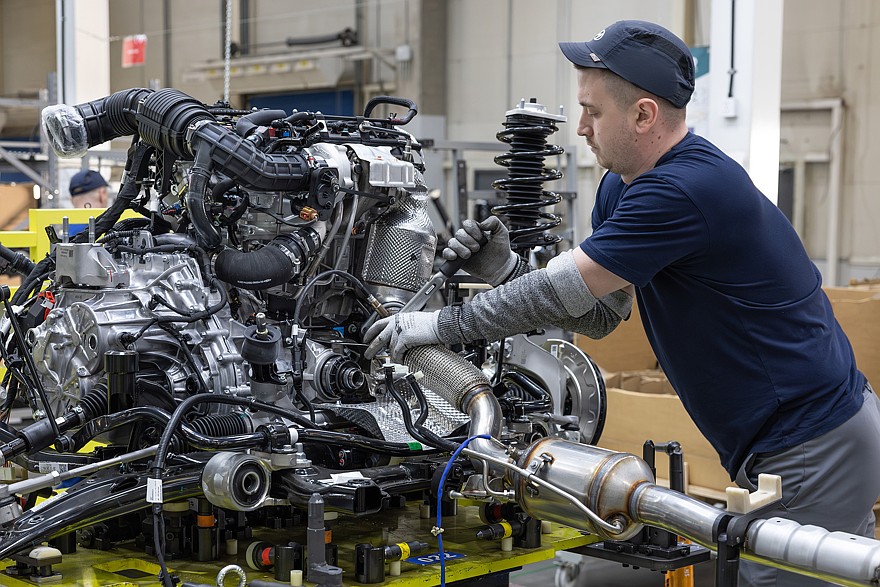
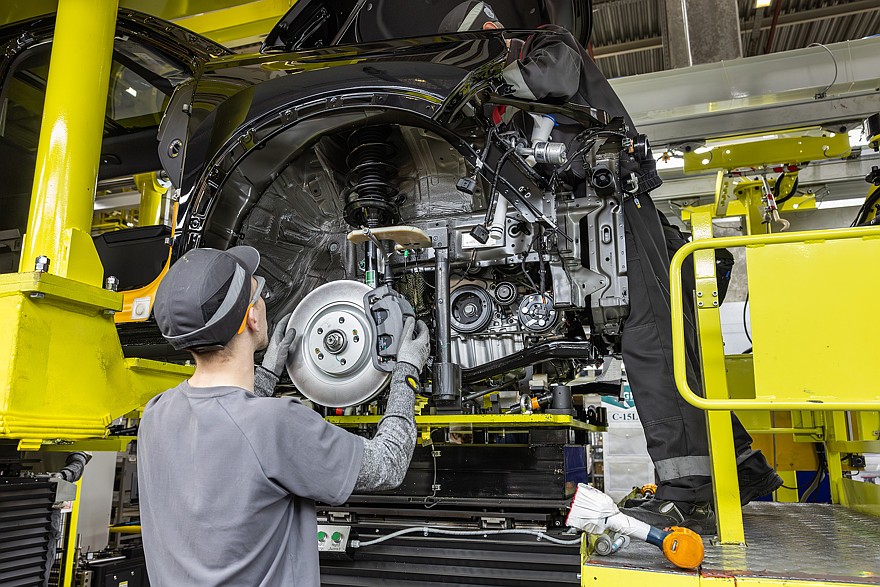
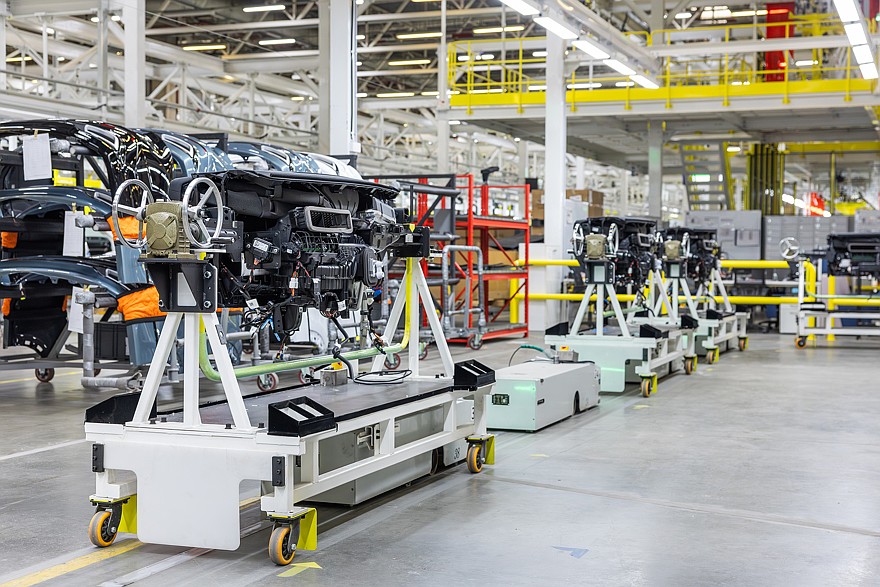
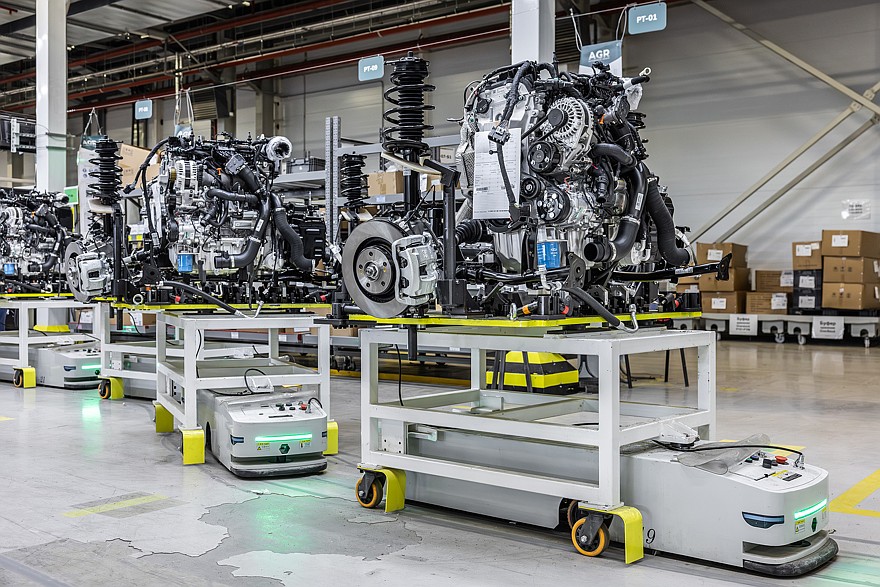
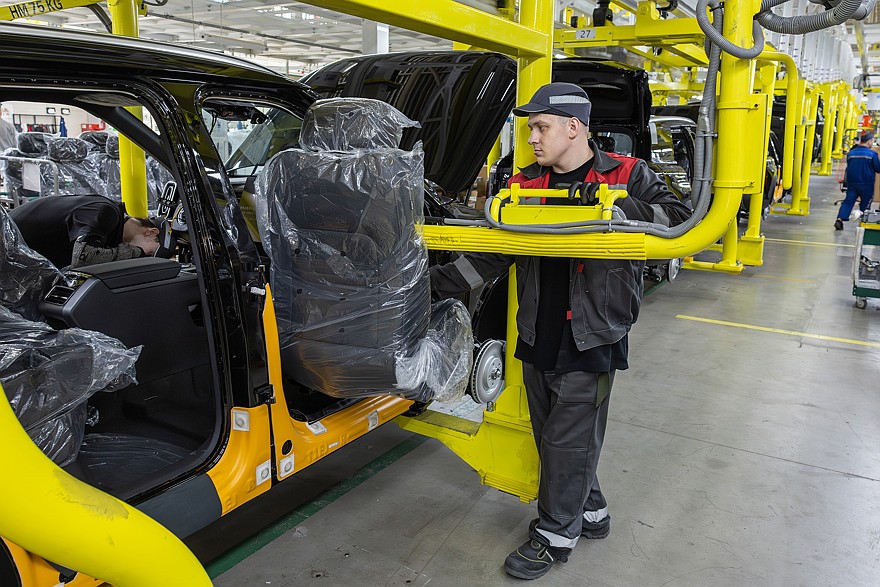
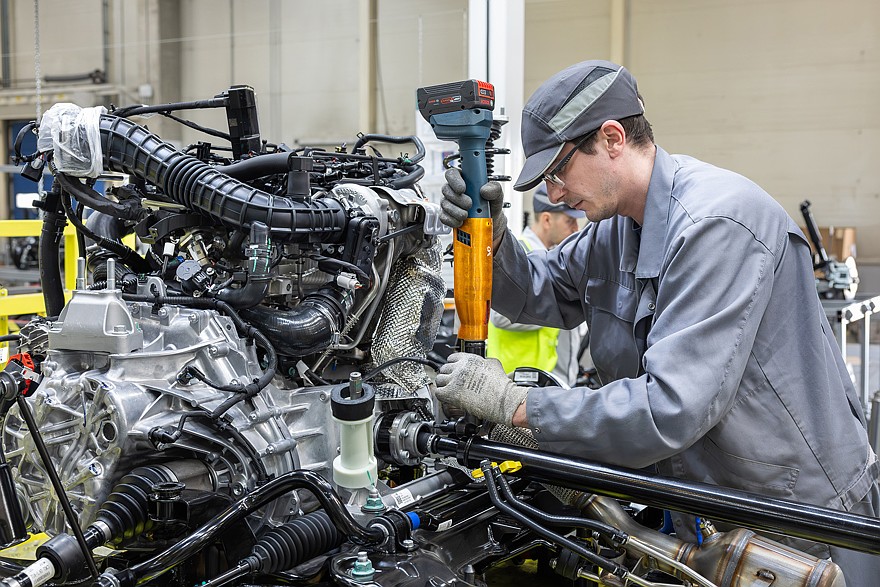
I should note that installing the engine and transmission into the body that arrives from the paint shop, assembling the interior, gluing in the windows, installing the fuel system, programming, and everything else – that’s far from all. In this shop, a great deal of time is devoted to quality control, which the vehicle moving along the assembly line undergoes after each assembly stage. Moreover, they check not only the tightening torque of threaded connections, but also all electronic components and systems, of which there are a huge number in a modern vehicle. In fact, at the output, every car undergoes full computer diagnostics, and after that it is also sent for a road test (of course, after being checked on a roller dynamometer). As they say here, the most important thing in this shop only begins after assembly: checks, tests, and diagnostics.
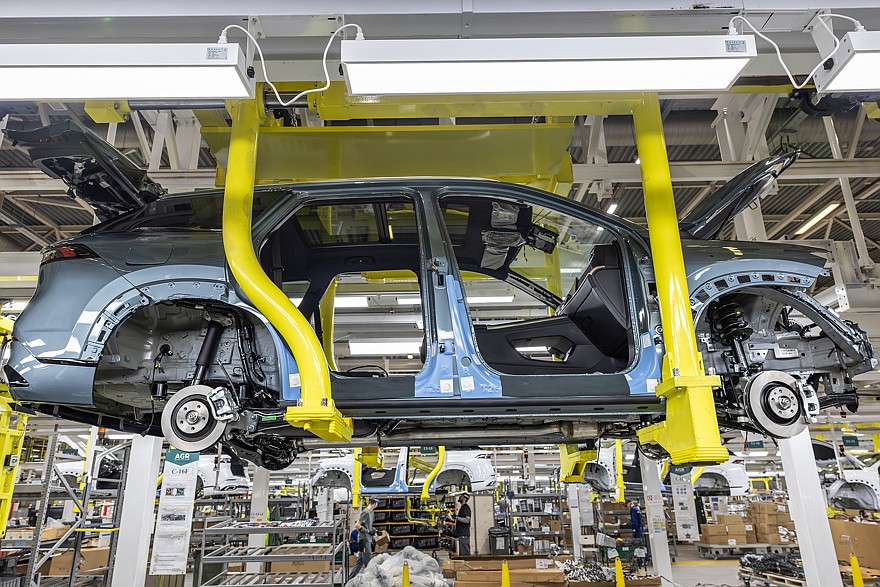
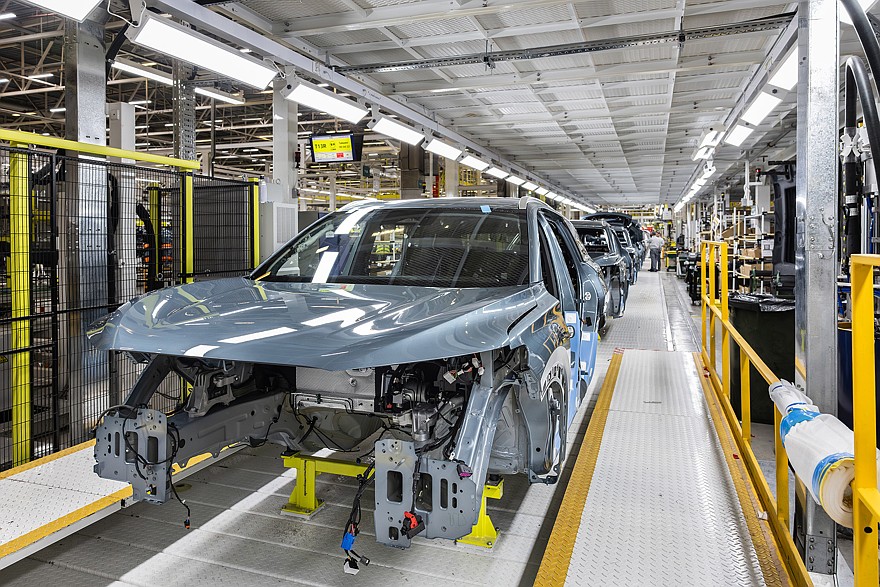
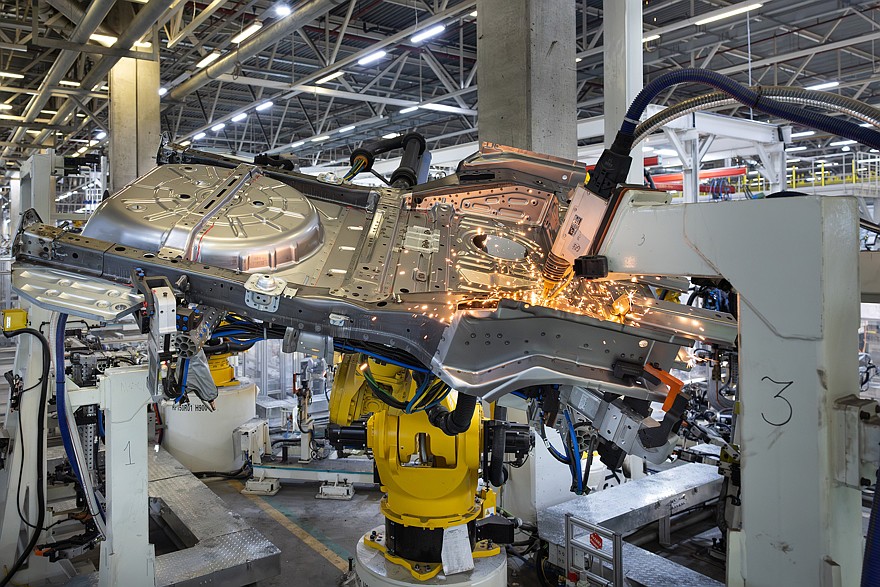
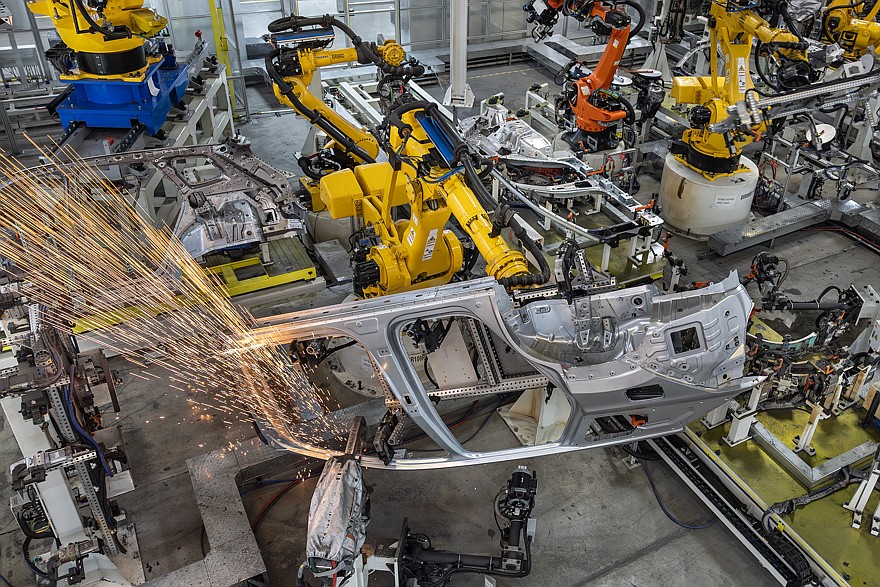
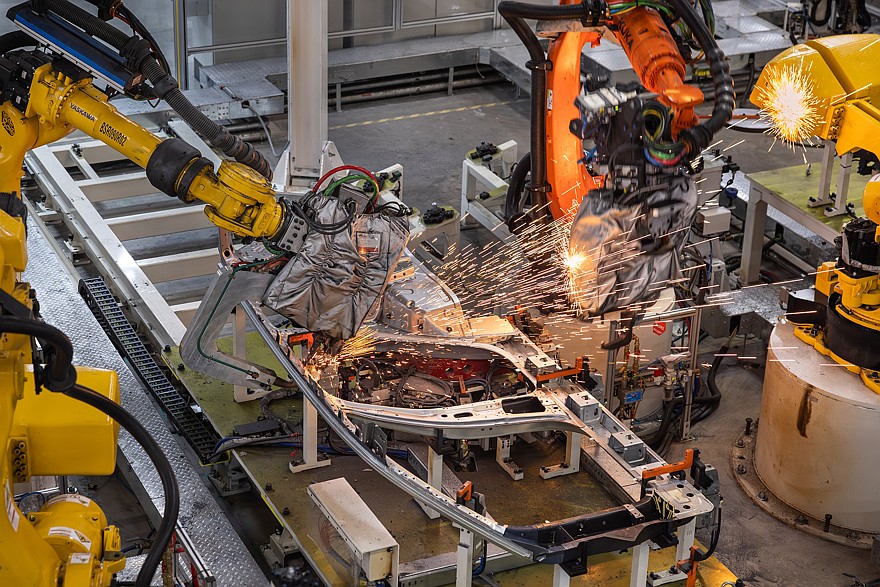
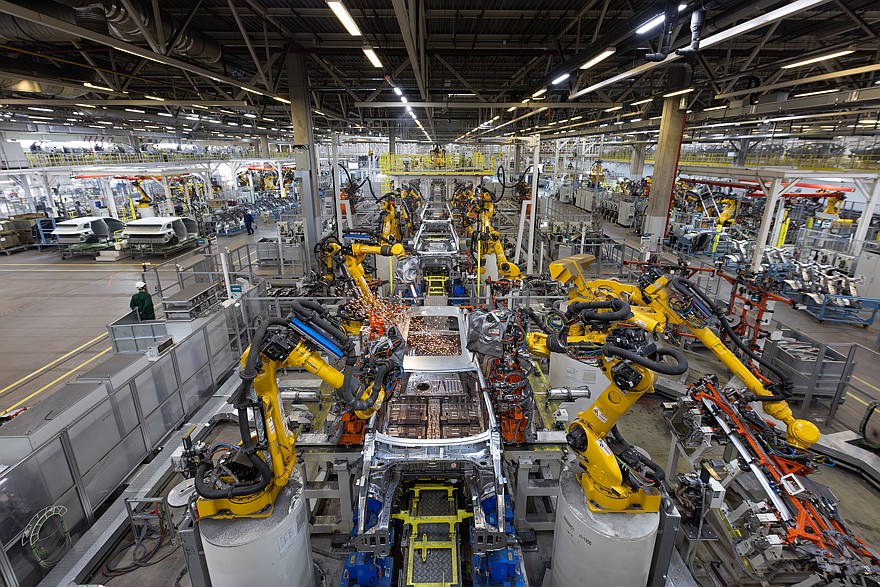
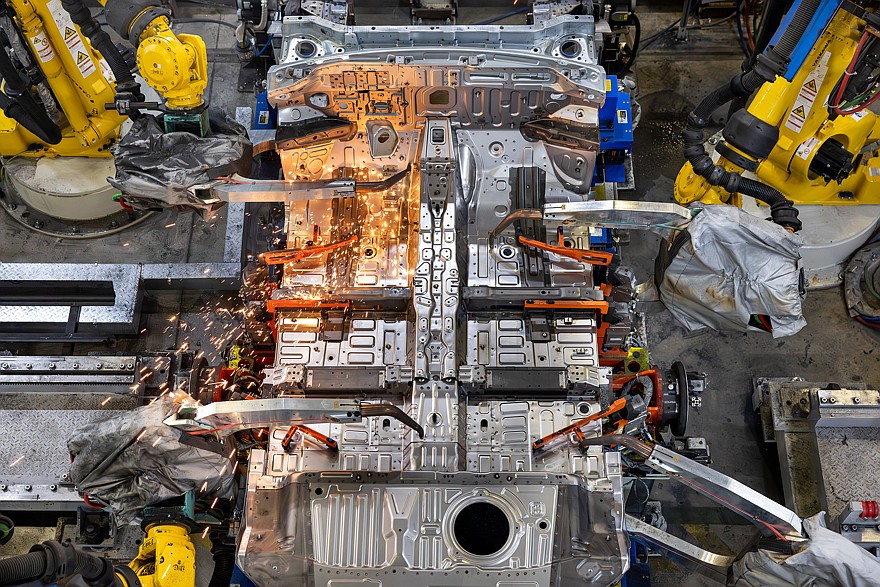
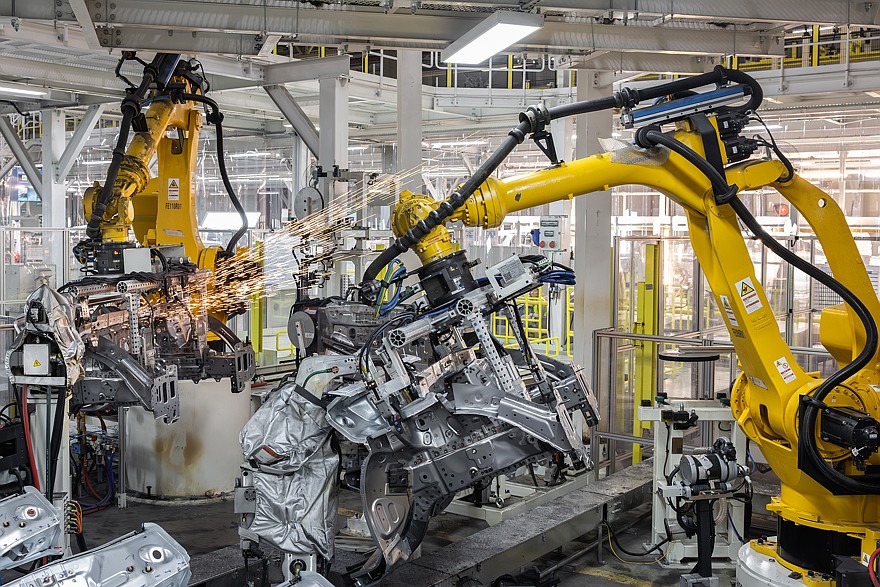
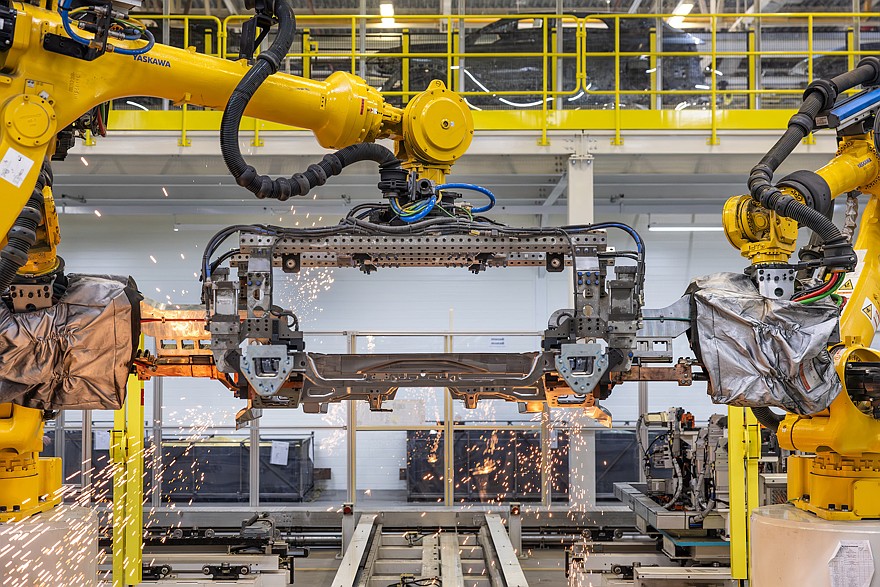
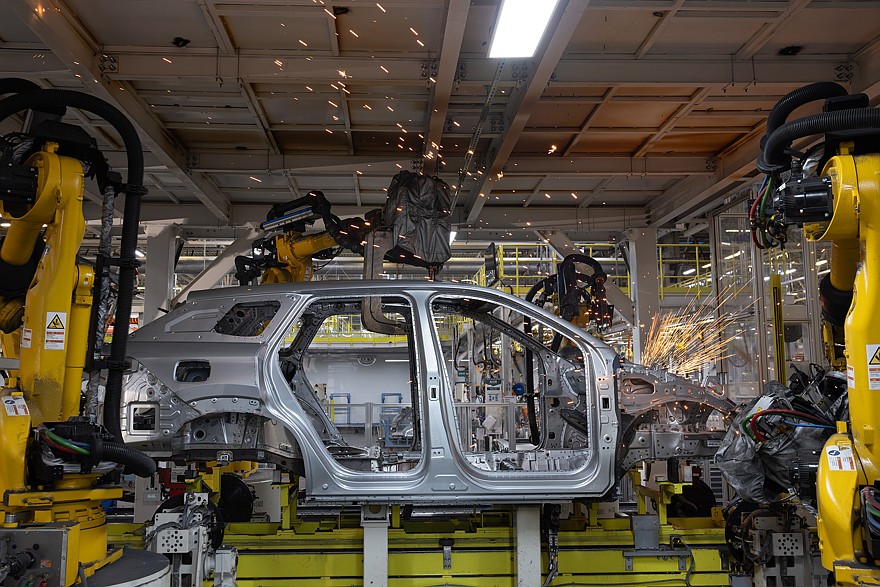
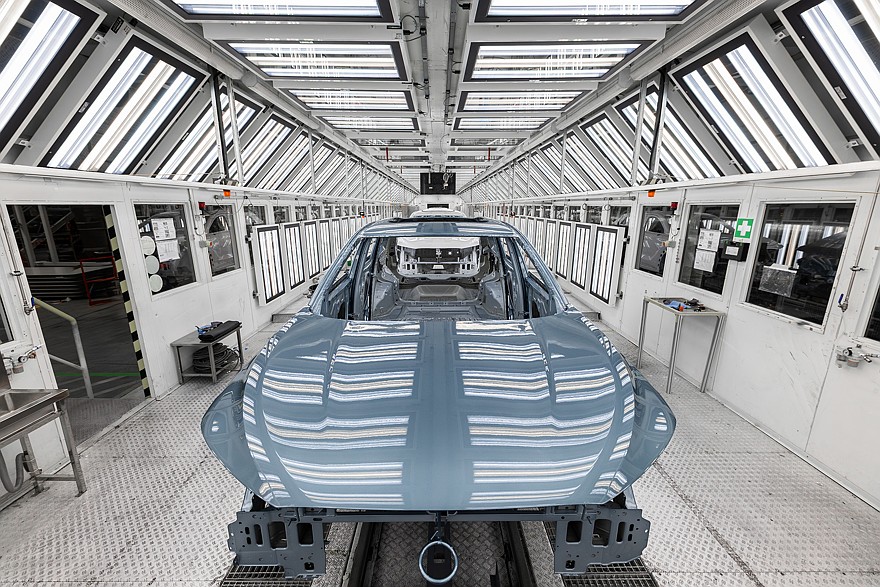
Now let’s look into the welding shop. There are practically no people here: almost all work is done by 122 robots. Errors due to the human factor are completely eliminated, which, however, does not cancel out inspections here either. And there is a lot to control. Despite the fact that both spot welding and seam welding in an inert gas environment are robotized, and the application of sealant to body elements is done by automated machines, a machine vision system is widely used in this shop. Its cameras check whether the sealant is being applied correctly, and the geometry of the finished body before painting is also checked on a coordinate measuring machine. To be honest, there is nothing unusual about this: it is a normal production organization adopted at any modern automobile plant. True, there is a key word here – “modern.”
It’s a pity that we weren’t allowed into the paint shop: there are elevated cleanliness requirements, so it’s hard to get in. But they showed us video of the process, so we’ll say a few words about how new cars are painted.
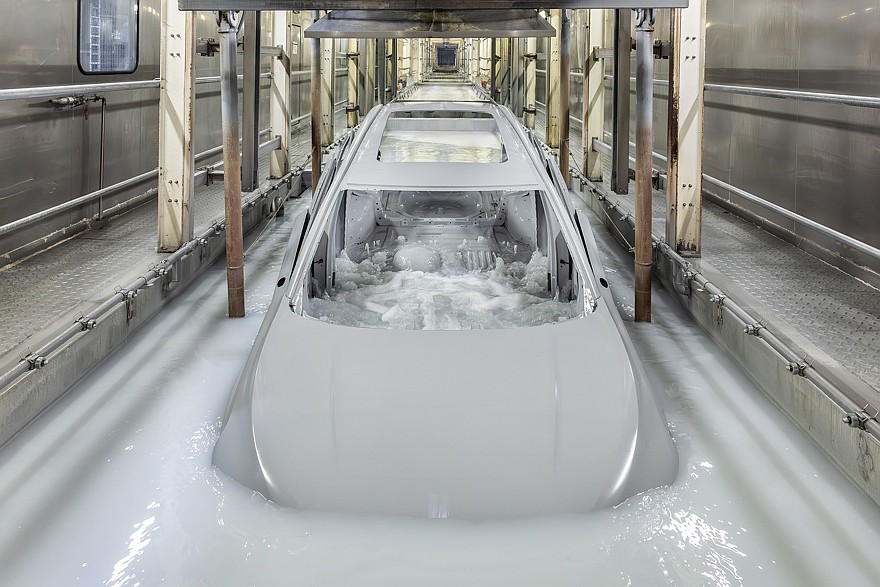
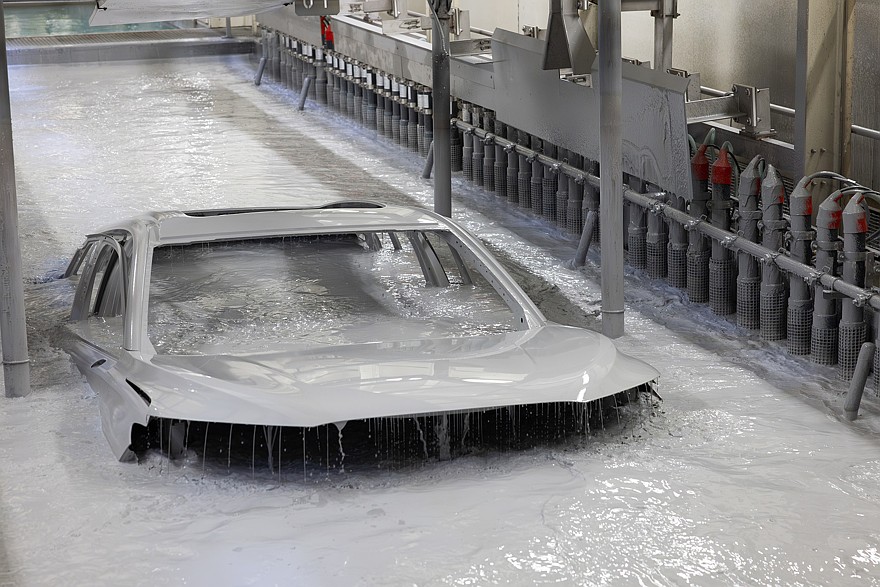
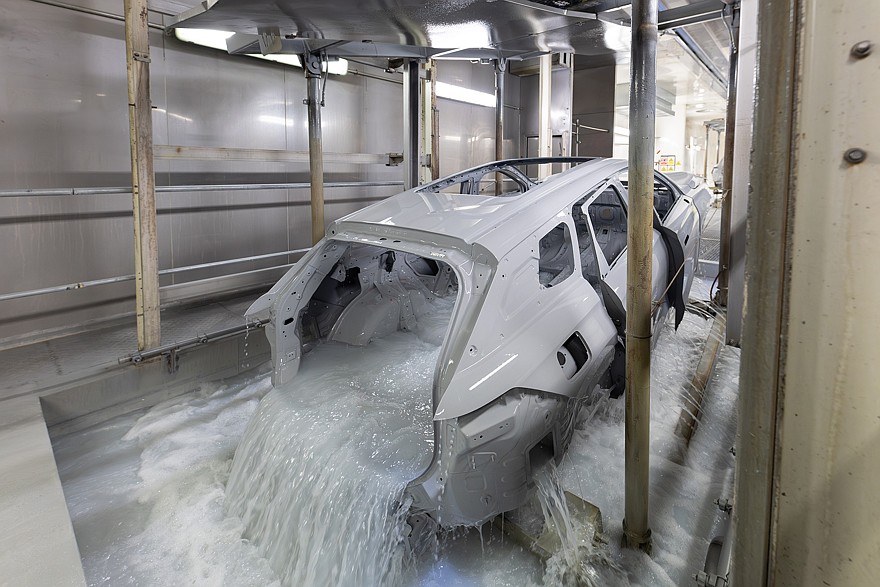
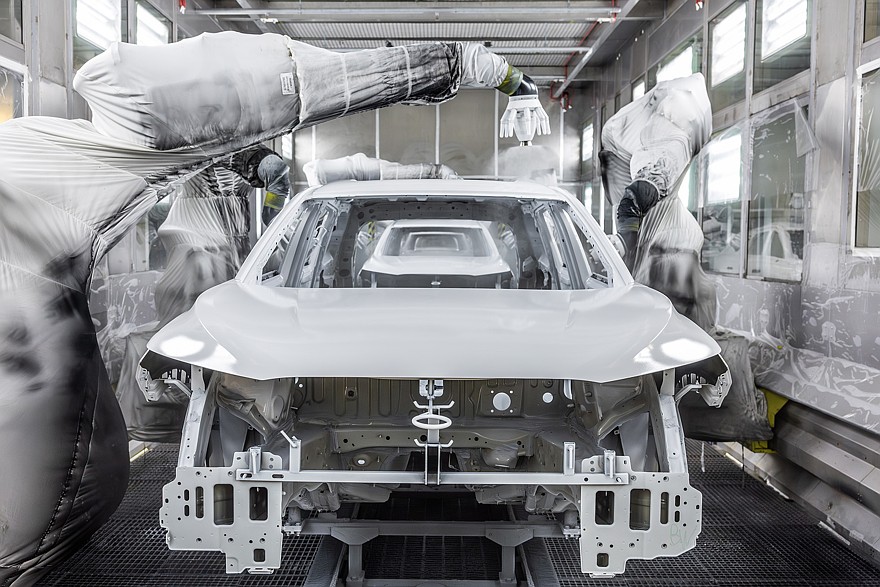
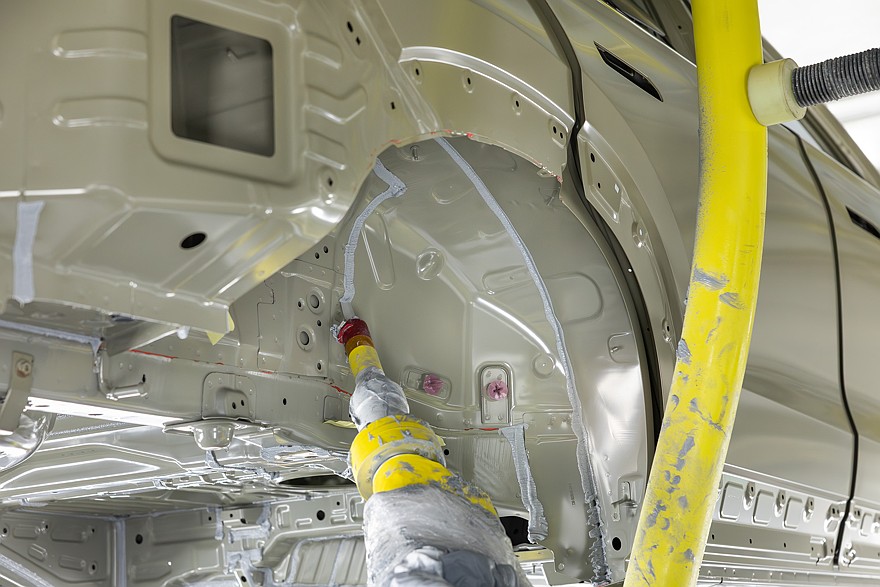
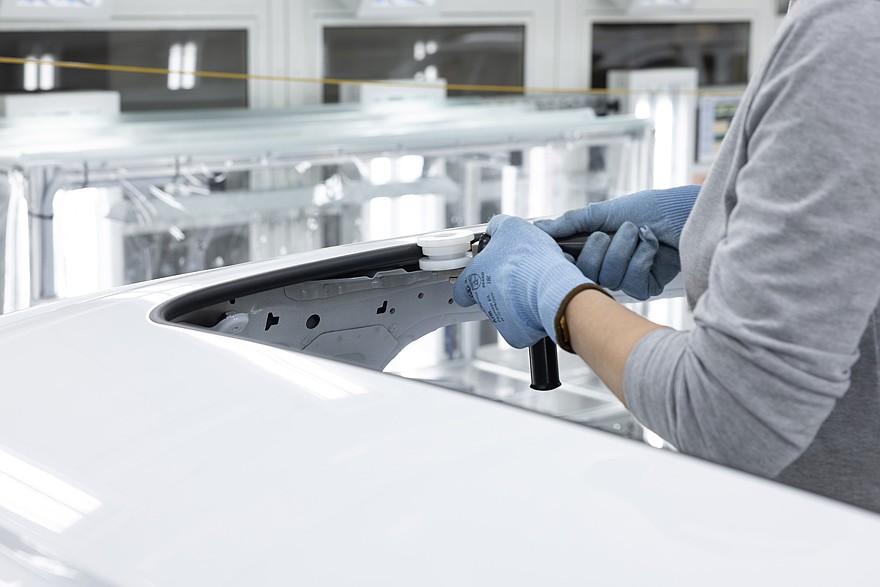
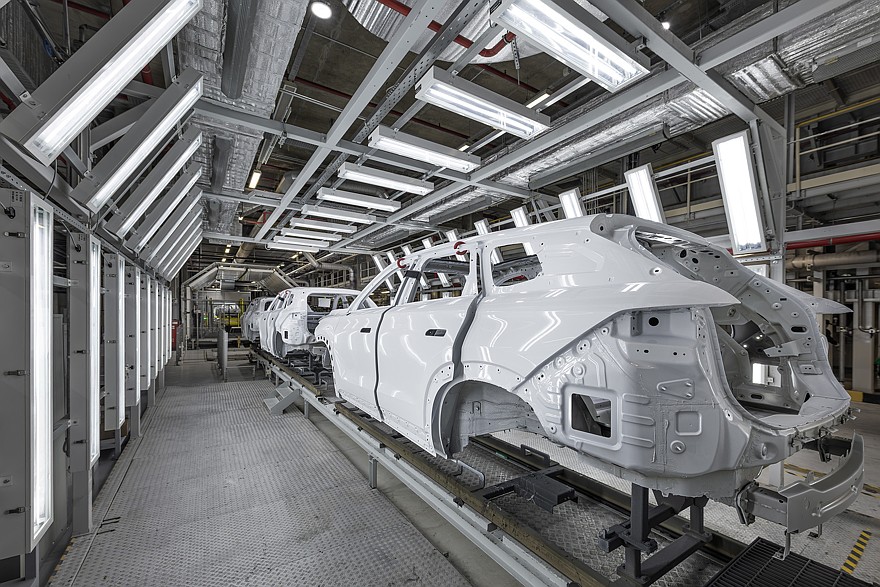
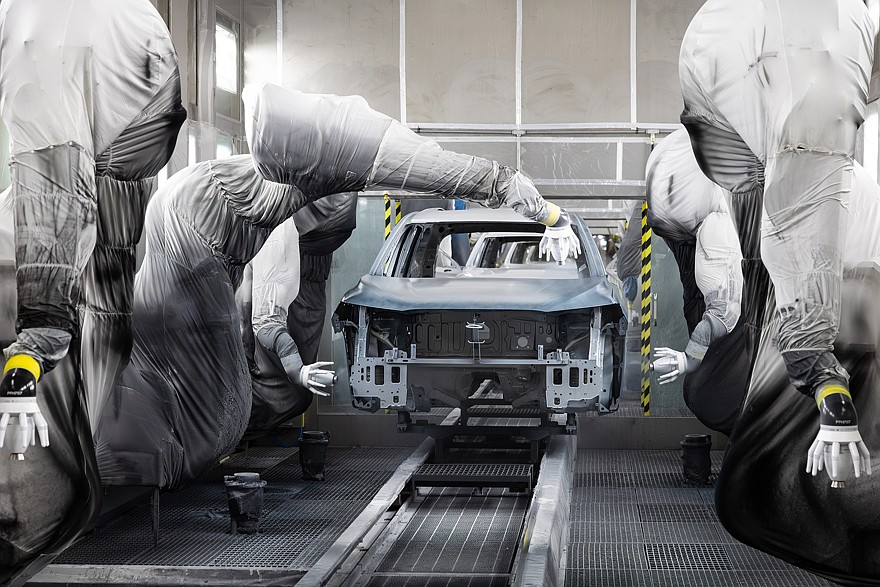
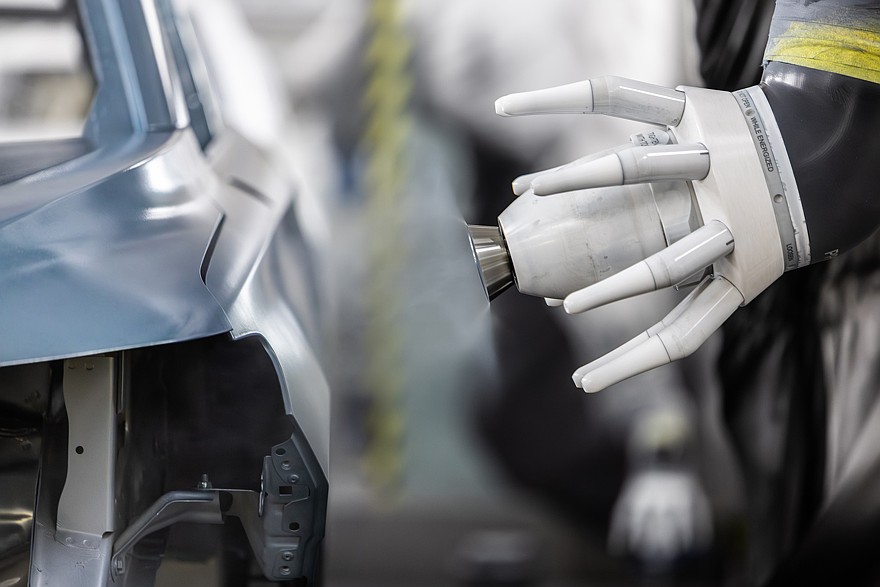
They are also painted by robots, of which there are 34 in the paint shop. However, before covering the body with paint and varnish, it must first be prepared. And since we live in Russia, a great deal of attention is paid to anti-corrosion treatment. After the welded body is washed and degreased, it is sent for a dip in cataphoresis baths. This is done with full immersion so that all hidden cavities are treated as thoroughly as possible. Then the body is dried (the cataphoresis coating must polymerize), checked to see if everything turned out correctly, and additional sealant is applied where required. Hidden cavities are also treated with wax. After that, the body is sent to the paint booth, where a base coat and a top coat are applied. An interesting detail: the shop uses a “wet-on-wet” technology, meaning no intermediate drying between applying these coats is required. This significantly reduces painting time.
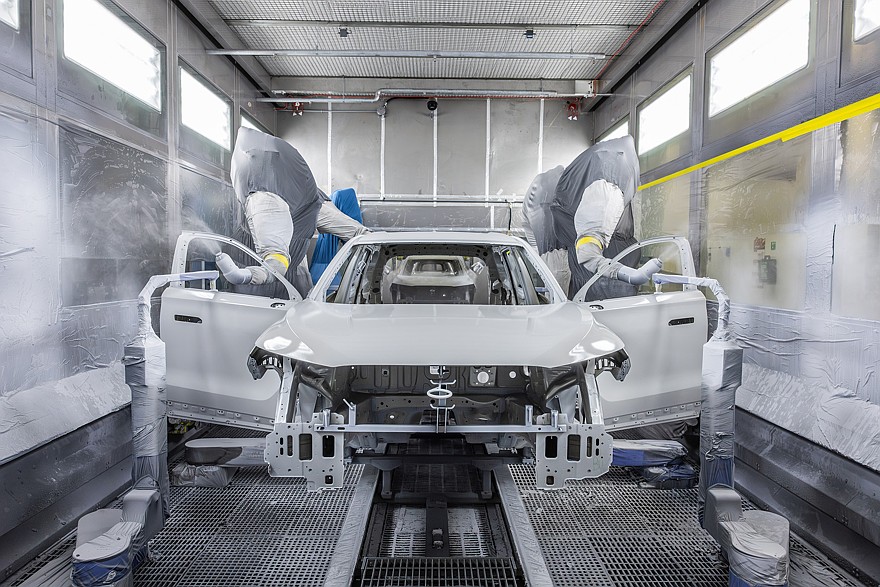
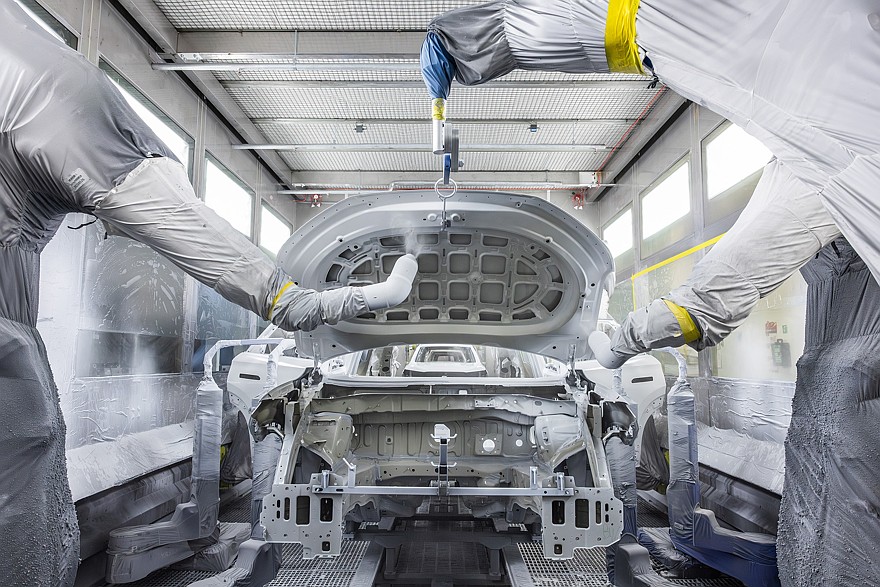
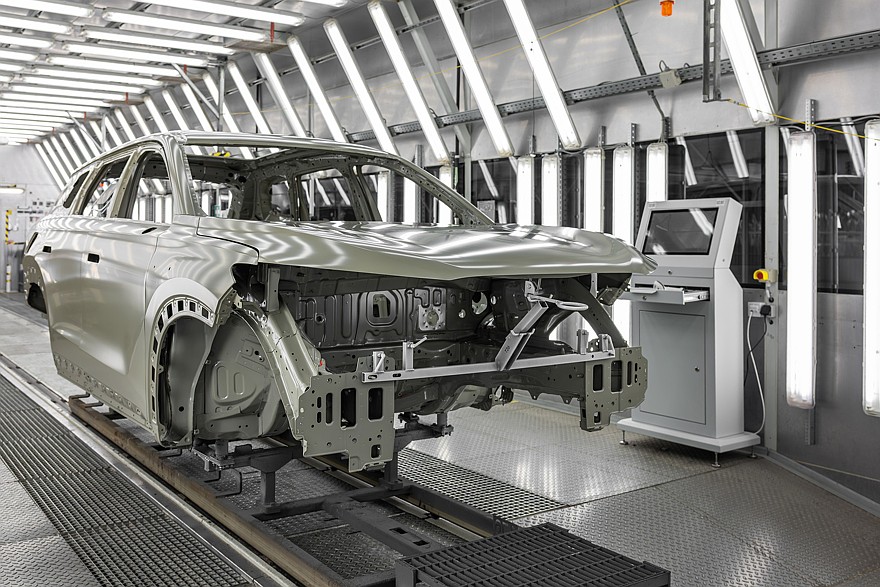
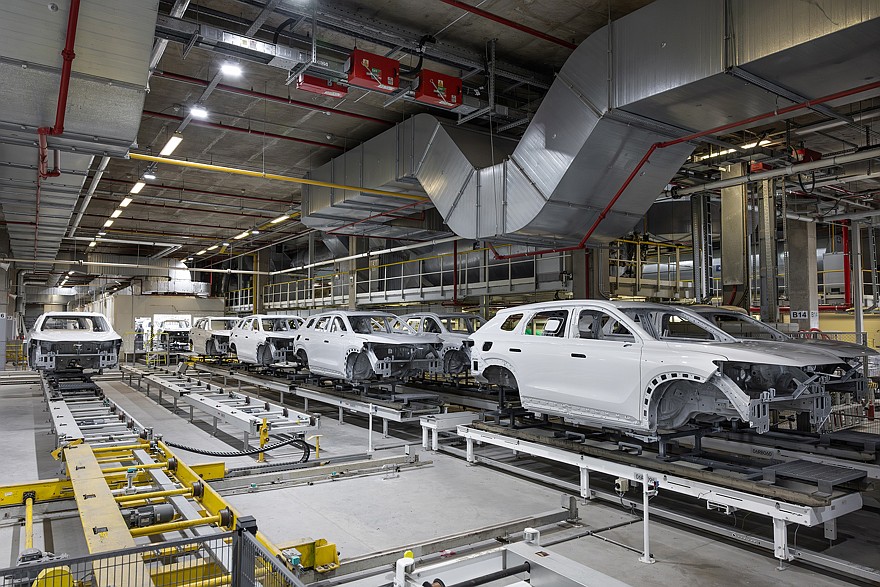
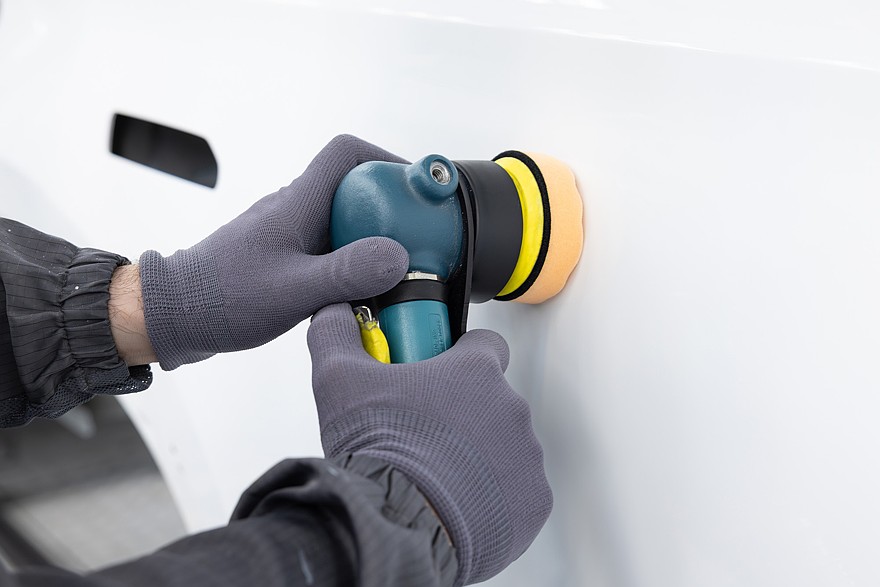
The fully painted body is then dried, polished, and the paint film thickness, its adhesion, gloss, roughness, and color rendering are carefully examined. Naturally, during painting, the chemical compositions and paint materials used are constantly monitored, and no deviations in their parameters are permissible. And after all that, only the final stage remains: sending the body to assembly, which we have already seen.
What, where, when?
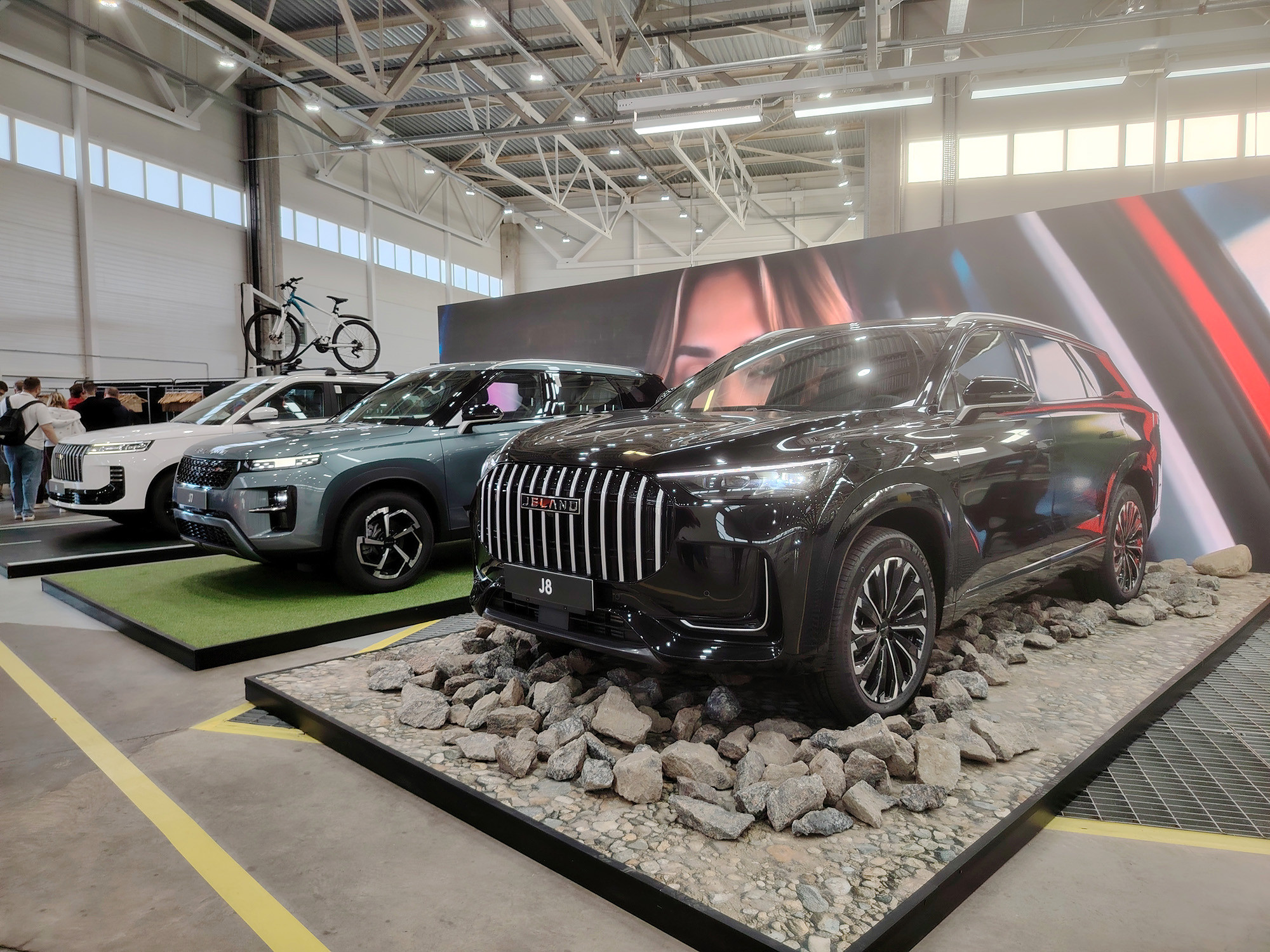
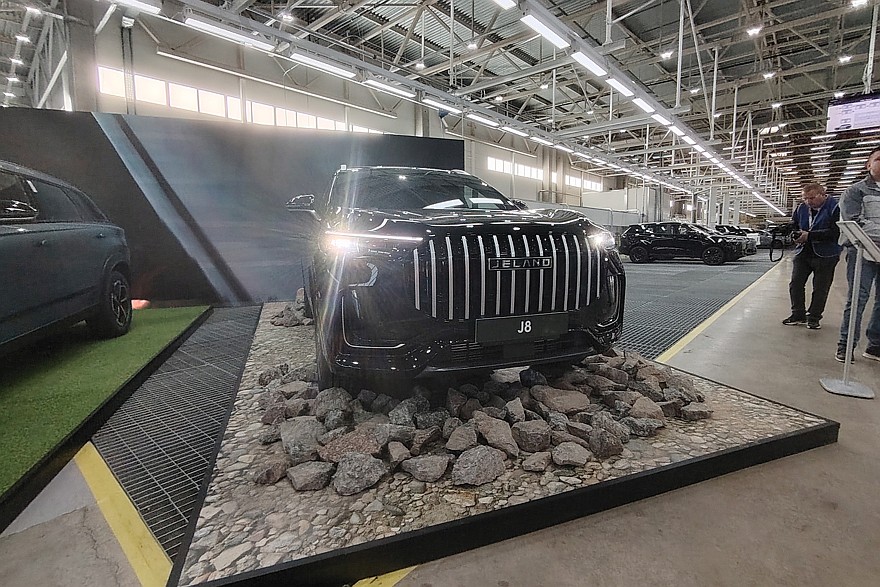
As we said at the very beginning, this plant is already producing the Jeland J6 crossover at full capacity, which has already gone on sale. Just the other day, the holding company’s press service also announced the start of production of the mid-size model Jeland J7. Among the upcoming new products, all we have left to wait for is the start of production of the flagship crossover Jeland J8, but things won’t be limited to three models. As we were told at the Shushary site, crossovers of a new lineup will be produced here in the future, but for now we won’t reveal all our cards: when the time comes, we’ll tell you about them in detail.
And let’s not forget that, despite the organized full-cycle production, work on localizing the vehicles does not stop. Already now, domestic GLONASS and telematics systems, body electronics control units, fuel tanks, batteries, and exhaust systems are used in them. In the future, depending on the model, our own electronic stability control systems, a locally assembled 1.6-liter engine (with a domestically produced cylinder block and cylinder head), as well as a steering wheel with airbag, side airbags, seat belts, and some other elements will appear. One would assume that this manufacturer is here to stay for a long time. Well, let it stay: any production is always a good thing, and the Shushary site definitely has prospects.