















































Declassified Volkswagen ID. Cross: technology and interior from ID. Polo, but its own exterior design
The starting price of the German brand’s new fully electric crossover is already known: in Europe, it is 27,995 euros, which is equivalent to approximately 2.5 million rubles at the current exchange rate.
The Volkswagen ID. Cross concept debuted in early autumn 2025, a camouflaged prototype appeared in March, and now the German manufacturer has fully unveiled the production SUV of the same name. As a reminder, the new model is intended to serve as an alternative to the “hydrocarbon” VW T-Cross. The closest relative of the ID. Cross is the ID. Polo hatchback, which premiered at the end of April 2026.
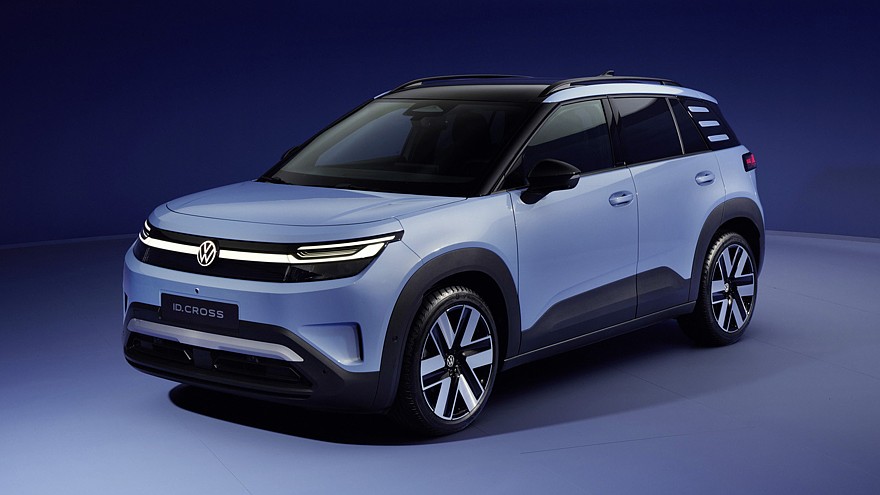
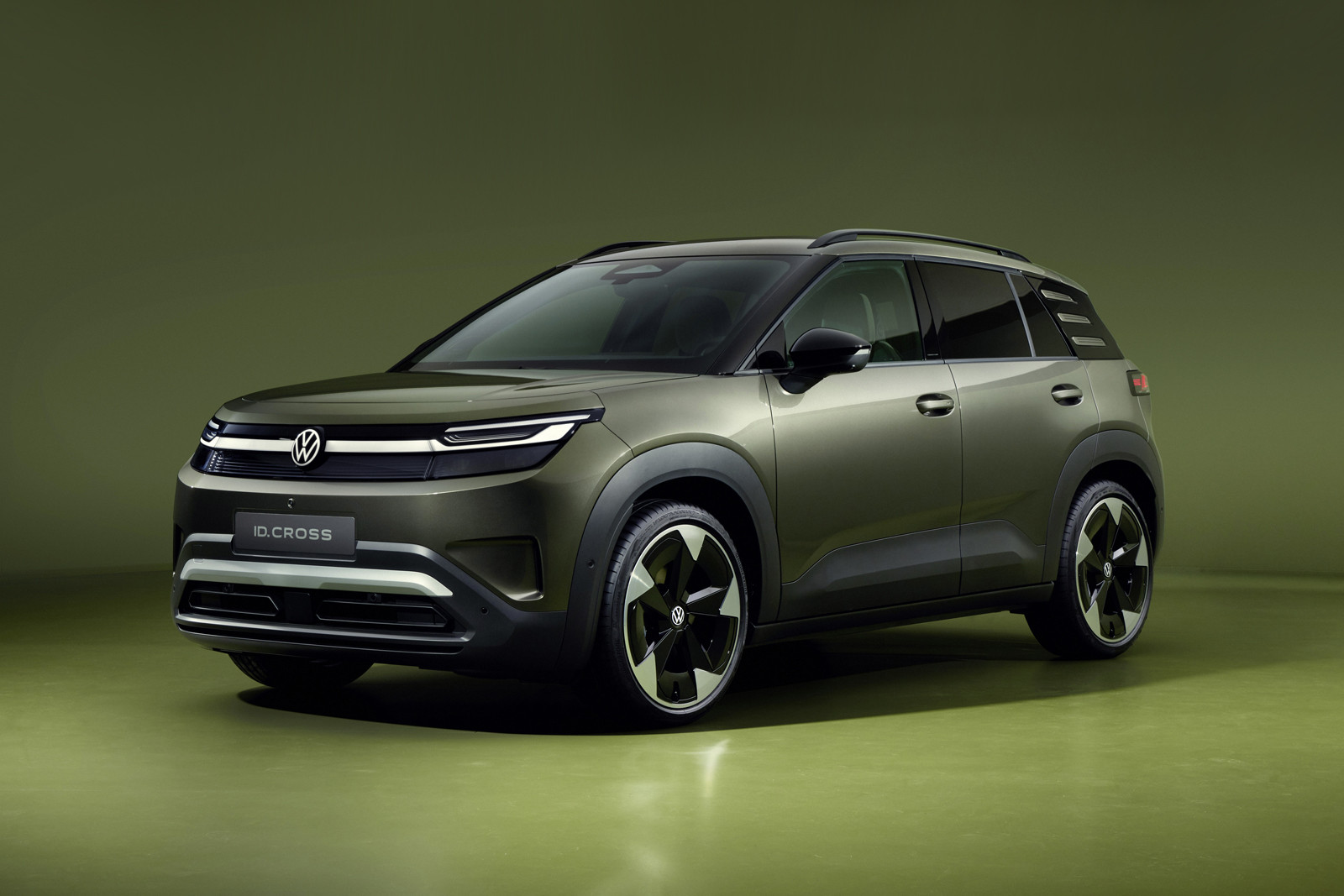
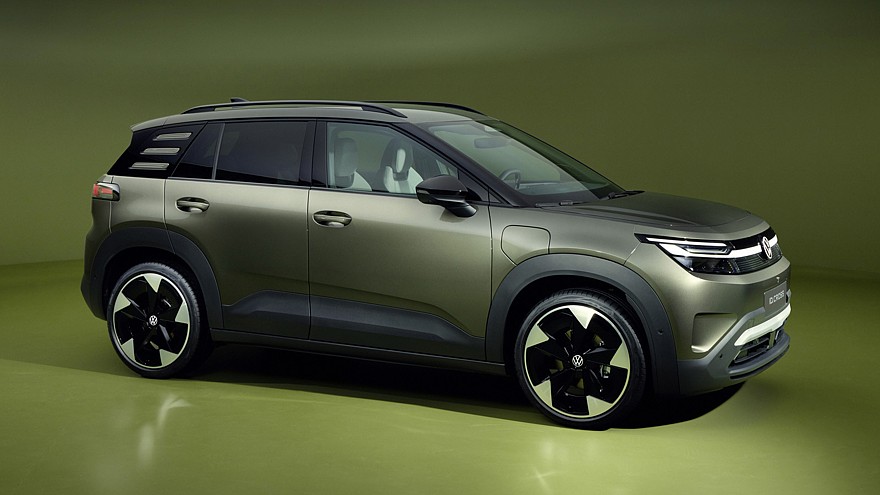
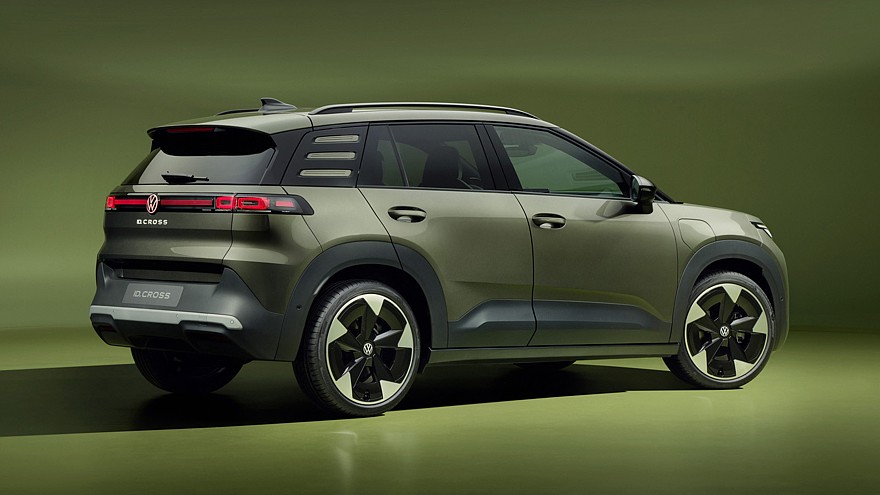
The Volkswagen ID. Cross crossover has its own distinctive exterior, which is nevertheless styled in the brand’s current corporate design. The model features a traditional five-door body, conventional door handles and exterior mirrors, full roof rails, and a decorative element consisting of three large body-colored strokes on the black rear roof pillars.
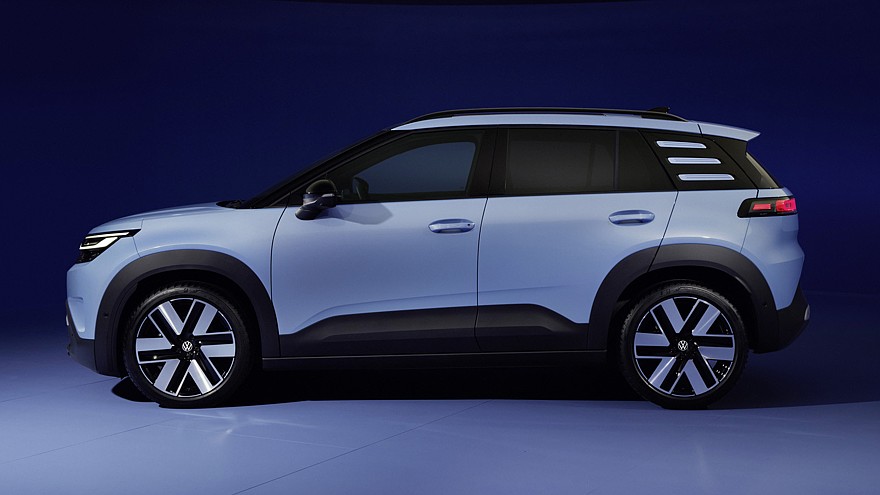
The crossover is equipped with LED headlights that are visually integrated with the blanking plate in place of the radiator grille, with the headlights connected by a wide illuminated strip, in the center of which is a backlit brand logo. The ID. Cross also features plastic body cladding around the perimeter, including wide rounded wheel arch trims, as well as silver inserts on the lower parts of the front and rear bumpers. The rear is adorned with a minimalist spoiler and a “mono-light bar,” similar to the “green” Polo.
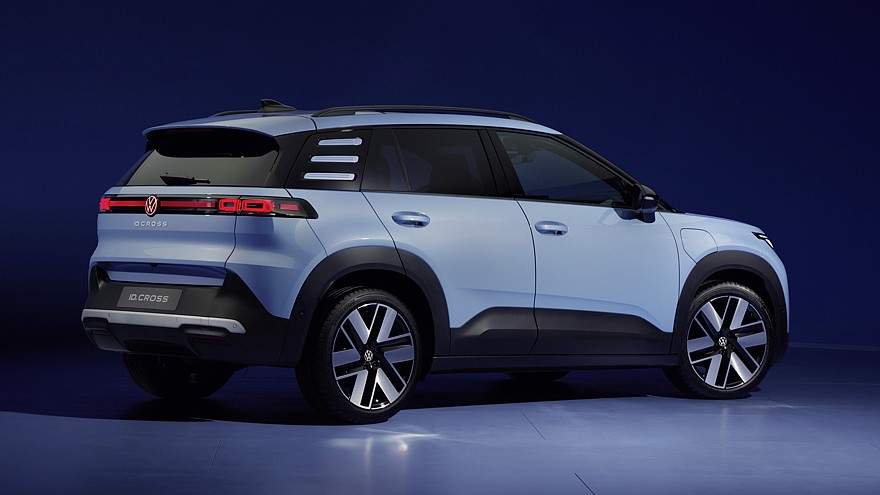
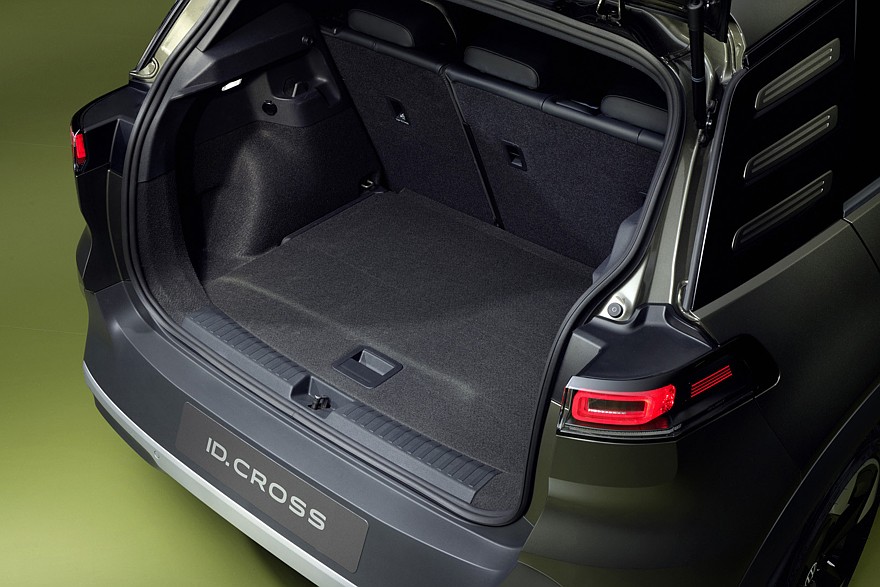
The overall length of the Volkswagen ID. Cross is 4153 mm (18 mm longer than the current VW T-Cross), width is 1794 mm (12 mm wider), height is 1581 mm (5 mm lower), and the wheelbase is 2601 mm (50 mm longer). The new crossover has a trunk volume of 475 liters, which expands to 1345 liters with the second row of seats folded down. There is also an additional 22-liter storage compartment under the hood. Ground clearance is 140 mm.
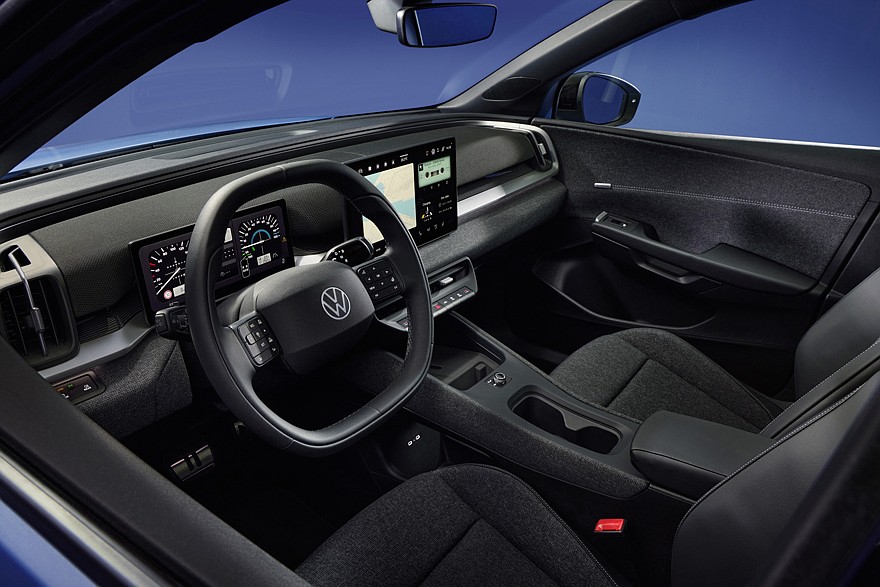
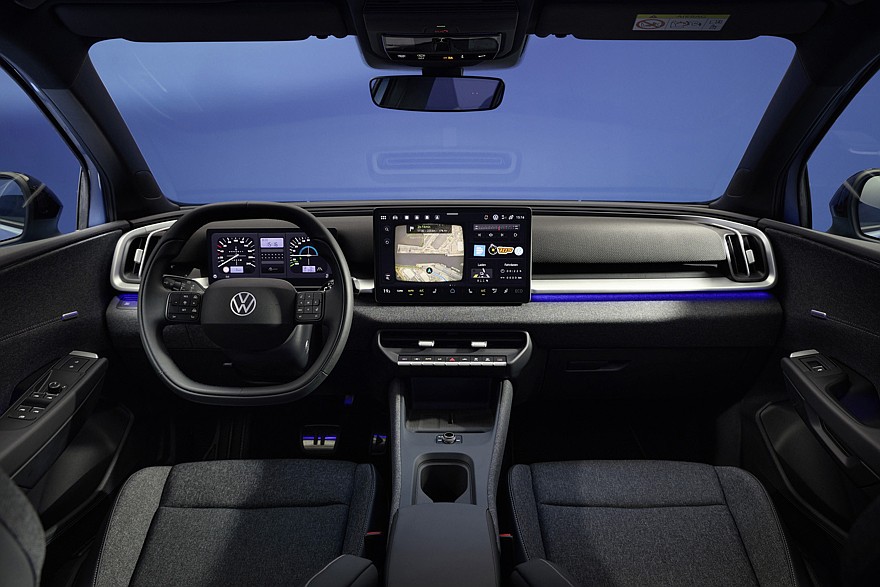
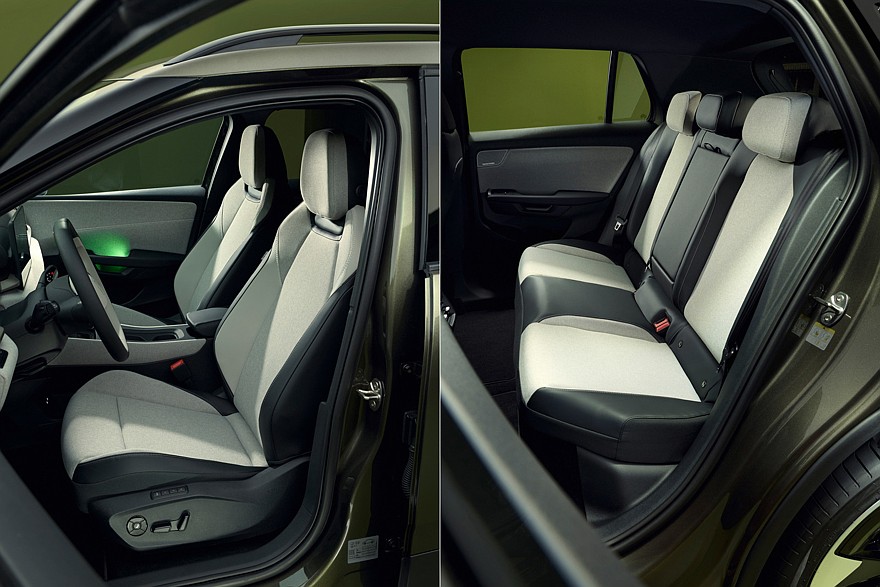
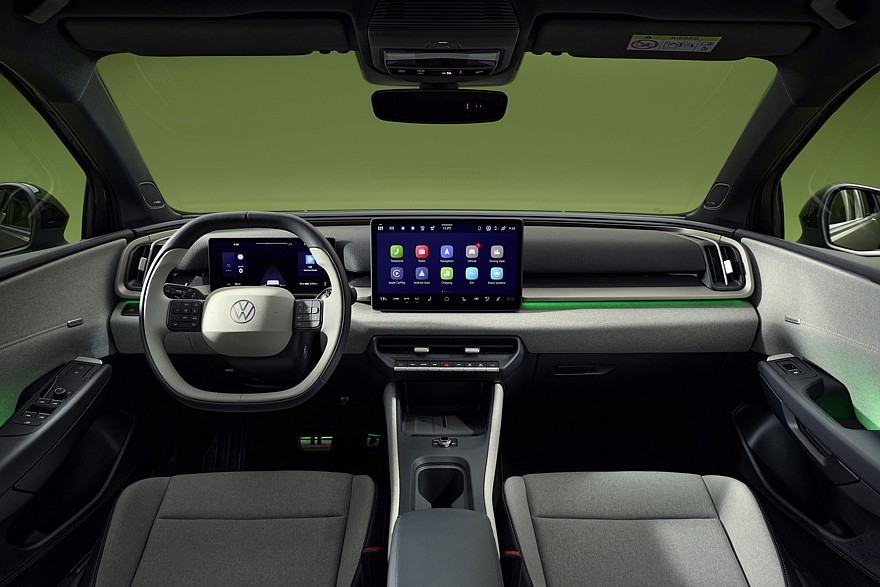
The interior, designed for five occupants, is upholstered in fabric and styled similarly to its closest relative. The model features a two-spoke steering wheel with a flattened rim on both sides and physical buttons, which are also provided for the climate control unit. The ID. Cross has a two-tier center tunnel with a wireless smartphone charging pad.
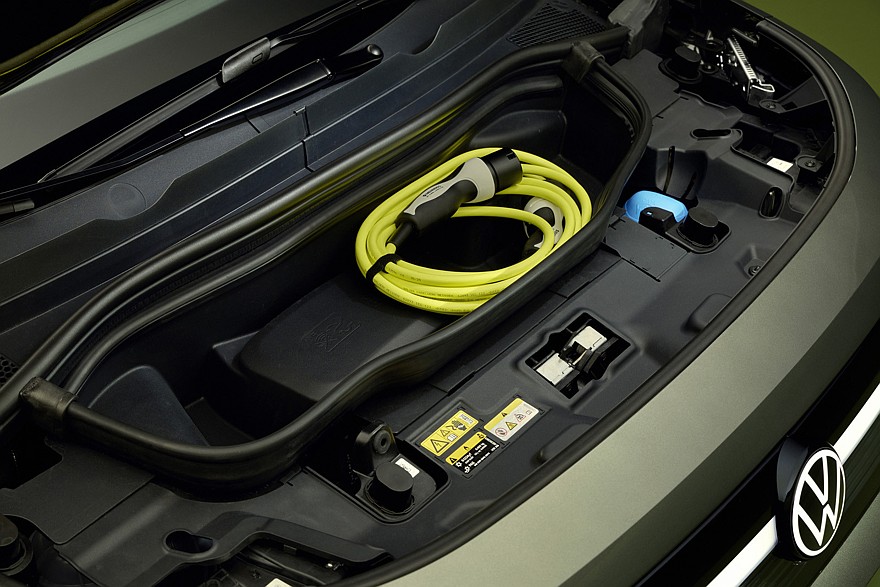
A pair of relatively small displays are installed on the illuminated dashboard. One serves as a virtual instrument cluster, with a diagonal of 10.25 inches. In the center is a touchscreen for the infotainment system (12.9 inches). On the center tunnel, there is a rotary knob for adjusting volume, selecting radio stations, or music tracks.
The Volkswagen ID. Cross shares the MEB+ modular platform and technology with the ID. Polo. The capacity of the “entry-level” lithium iron phosphate traction battery is 37 kWh. With this battery, the base Trend version has a range of 317 km per charge (WLTP cycle), while the Life / Style versions achieve 306 km; charging from 10% to 80% at fast-charging stations takes approximately 23 minutes. The “higher-tier” nickel-manganese-cobalt battery has a capacity of 52 kWh, a range of 427 km, and requires about 24 minutes for a similar “top-up.”
The Volkswagen ID. Cross is front-wheel drive only, meaning it has a single electric motor mounted on the front axle. The entry-level variant is equipped with a 116-hp electric motor, the mid-range with a 135-hp motor, and the top-tier crossover features a 211-hp electric motor. In the first case, the crossover accelerates from 0 to 100 km/h in 11 seconds, in the second in 9.8 seconds, and in the third in 7.1 seconds. The top speed for the first two versions is limited to 150 km/h, while for the top version it is 160 km/h.
Today, July 15, dealers in Germany have begun accepting pre-orders for the new model. The starting price of the Volkswagen ID. Cross is already known: in Europe, it costs at least 27,995 euros, which is equivalent to approximately 2.49 million rubles at the current exchange rate. In the Old World market, the newcomer will have to compete for customers with the Kia EV2 (starting price of 26,600 euros, or about 2.37 million rubles) and the Renault 4 (starting price of 26,370 euros, or about 2.35 million rubles).