






Tesla sued over fatal Texas crash
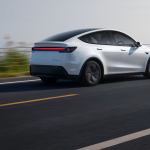
Around 8 p.m. local time on June 19, a Tesla Model 3 crashed into a home in Katy, Texas, causing 76-year-old Martha Avila, who was inside, to be immediately buried under the rubble. She was later airlifted to a hospital but died despite rescue efforts. Her daughter, Jennifer Barbour, and son-in-law, Justin Barbour, filed a wrongful death lawsuit on Monday in Harris County District Court, naming Tesla Inc. and the 44-year-old driver, Michael Butler, as defendants.
According to the lawsuit, Butler was driving the Model 3 eastbound on Rose Hollow Lane when the vehicle failed to recognize the end of the road and the house ahead, crashing directly through the front wall. At the time, Avila was standing in the living room, and Justin was also inside, sustaining injuries to his neck, back, and shoulder as a result of the crash. The family stated that the home is now uninhabitable, and they are temporarily staying at a hotel.
The plaintiffs allege that Tesla had product design defects and failed to provide adequate risk warnings, while also accusing Butler of negligence and gross negligence. The lawsuit claims that the vehicle involved failed to effectively monitor the driver’s attention and did not adequately inform users of the limitations of the “Autopilot” and “Full Self-Driving” (FSD) systems, and also mentions the possibility of “sudden unintended acceleration.” The plaintiffs cited a 2023 analysis by The Washington Post, which stated that the Autopilot system has been linked to at least 17 fatal accidents, constituting a “known history of danger.”
The lawsuit seeks damages exceeding $1 million, along with additional punitive damages, and demands that Tesla preserve the vehicle involved, the event data recorder, “Autopilot” and FSD logs, telemetry data, firmware versions, and camera and sensor data.
Tesla has publicly responded. The company’s head of artificial intelligence, Ashok Elluswamy, stated that vehicle data shows Butler “manually fully pressed the accelerator pedal to 100%” within the residential area, reaching a speed of 73 miles per hour (approximately 117 kilometers per hour), and the pedal remained fully depressed after the impact. CEO Elon Musk added, “FSD drives slowly on neighborhood streets, but this was a high-speed collision.”
A preliminary investigation by the Harris County Sheriff’s Office found no mechanical issues with the vehicle, and Butler showed no signs of intoxication and cooperated with the investigation. The conclusion points to “pedal misapplication”—mistaking the accelerator for the brake. However, Tesla’s practice of citing “driver pressing the accelerator” as a defense has faced legal challenges in similar cases.
In August 2025, a federal jury in Miami, Florida, ruled that Tesla bore 33% of the responsibility in a 2019 crash in Key Largo. In that case, driver George McGee, while using Autopilot, ran a T-junction at approximately 62 miles per hour while reaching for a dropped phone, causing a collision that killed 22-year-old Naibel Benavides Leon and injured Dillon Angulo. Although McGee was found 67% primarily responsible, the jury still determined that Tesla’s marketing and its weak driver monitoring system based on steering wheel torque contributed to users’ misconceptions about the system’s capabilities. The verdict was upheld by a federal judge in February, and Tesla was ordered to pay approximately $243 million in damages.
The plaintiff’s attorney in this case, Chris Adkins, is from the Houston-based law firm Zehl & Associates. The National Highway Traffic Safety Administration (NHTSA) has launched a special crash investigation into this incident and will independently extract information from the event data recorder. In the previous Florida case, Tesla claimed that relevant data did not exist until independent researchers recovered it.
Currently, the factual details of this case remain disputed. The plaintiffs’ claim of “sudden unintended acceleration” contradicts the police’s preliminary conclusion ruling out mechanical failure, and the pedal data provided by Tesla is not easily refuted. However, judicial trends suggest that even if the driver clearly misused the system, courts may still find Tesla partially liable. The final cause of the crash awaits disclosure of independent data from NHTSA.