





































Nissan shareholders begin to miss Ghosn
Recently, Nissan Motor held its annual general meeting, where a highly controversial shareholder proposal emerged: an investor suggested reappointing Carlos Ghosn as the company’s CEO. This proposal was part of a series of demands calling for the removal of the current CEO, Ivan Espinosa.
Automotive News, citing remarks from attending shareholders, reported that this supporter did not shy away from Ghosn’s past legal troubles, stating outright that despite the criminal charges against Ghosn, “Nissan needs someone like Ghosn. He has his bad side, but he also has his good side. I hope to have such a leader.”
At its core, this proposal represents a concentrated emotional宣泄 from the market regarding Nissan’s nearly eight-year operational decline. Since Ghosn left Nissan in 2018, the Japanese automaker has been unable to escape the quagmire of performance volatility. Its stock price has continued to weaken, the pace of transformation has been sluggish, and pressure to return to profitability has mounted layer by layer. The burden of reform on the shoulders of current CEO Espinosa is heavy.
Some shareholders pin their hopes on the former “firefighting chief” making a comeback to turn the situation around. However, setting aside emotional nostalgia, the legal reality that Ghosn is an internationally wanted fugitive fundamentally renders this call for his return impossible to materialize.
Shareholders Collectively Miss Ghosn
The idea of recalling Ghosn arose among shareholders because the operational achievements during the Ghosn era stand in stark contrast to Nissan’s recent continuous decline, fostering a sense of nostalgia born from this disparity.
Known as the “Cost Killer,” Ghosn took over Nissan in 1999 when it was mired in seven consecutive years of losses and burdened with high debt. Through aggressive reforms including workforce reductions, closing inefficient factories, and optimizing the supplier system, he turned Nissan profitable within just one year and paid off over two trillion yen in massive debt within a few years, saving the automaker from the brink of bankruptcy.
On the management front, Ghosn single-handedly built the Renault-Nissan-Mitsubishi global automotive alliance, integrating R&D, procurement, and manufacturing resources across the three companies. At its peak, the alliance’s annual sales ranked second globally, and its vast synergies provided Nissan with a stable profit base. His assertive, decisive, and highly execution-oriented management style also became a benchmark model for many long-standing shareholders seeking to turn the company around.
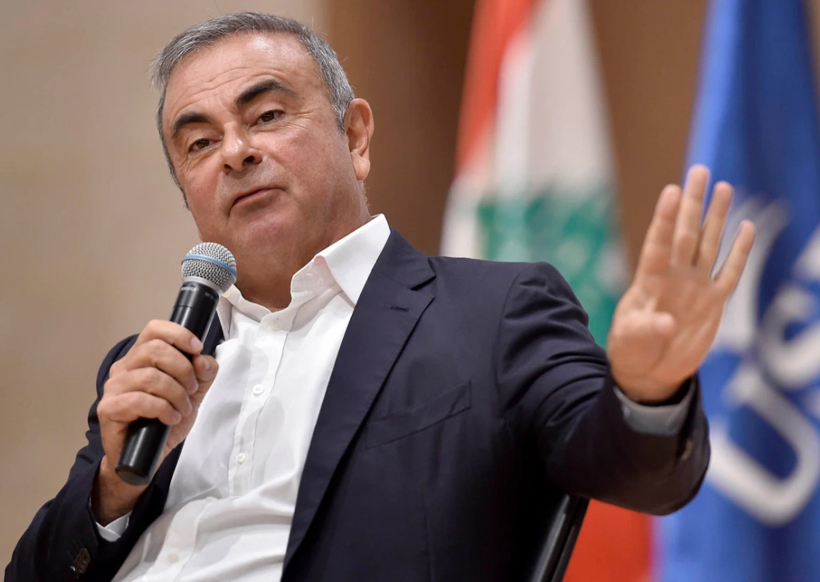
During his tenure, he also pushed Nissan’s entry into the Chinese market, establishing the joint venture Dongfeng Nissan in 2003. At its peak, Dongfeng Nissan’s annual sales exceeded one million vehicles, making it one of the best-selling top-tier joint venture automakers in China.
In contrast, after Ghosn’s departure, Nissan experienced frequent changes in its internal management, highlighted strategic vacillation, and fell significantly behind its peers in the pace of electrification transformation. Pressure on financial results persisted, with the company posting substantial losses consecutively. To alleviate cash flow pressure, it even sold its global headquarters building to raise funds.
To cut costs, Espinosa launched an aggressive cost-reduction plan involving closing seven factories and laying off 20,000 employees. Yet, this has still failed to halt the downward trend in both sales and profits, with the weak stock price further exacerbating shareholder anxiety.
From the perspective of many shareholders, Nissan’s current decision-making is sluggish, internal friction is evident, and it lacks a core leader bold enough to implement sweeping reforms, leaving it constrained in the face of drastic industry changes.
Comparing Ghosn’s track record of rescuing the company against the odds, investors naturally develop the psychological expectation that “if Ghosn were still here, the situation wouldn’t be so passive.” The calls to dismiss the current management and propose Ghosn’s return are essentially an externalization of investor dissatisfaction with the current turnaround plan and their eagerness to find a way out of the predicament—an emotional yearning for a strong, reform-minded leader during a crisis.
However, this nostalgia focuses solely on Ghosn’s past operational achievements, deliberately downplaying his personal legal troubles and historical conflicts. It also ignores the deep-seated causes behind Ghosn’s ouster, such as power struggles within the alliance and internal governance issues. Simply replicating the old model is inherently unsuitable for the entirely new environment of the automotive industry’s electrification transformation.
Ghosn’s Return Lacks Practical Feasibility
Setting aside emotional expectations, examining the situation from the three dimensions of judicial facts, geopolitical rules, and corporate governance reveals almost no room for Ghosn to return to Nissan and take the helm. The shareholder proposal is more an expression of emotion than a feasible plan.
The timeline clearly records the beginning and end of Ghosn’s troubles: In November 2018, Ghosn was arrested in Tokyo, Japan, on charges of financial misconduct, including underreporting his巨额 compensation and misusing company funds. After two detentions and posting bail totaling 1.5 billion yen, he was released pending trial.
At the end of December 2019, Ghosn hid inside a sound equipment case, fled Japan via a private jet from Kansai Airport in Osaka, and eventually settled in Lebanon.
On the judicial front, Japanese prosecutors have not terminated their pursuit of charges against Ghosn. In 2022, French authorities also issued an arrest warrant for Ghosn regarding the misuse of Renault funds. Ghosn is currently an internationally wanted fugitive tracked by judicial authorities in multiple countries.
Geopolitical rules present a hard obstacle: Lebanon has not signed bilateral extradition treaties with either Japan or France. Ghosn holds Lebanese citizenship, and the local judicial system will not cooperate with extradition requests. This means Ghosn is effectively unable to legally return to Japan to perform his duties for life.

Even if Ghosn were to manage remotely, his status as an internationally wanted fugitive would expose Nissan to significant compliance risks, public relations crises, and regulatory scrutiny.
Furthermore, the root causes of Ghosn’s ouster, beyond the financial allegations, included the structural conflicts stemming from the long-term equity博弈 between Renault and Nissan and the struggle for control of the alliance. Years later, the equity structure and cooperation model between Renault and Nissan have been fundamentally restructured, and the logic of alliance synergy has been completely rewritten. The conditions that allowed Ghosn to exercise his management skills no longer exist.
Even setting aside legal issues, his aggressive, centralized management style would severely conflict with Nissan’s current internal governance rules and Japanese corporate management culture. Forcing its introduction would only exacerbate internal conflicts.
The operational challenges Espinosa faces are real and daunting. However, shareholders pinning their hopes for recovery on a former executive who cannot enter the country and is a wanted fugitive not only avoids the core issues of Nissan’s lagging transformation and strategic vacillation but also ignores objective legal boundaries. It is ultimately an emotional choice detached from reality.
Nissan’s current predicament is the result of multiple overlapping problems: chaotic management succession, a lagging electrification strategy, weakened alliance synergies, and declining global market competitiveness. It cannot be quickly resolved simply by replacing one manager. Instead of indulging in past narratives and unrealistic nostalgic salvation, it would be better to face its own shortcomings head-on, steadily advance cost reduction and efficiency improvement, rationalize long-term product planning, fill the gaps in its new energy transformation, and solidify its own operational fundamentals.
For Espinosa and Nissan’s board of directors, responding to shareholder anxiety, presenting a feasible medium-to-long-term recovery plan, and restoring market confidence through tangible performance improvements is the only viable path to resolving the current predicament.