
















































Over the past week, NVIDIA has signed strategic partnerships at a dizzying pace across multiple global locations.
On June 8, NVIDIA and SK Hynix announced a multi-year technology collaboration focused on joint R&D for next-generation AI factory memory. On the same day, five major South Korean tech giants, including KT, Doosan Group, LG Group, and Naver, all joined the NVIDIA ecosystem.
Meanwhile, NVIDIA has been expanding its presence in the autonomous driving sector, with Foxconn and Uber joining the Robotaxi ecosystem, and Hyundai Motor announcing plans to build an L2 to L4 intelligent driving system based on the DRIVE Hyperion platform.
In Europe, NVIDIA has successively reached industrial AI cloud partnerships with Deutsche Telekom, France’s Mistral, and the UK’s Nebius.
These seemingly scattered partnership announcements, when pieced together, reveal a clear strategic reality: NVIDIA is undergoing a deep transformation from a “chip company that sells GPUs” to a “standard-setter for AI infrastructure.”
Jensen Huang stated bluntly at Computex Taipei: “NVIDIA has truly become an infrastructure company, not just a GPU company or a systems company, but an infrastructure company that helps you achieve maximum revenue and profit.”
How is NVIDIA’s strategic puzzle unfolding?
A careful review of recent partnerships reveals they are not randomly distributed across various corners of the industry chain, but precisely fall along three key threads of NVIDIA’s strategic blueprint.
The first thread is strategic locking in the supply chain.
During his visit to South Korea, Jensen Huang issued a serious warning that the memory supply shortage is not over and will last for several years. The multi-year technology partnership with SK Hynix, covering all next-generation memory required for the Vera Rubin supercomputer, RTX Spark PC, and even the Jetson Thor robotics computing platform, is a direct response to this concern.
SK Hynix and Micron are NVIDIA’s primary HBM suppliers. The essence of this collaboration is to lock in the scarcest strategic resources before a bottleneck arrives.
The second thread is platform-based advancement in industry penetration. In early June, NVIDIA launched the Alpamayo 2 Super open inference model with 32 billion parameters, expanding the DRIVE Hyperion ecosystem. New partners include Foxconn, VinFast, Uber, and Autobrains.
Currently, multiple domestic automakers and autonomous driving companies are developing systems based on the Hyperion platform. With Hyundai Motor joining, the total annual production volume of partners on this platform has reached 18 million vehicles.
NVIDIA is not building cars itself, but its AI factories and autonomous driving systems are becoming the shared computing foundation for numerous automakers.
The third thread is ecosystem expansion in the global market. South Korean internet giant Naver has joined NVIDIA’s AI factory initiative, and the two parties will jointly enter the AI markets of Europe, the Middle East, and Asia-Pacific.
In Europe, NVIDIA is building an industrial AI cloud with Deutsche Telekom, providing 10,000 chips; it has strategically invested $2 billion in Nebius, leveraging its asset-heavy model to embed NVIDIA infrastructure into the global AI cloud赛道.
This full-chain coverage of “chips + computing platform + application ecosystem” is expanding NVIDIA’s influence from data centers to every terminal scenario.
When Chips Are No Longer Scarce: NVIDIA’s Next Battle
Behind the flurry of signed partnerships, NVIDIA’s strategic transformation is no longer just a vision but an industrial reality being realized.
At the GTC 2026 conference, NVIDIA officially announced its transformation into an AI infrastructure company, launching the Vera self-developed CPU and the DSX platform, with its core strategy centered on “burning more tokens.”
Jensen Huang proposed a new formula of “computing power equals revenue,” believing that every token creates measurable business value. From NVIDIA’s $2 billion investment in chip design software company Synopsys, to the release of the Cosmos 3 open model in the physical AI domain, to a $1 billion joint laboratory collaboration over five years with Eli Lilly in the biomedical field, NVIDIA is building the standard system for the AI era across all dimensions of capital, technology, and computing power.
However, the transformation is not without challenges.
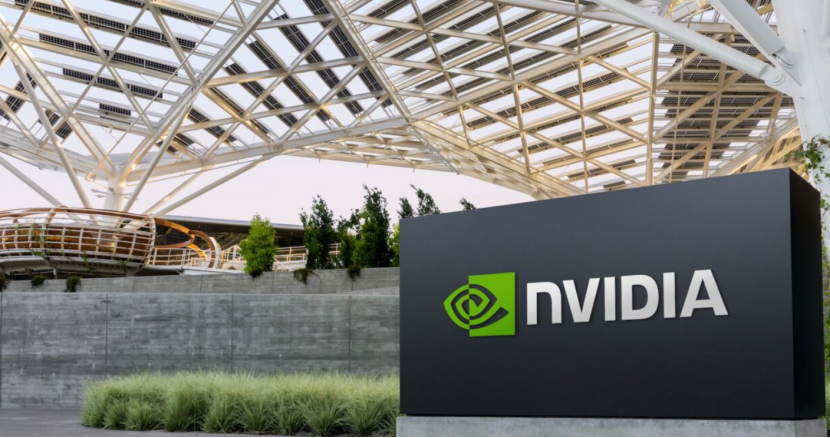
First, there is the pressure of deep integration within the ecosystem. NVIDIA is simultaneously advancing multiple fronts including CPU, GPU, networking, software, and PC chips. Each front has established giants holding their ground: Intel and AMD in the CPU field, Microsoft and the Qualcomm alliance on the PC side. Currently, the software ecosystem represented by CUDA is its strongest moat, but whether the speed of ecosystem expansion can keep pace with hardware iteration remains to be tested over time.
Second, there are compliance and competitive pressures at the macro level. The tech rivalry between the U.S. and China continues to intensify, and NVIDIA’s business operations in China face ongoing policy uncertainty. Meanwhile, AMD, Google, and domestic AI chip manufacturers are all attempting to break its ecosystem monopoly.
As the scarcity of chips themselves gradually diminishes, whether the moat of standards can sustain its trillion-dollar market capitalization will be the core question the capital market poses to NVIDIA.
Overall, NVIDIA is at a critical juncture, transitioning from “choosing the market” to “defining the market.”
The essence of its intensive partnerships is to establish a de facto set of commercial and technical standards for future AI infrastructure. Whether it ultimately succeeds or not, this represents a powerful sprint by a tech company towards the highest form of ecosystem dominance.