











































How to refuel quickly without waiting in line: proven methods
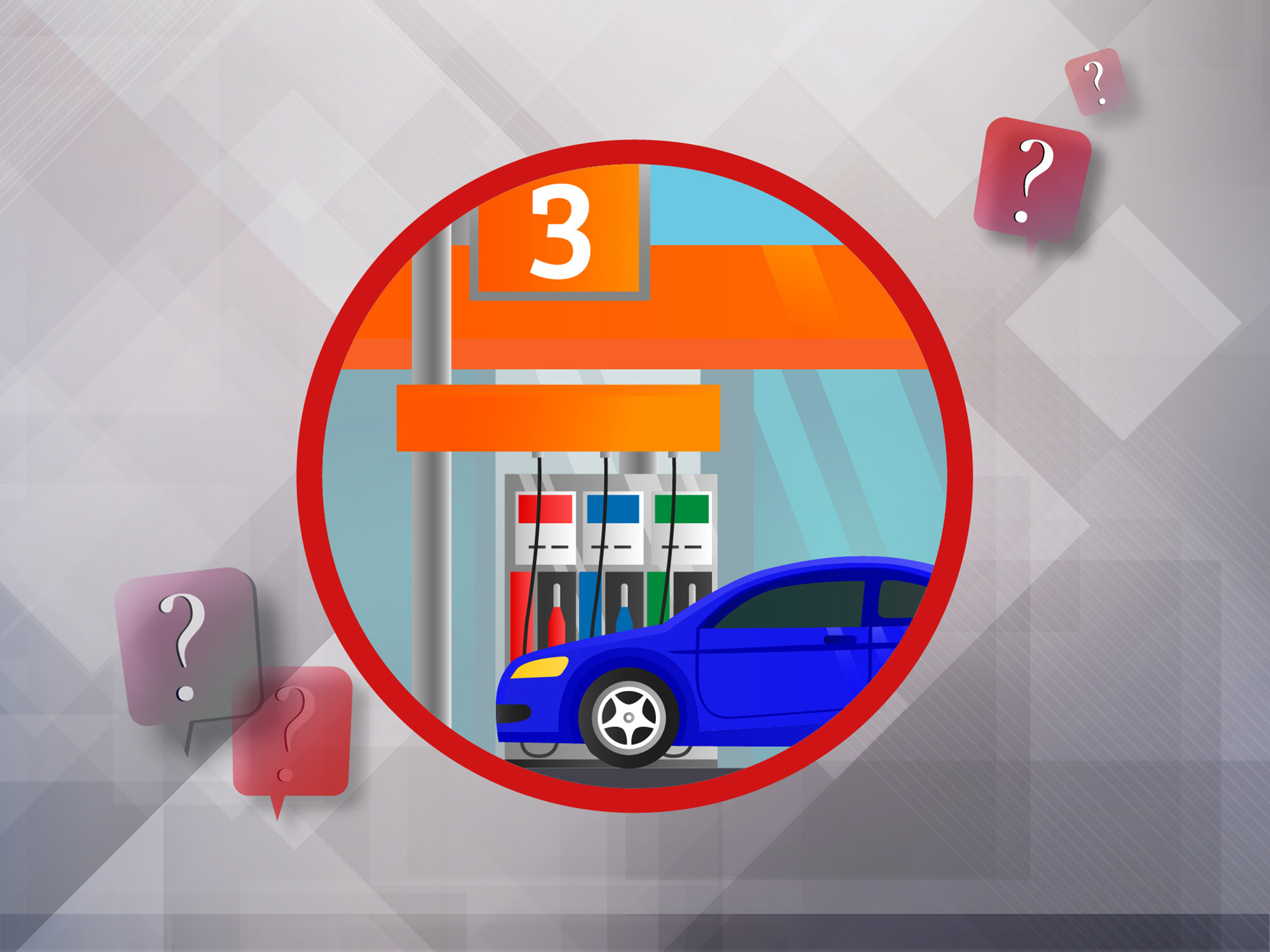
Live queues usually form when waiting to refuel at a gas station. But it is worth remembering that some citizens have the right to priority service. Let us recall all federal beneficiary categories and private options, and also figure out how to avoid queues at gas stations altogether.
Who has the right to refuel without waiting in line
At the federal level, the law establishes only one category of citizens who have the right to priority service at gas stations: people with disabilities. According to paragraph 1 of Presidential Decree No. 1157 of October 2, 1992, the following citizens have this right:
- Group I disabled persons
- Group II disabled persons
- disabled children and persons accompanying such children
It should be noted that gas stations are not specifically listed in the benefits list, but they certainly fall under it: paragraph 1 states that “Group I and II disabled persons, disabled children and persons accompanying such children are served out of turn at trade enterprises and other organizations serving the population.” Since gas stations are engaged in retail sales of fuel, they qualify as trade enterprises.
To receive the benefit, one must prove the fact of disability by providing:
- a document confirming disability
- an identity document
Disability certificates – both paper and electronic – do not contain photographs, so a passport or other identity document is needed to confirm that the certificate matches its bearer.
It is also worth noting that persons accompanying a disabled child have the right to priority service only if the child is in the vehicle. The status of guardian or accompanying person by itself does not grant the right to service out of turn.
The law does not directly establish that the vehicle must be registered to the disabled person – the benefit is granted to the citizen, not the vehicle. Therefore, it is not necessary to prove ownership or install a special “Disabled” sign on the vehicle.
It should be noted that the benefit applies to receiving the service out of turn, but not to other conditions. For example, if a gas station has restrictions on the volume of fuel dispensed per person, these also apply to beneficiary categories of citizens.
In addition to federal law, different regions may have regional laws establishing benefits for other categories of citizens – for example, Great Patriotic War veterans, as well as emergency, road maintenance, and utility service vehicles. In such cases, it is worth remembering that such benefits apply within the region’s territory, and secondly, benefit recipients are also obliged to confirm their right to receive them.
Another mention of special vehicles is found in GOST 58404-2019. Clause 8.2.6 states that “refueling of a vehicle is carried out in the general queue order; priority service is provided for special vehicles (vehicles equipped with flashing beacons of blue or blue and red colors), as well as vehicles of persons who, in accordance with legislation, have the right to priority service at trade and service enterprises.”
However, it is important to understand that, unlike the aforementioned Decree No. 1157, GOST is a regulatory-technical document, not a normative legal act. Simply put, it is not a law that all citizens without exception must comply with, so it cannot be used as a legislative argument.
If a citizen from a beneficiary category is denied service without waiting in line, they can bring the gas station to administrative responsibility under Article 14.8, Part 3 of the Administrative Offenses Code. It states that “failure to provide the consumer with benefits and advantages established by law entails the imposition of an administrative fine on officials in the amount of 500 to 1,000 rubles; on legal entities – from 5,000 to 10,000 rubles.” To record the fact of refusal to provide the benefit, it is worth calling the police or obtaining a written refusal from gas station employees regarding priority service.
If there is no right to priority service, it is worth considering how to avoid the queues themselves.
The first option is to choose the best time to visit a gas station. For example, in the morning and early evening, gas stations are typically busy, and standing in a morning queue while risking being late for work makes no sense. But late in the evening, early in the morning, or at night, there may be fewer customers at the gas station, so you can quite easily refuel without waiting in line.
The second option is to choose the least busy gas stations. For example, gas stations in the city center almost always enjoy high demand. At the same time, on the outskirts and outside the city, at exits or intersections with bypass roads around a populated area, there are also plenty of gas stations, and some of them may be significantly less busy, especially at certain hours. Therefore, it may be more logical to spend half an hour on the road than an hour in line.
The third feature is knowing and correctly using the gas station layout. For example, if you have a diesel vehicle, it is worth remembering that many large gas stations have separate pumps for diesel fuel. They are primarily made for trucks, but no one forbids refueling passenger cars at them either. Therefore, even when there is a queue, you can sometimes save time by correctly choosing the pump for refueling.