
















































Where the Oil Flows and How to Change the Valve: Everything You Need to Know About the VVT Solenoid
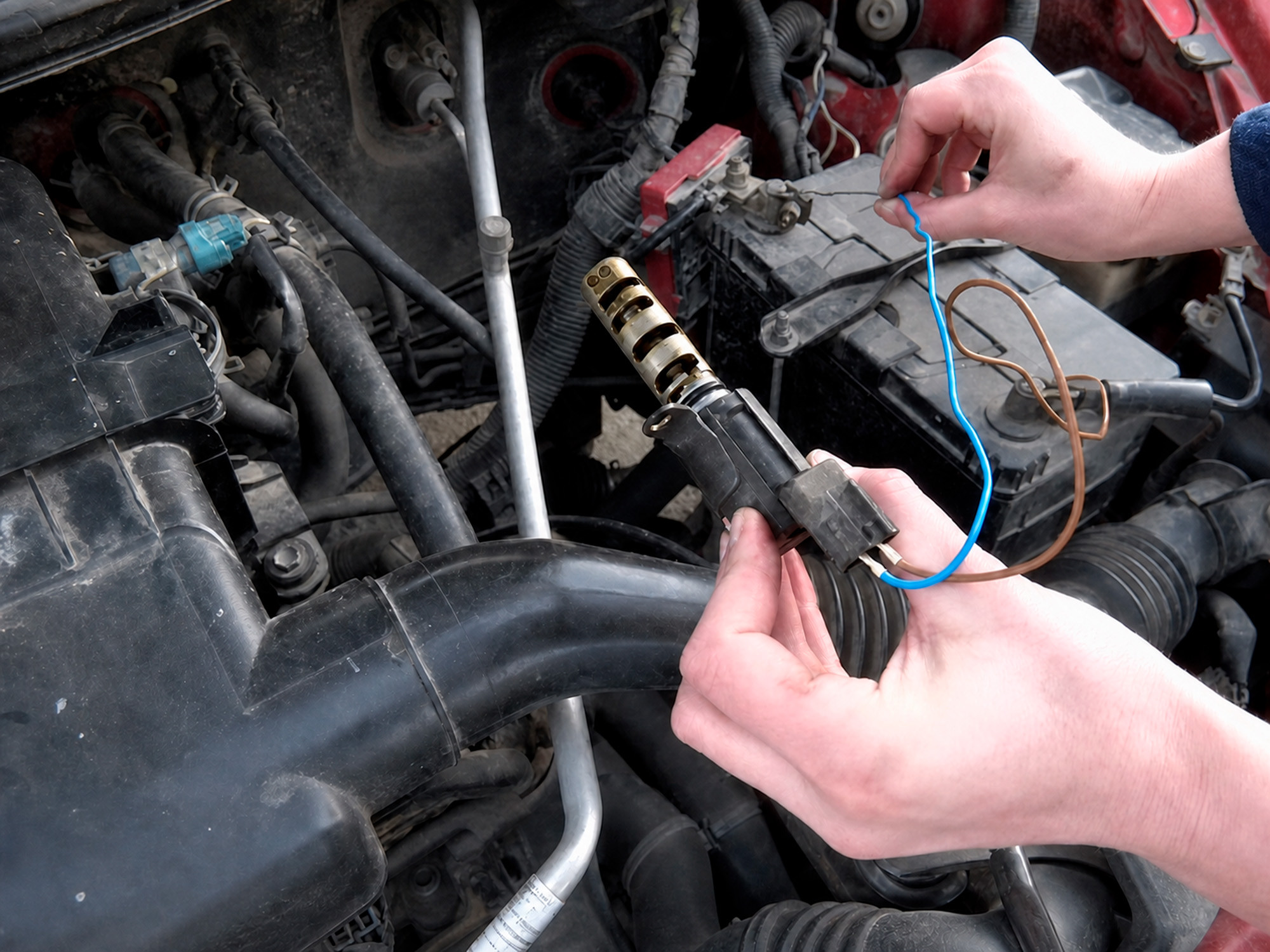
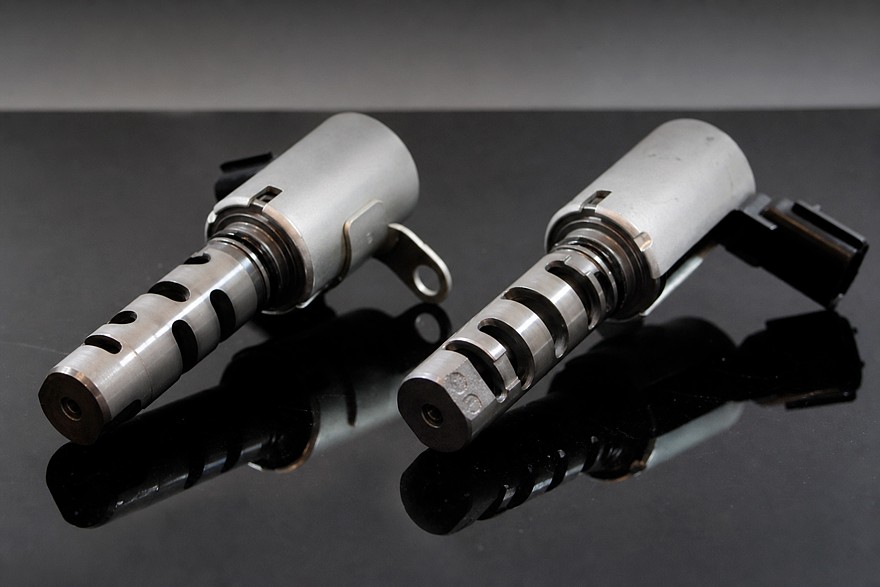
The VVT electromagnetic valve, also called the VVT solenoid, is one of the core components of the variable valve timing system. It is like a traffic controller on a highway: it also has to manage a flow, responsible for its intensity and movement, only in its case, the flow is not of cars, but of engine oil that powers the actuators. Accordingly, if something goes wrong in the controller’s behavior, if it stops correctly performing its duties, failures can begin in the operation of the entire assembly as a whole. What these failures are, how they manifest themselves and are diagnosed, we will tell in our material.
The Valve is the Head of Everything
Without wasting time on a repeated description of the variable valve timing system, which can be found here, we note immediately that the VVT solenoid handles an extremely important task: receiving corresponding commands from the control unit (ECM/ECU), it directs pressurized engine oil into specific cavities of the phaser. Due to this, the angle position of the camshaft changes. As soon as the required angle (optimal for certain conditions and modes, according to the ECM) is reached, the valve shuts off the oil flow, and the camshaft remains clearly fixed in the new position.
At moments when the engine requires maximum power output – for example, during acceleration, the valve regulates the flow so that the valve timing mechanism operates with greater efficiency. And during steady cruising, it executes the scenario of maximum fuel economy, the algorithm of which is sent to it by the same control unit.
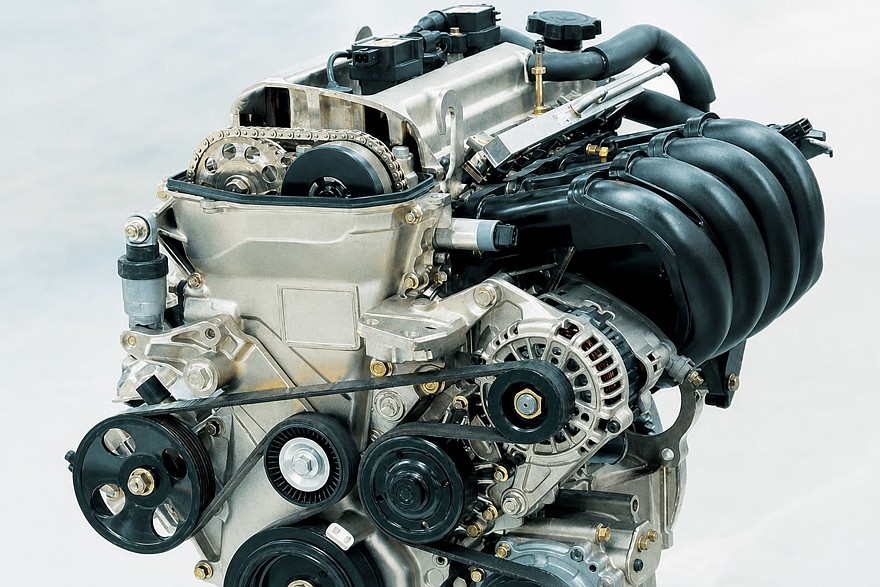
As a result, by optimizing valve timing for various driving modes and conditions, a properly working solenoid ensures fuel savings. Consequently, it also reduces exhaust emissions. And if necessary, it helps achieve short-term or long-term increases in engine performance.
But for this entire balanced system to work perfectly, the valve must respond immediately to the control action of the control unit. Because any delay, even for tenths of a second – since we all know that the combustion process takes on average 0.01-0.002 seconds, will drastically affect the operation of the variable valve timing system and lead to various disturbances and malfunctions.
Modern cars may have several VVT solenoids – their number is directly related to the number of phasers. They are typically installed on the cylinder head.
Reliable, but Anything Can Happen
The VVT valves used today are quite reliable products and are not considered scheduled replacement parts. They usually last tens of thousands of kilometers and only start to malfunction closer to the three hundred thousand kilometer mark due to natural wear. Although there are known cases where valves outlast the entire engine’s lifespan.
However, all this is typical for situations where nothing unexpected happens. When periodic maintenance is performed meticulously and exactly on time, and the materials and technical fluids used are ideal, high-quality products.
Such situations in real life, as you well understand, are rare. More often, some absurd force majeure events and mistakes occur, even with the most careful treatment of your four-wheeled beloved. Either some “off-brand” oil is used, or dubious fuel is taken on at a gas station, or a filter is screwed in crookedly, or something else, and eventually the solenoid meets its end. Although the end is already a peak scenario, usually all these things lead to malfunctions.
Among the most common reasons why the control valve starts to “glitch,” the following can be recalled.
Firstly, it is old or contaminated engine oil. Losing its properties, filling with foreign impurities, it thickens or thins, clogging the valve’s fine channels with dirt and sludge. As a result, even a physically sound solenoid malfunctions, and then becomes completely clogged. But there is good news: in most cases, after thorough cleaning, it can be brought back to life.
The second reason is a low engine oil level. When there is insufficient oil, the valve a priori cannot perform its duties correctly. This also includes wear of seals, gaskets, and other similar small parts, leading to engine oil leaks.
Next comes another “oil-related” reason, indirectly related to the first two. This is a dirty or clogged oil filter. If it prevents normal oil flow into the VVT system, if it releases dirt into it, the solenoid will not be able to work correctly, no matter how much it wants to.

Much less common are problems with the electrical system, wiring damage, poor connections, corrosion of connectors, or the electrical part of the solenoid itself. Due to communication disruptions with the control unit, the valve again cannot work correctly, even if it is physically fully functional. Cases of manufacturing defects in the valve’s production are also quite rare. But all this, nevertheless, can never be completely excluded from the list of reasons for the failure of this part.
One should not forget about mechanical wear. This is a natural process for any component, and regular oil changes and the use of impeccably quality products recommended by the vehicle manufacturer help extend the solenoid’s service life. Of course, there is no eternal life even for a VVT valve, and eventually, like any other part, it will become unusable, but it is entirely within your power to delay this moment.
And lastly, there is engine overheating. Constant exposure to high temperatures or sudden temperature spikes leads to the destruction of valve components.
Check Engine Light On and Operational Interruptions
Now let’s turn to the symptoms of a faulty valve.
The Check Engine light illuminates on the dashboard. The variable valve timing system is one of the priorities for the control unit. Therefore, it constantly monitors its performance. As soon as a problem with oil pressure, the phases themselves, or the electrical circuit is detected, a signal is sent from the sensors, and the ECU activates available protective algorithms. So, with almost one hundred percent certainty, the warning indicator will light up, and one error or another will appear in the memory. Among the most common are P0010-P0013 and P0020-P0023, indicating synchronization problems in the first and second banks, as well as P0024-P0026, indicating general system problems.
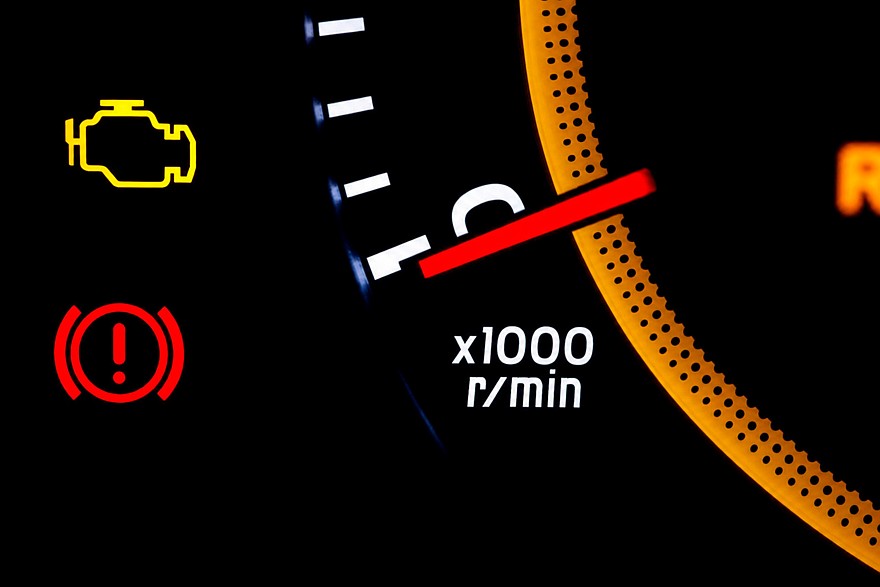
Engine operation interruptions. Because the variable valve timing system cannot correctly execute its algorithms when there are problems with the valve, various interruptions in engine operation occur. Most often, they manifest as a loss of dynamics and a general sluggish tone of the car. The car responds poorly (or inadequately) to pressing the gas pedal, takes longer than usual to accelerate, or even almost drops RPM instead of increasing them.
At idle speed, all sorts of irregularities can also occur. The engine runs unstably, the tachometer needle jumps up and down, RPM fluctuates from 500 to 1200 RPM. Sometimes unhealthy vibrations even occur, spreading throughout the entire body, steering wheel, and seats. The reason is that due to the malfunctioning valve, the VVT system loses its ability to ensure the correct valve opening timing at low RPM.
All these are typical consequences of camshaft synchronization disruption, which manifest themselves across almost the entire operating range of the internal combustion engine.
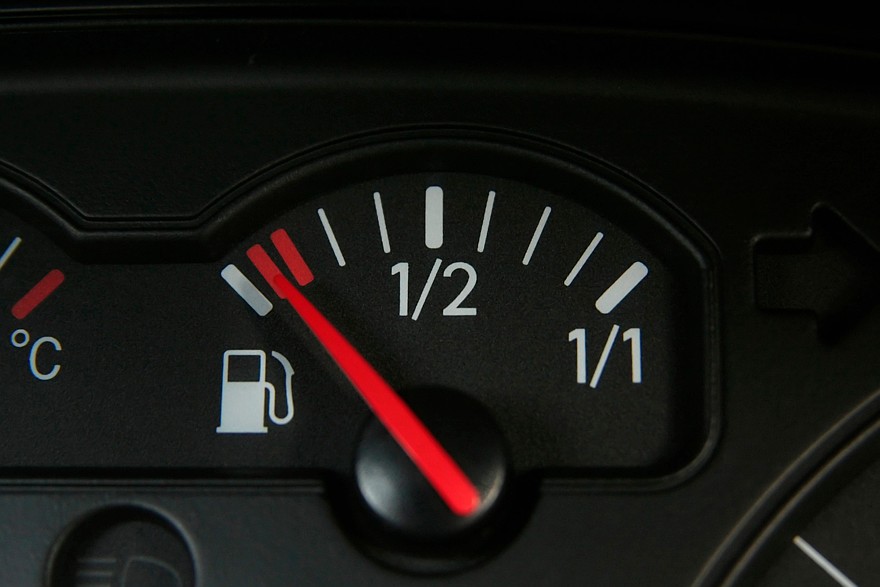
Increased fuel appetite. A consequence of synchronization failures is also increased fuel consumption, as quite often the engine has to work harder or in less than optimal modes. Therefore, at the slightest suspicion, it is recommended to monitor fuel consumption more closely and react promptly to its increase.
True, it is worth noting here that both increased fuel consumption and uneven engine operation can be symptoms of a wide range of malfunctions. Nevertheless, for engines with a variable valve timing system, all these are key signs pointing to a failure of the oil pressure control solenoid.
Detonation and misfires. Let us recall, detonation is the spontaneous ignition of the air-fuel mixture before the spark plug fires. It often occurs explosively, damaging engine components. The VVT control solenoid can cause detonation when the valve timing is fixed, so to speak, in an aggressive mode, leading to untimely opening and closing of the valves. On the other hand, directly opposite phenomena can occur – misfires, where the mixture ignites with difficulty or does not ignite at all.
Various problems with cold starting (starting after a long period of inactivity). Here there is a whole array of symptoms pointing to VVT valve issues. This includes prolonged starting not “from the first turn,” the engine rattling at higher RPM longer than usual, unstable idle of a cold engine, and sudden stalling shortly after starting. All this happens because the variable valve timing system does not receive the necessary oil pressure for correct operation. Moreover, during startup, the thick oil, combined with the problematic valve, prevents the camshafts from positioning correctly.
Timing chain noise. Yes, specifically the chain, not the phaser sprockets. It is often said that they can rattle due to a malfunction, but it is rarely remembered that the chain can rattle or click because of the solenoid. Although it should be, because the faults of the VVT solenoid affect the timing chain hydraulic tensioner and, by causing pressure fluctuations, lead to the described noises.
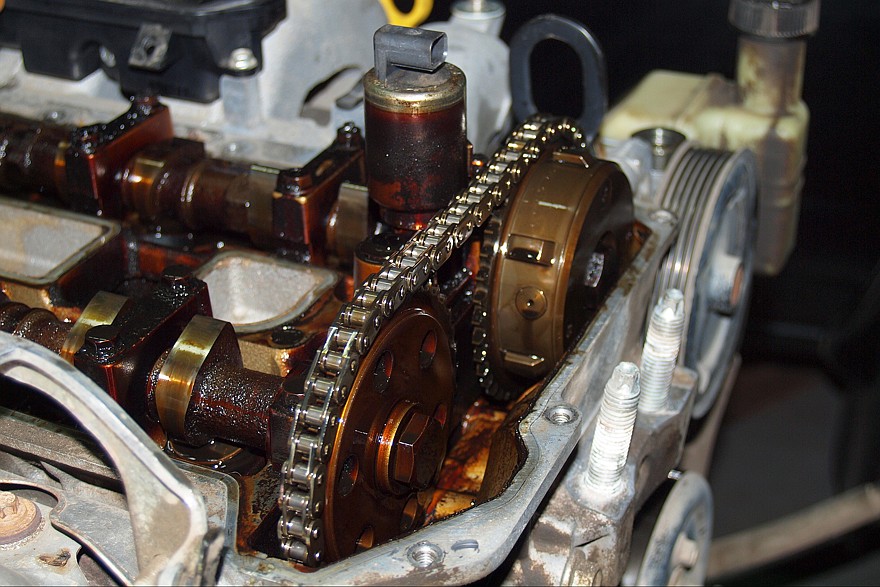
As a rule, they occur again on a cold engine and may subside as it warms up. But once they appear, they are unlikely to disappear on their own.
Oil leaks. This reason was saved for last because it is simply extremely banal and obvious. Since we have a hydraulic system, the correctness of its functioning is directly related to its tightness. If this is compromised, trouble is unavoidable. That is, any engine oil leaks harm the VVT valve, but especially those directly related to it. They can be detected by characteristic dampness in the area of the solenoid or the variable valve timing system drive. Usually, the appearance of these “weeps” is due to wear of seals or gaskets and can be eliminated by replacing them.
DIY Master
The electromagnetic valve of the variable valve timing system is one of those parts whose replacement (or removal for cleaning) is quite feasible for a car owner with minimal skills in using hand tools. As already mentioned, the solenoid is usually located on the cylinder head (less often – mainly on older models – on the valve cover) near the camshafts and is easily accessible for removal. Thus, by doing the work yourself, you can save several thousand rubles, which is usually charged for replacement at a car service center.
To perform the operation, you will need a basic set of socket wrenches and extensions, likely a screwdriver, definitely a torque wrench, a container to collect the draining oil, rags, wipes, and cloths to maintain cleanliness, a new solenoid, and a seal.
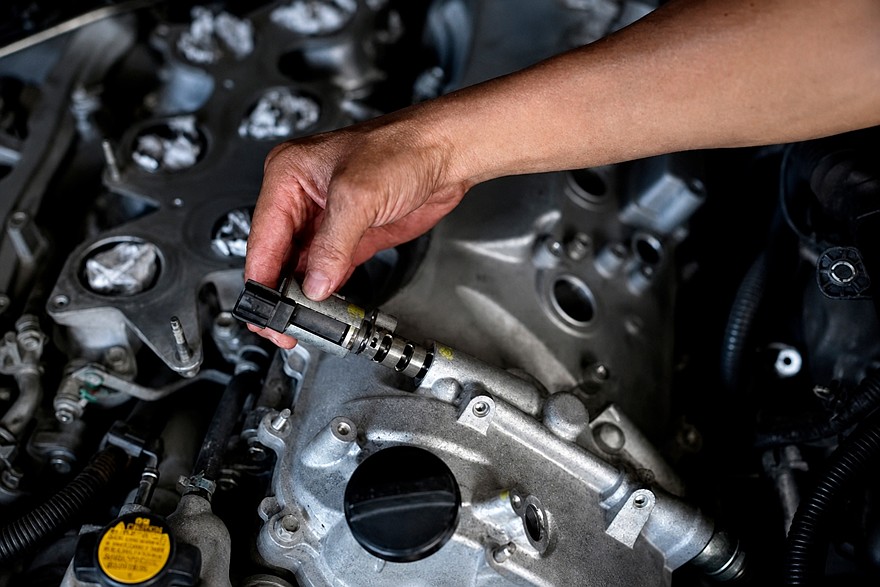
The first step is to disconnect the battery power. Since you are dealing with an electromechanical device, it is not worth risking electricity. Then disconnect the solenoid connector. Act carefully to avoid damaging the wires – they will still be useful along with the connector for connecting the new part. Keep in mind that most connectors have a lock that is released by pressing a tab.
Unscrew the fasteners – most often one or two screws (but there can be more – for example, on a Volvo S80 with a B5244S engine, there are four of them). Try not to drop the screws into the engine bay.
Now carefully remove the solenoid. Inspect it closely – it is quite possible that the valve is simply clogged and, after cleaning, can return to service. Check the mating surfaces on the valve and engine – all old seals must be replaced with new ones, and the surfaces themselves must be thoroughly cleaned. Using a long screwdriver, remove all debris from the mounting hole. And again, we remind you: your main companion is accuracy.
After all the hygiene measures are completed, install the new (or cleaned old) valve. It may go in tightly, but do not force it – insert it using a rotating motion and applying slight pressure. It would be very good if you treat the seals and connector with dielectric grease.
Secure the fasteners with the specified torque and reconnect the battery. At this point, the job can be considered complete.
In words, it really does seem quite simple, but in practice, a whole range of nuances can arise that significantly complicate it and require the removal of additional parts to simplify access to the valve. Therefore, before starting the work, carefully analyze your abilities and skills, as well as the scope and specifics of the upcoming task. If there is even the slightest doubt, it is better not to skimp and contact a professional auto service center.