








































Kia Signs Multilateral MOU for ‘Seocheon Tidal Flat Blue Carbon Ecological Restoration Project
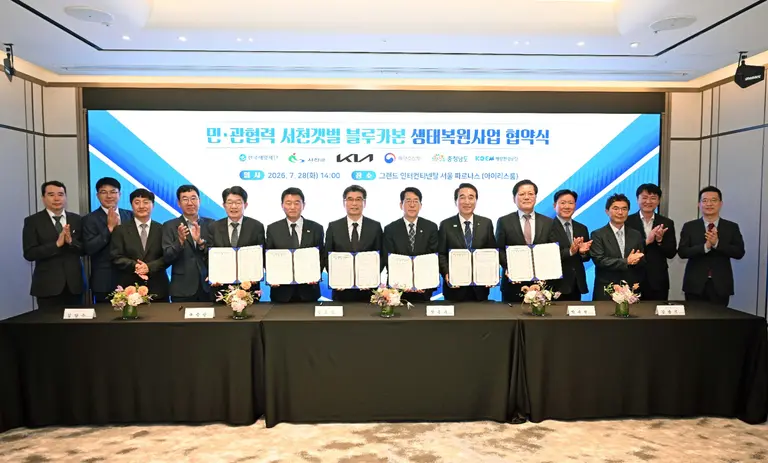
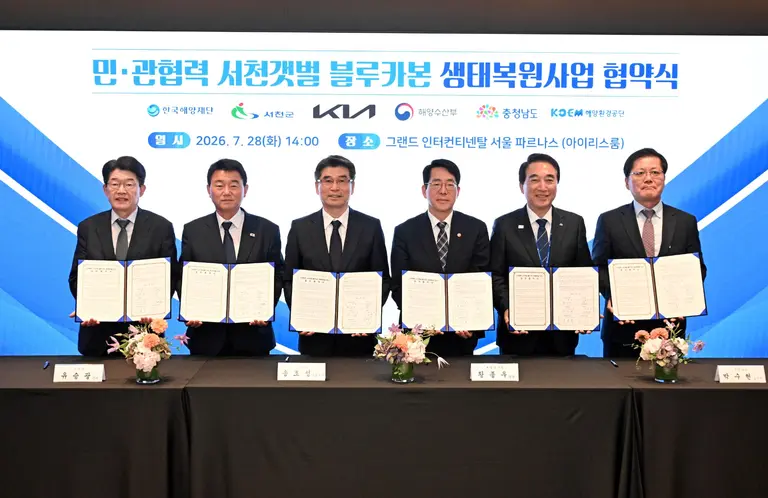
Kia signed a multilateral business agreement with the Ministry of Oceans and Fisheries, South Chungcheong Province, Seocheon County, the Korea Marine Environment Management Corporation, and the Korea Maritime Foundation on Tuesday (the 28th) at the Grand InterContinental Seoul Parnas to promote the ‘Seocheon Tidal Flat Blue Carbon Ecological Restoration Project’. Attendees at the signing ceremony included Kia President Song Ho-sung, Minister of Oceans and Fisheries Kang Do-hyung, South Chungcheong Province Governor Kim Tae-heum, Seocheon County Governor Kim Ki-young, Korea Marine Environment Management Corporation Chairman Kang Yong-seok, and Korea Maritime Foundation Chairman Kim Yang-soo.
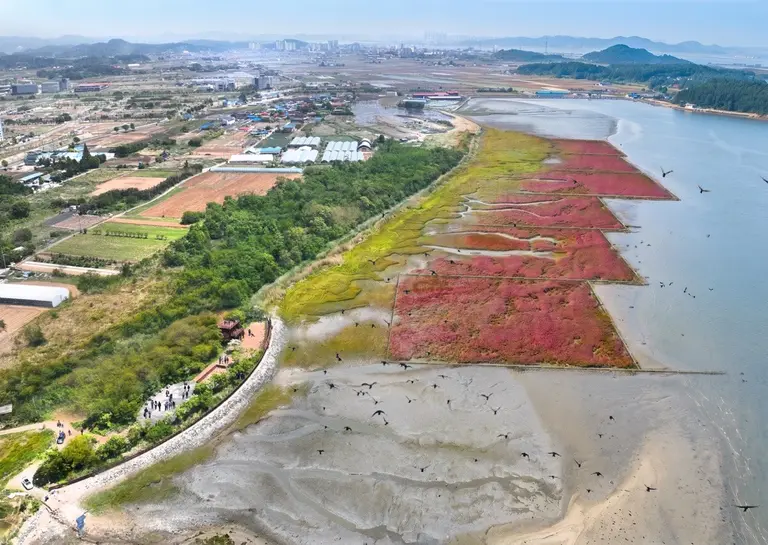
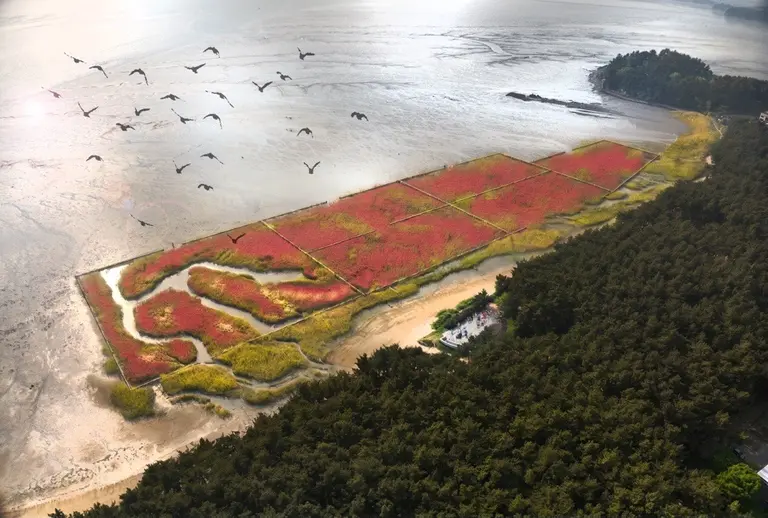
This business agreement was made to restore the tidal flat ecosystem and expand blue carbon sinks by planting halophytes on tidal flats in the Seocheon County area of South Chungcheong Province, based on public-private cooperation. Tidal flats are blue carbon ecosystems that absorb and store carbon through sediment layers and halophytes, performing ecosystem functions such as carbon absorption and pollutant purification, and hold value as natural capital.
Through this business agreement, Kia will continue its efforts to restore tidal flat ecosystems and protect natural capital. Previously, starting in 2022, Kia cooperated with the Ministry of Oceans and Fisheries to promote the tidal flat vegetation restoration project in Maehyang-ri, Hwaseong City, and planted halophytes in an area of approximately 40,000m² within the Maehyang-ri tidal flat, which was designated as a wetland protected area.
Through this project, Kia and the participating organizations will plant halophytes on tidal flats covering approximately 168,000m² (about 50,000 pyeong) in the Jangam Tidal Flat area, Soli Tidal Flat, and Songrim Tidal Flat areas in Seocheon by 2029, strengthening carbon absorption functions. In the Jangam Tidal Flat area, the project will restore the damaged tidal flat ecosystem by utilizing idle sites of former abandoned fish farms, while also creating a blue carbon garden that includes tidal flat walking trails and observation decks.
Kia expects that as halophyte communities expand in the future, environmental benefits will grow not only in carbon absorption and pollutant purification but also in improving seabird habitats and restoring biodiversity. Going forward, Kia plans to continue eco-friendly activities to respond to climate change and protect natural capital based on cooperation with related organizations and local governments.
Kia President Song Ho-sung stated, “This business agreement is a new cooperation model for preserving ecosystems together with businesses, government, and local communities,” and added, “Kia will continue its efforts to contribute to carbon neutrality through tidal flat vegetation restoration and blue carbon expansion based on cooperation with various partners.”