





































How to Reduce Fuel Consumption: Practical Methods for City and Highway
The cost of gasoline now teaches better than any instructor – you immediately start looking at fuel consumption not as an abstract number, but as a separate line item in your personal budget. And that makes sense: saving fuel isn’t about greed, it’s about common sense. The less unnecessary work the engine does, the longer the car lasts and the less often you have to stop at the gas station.
You can save on fuel without extremes or dubious tricks. For saving fuel, driving style, the car’s technical condition, tire pressure, the cabin’s microclimate, and even exactly how you plan your route all matter. Below is a practical breakdown without magic or promises to cut consumption in half using a special mode known only to the chosen few.
How to Drive a Car in Economy Mode
The most noticeable effect comes not from a miracle additive, but from driving habits. Sharp starts, last-minute braking, and constant acceleration almost always increase consumption. The engine works erratically in this mode, and more gasoline is used than you’d like.
The optimal style is smooth acceleration, steady movement, and pre-planned maneuvers. If the driver doesn’t try to win three seconds at every traffic light, fuel savings become quite real. On the highway, it’s especially useful to maintain a stable speed: the fewer unnecessary fluctuations, the lower the fuel consumption.
To save fuel in a car without compromising safety, it’s worth remembering simple things:
- Accelerate smoothly
- Brake early
- Maintain a steady pace
- Don’t switch lanes unnecessarily
- Use cruise control when possible
- Don’t accelerate if there’s no point
At high speeds, fuel consumption increases noticeably faster than it seems. Air becomes a very expensive resistance, and the car has to spend more energy just to move forward. Therefore, an extra 20 km/h on the highway sometimes turns into a quite tangible difference at the pump.
Preparing the Car for Economy Mode
Even the most careful driver won’t achieve good results if the car resists saving fuel. This includes worn-out parts, incorrect tire pressure, dirty filters, and minor malfunctions that are barely noticeable individually but together steadily increase fuel consumption.
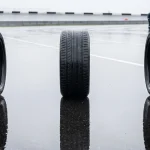
Special attention should be paid to the tires. An under-inflated tire increases rolling resistance, forcing the engine to work harder. It seems like a small thing, but it’s precisely these nuances that make fuel savings real or, conversely, pointless.
Before a trip, it’s useful to check:
- Tire pressure
- Air filter condition
- Engine oil level and quality
- Spark plug operation
- Absence of excess cargo in the trunk
- Brake system serviceability
Another simple way to reduce consumption is to remove everything unnecessary from the car. Extra cargo doesn’t seem dangerous, but over a distance of several hundred kilometers, it starts to affect fuel economy. And yes, if the trunk contains a “just in case” kit weighing half a garage, the car feels it.
Driving Safety and Fuel Economy
Economy mode should not become dangerous. Some drivers try so hard to save fuel that they start driving too slowly, creating obstacles, or choosing strange trajectories. This is no longer fuel saving, but amateur improvisation.
The good news is that safe driving almost always helps save fuel. When the driver maintains distance, reacts to traffic flow in advance, and doesn’t constantly accelerate and brake, fuel consumption decreases on its own. Here, savings go hand in hand with comfort and peace of mind.
There’s another important point: a technically sound car is both safer and more economical. If the brakes need replacing, the tires aren’t properly inflated, and the engine is running on its last legs, the price of such “savings” quickly becomes too high. Sometimes the best way to save is to service the car on time, rather than looking for miracle methods.
Cabin Microclimate
Air conditioning in summer is useful, but not free. It increases the load on the engine, and therefore fuel consumption. However, refusing cooling for the sake of economy isn’t always wise: driving in a scorching hot car is hardly pleasant either.
The goal isn’t to suffer, but to use the microclimate without unnecessary losses. If the cabin has heated up significantly, it’s better to ventilate the car first, and only then turn on the air conditioner. At low speeds and in the city, this is especially noticeable.
Useful rules here are simple:
- Don’t turn the air conditioner to maximum unnecessarily
- Ventilate the cabin before starting to drive
- Don’t keep windows open at high speed
- Monitor the condition of the climate system
- Use a moderate cooling mode
When windows are open on the highway, aerodynamics worsen, and fuel consumption increases. It creates a funny trap: the driver thinks they’re saving, but in reality, they’re spending more gasoline. In the city, the effect is different, but the point is the same – you need to find a balance, not go to extremes.
Route Planning with Economy Mode in Mind
Sometimes the cheapest kilometer is the one you didn’t drive unnecessarily. Route planning helps save fuel just as well as careful driving. If you choose a path in advance without unnecessary traffic lights, traffic jams, and pointless detours, fuel consumption decreases almost effortlessly.
In the city, it’s especially useful to look not only at distance but also at average driving speed. A route that is a couple of kilometers shorter might end up being more expensive if it has constant traffic jams and stops. Meanwhile, a longer but smoother route can sometimes be more advantageous both in terms of time and gasoline.
Good practice is to plan trips in advance:
- Combine several errands into one outing
- Avoid driving during peak hours
- Choose a road with smoother traffic flow
- Don’t make unnecessary stops along the way
- Refuel not “on impulse,” but according to a plan
By the way, the price at the gas station also makes you take the route more seriously. When you understand how much each extra liter costs, you start looking even at short trips “just for a minute” differently.
What Else Increases Fuel Consumption
There are also less obvious things that can increase fuel consumption. Sometimes a driver is sure the problem is bad gasoline, when in reality the issue is much more obvious – in the car and its maintenance.
Fuel economy is affected by:
- Incorrect tire pressure
- Dirty air filter
- Overloaded vehicle
- Frequent engine operation at high RPMs
- Prolonged unnecessary warming up
- Sharp accelerations
- Engine malfunctions
- Placing cargo on the roof
Even a simple roof rack can noticeably reduce fuel economy if it sits there all year round unused. For the car, it’s extra resistance; for the driver, it’s extra expenses. It seems like a small thing, but it’s precisely these details that add up to the final consumption.
Fuel Saving Recommendations
If you boil it all down to a short list, the recipe comes without surprises. Saving fuel is helped not by a single tip, but by a set of ordinary habits. And this, perhaps, is the main conclusion: fuel economy loves discipline, not miracles.
What really works:
- Calm driving style
- Correct tire pressure
- A properly functioning engine and a well-maintained car
- Moderate cabin microclimate
- Smart route planning
- No excess cargo
- Timely refueling with quality fuel
If you treat your car thoughtfully, fuel consumption can be reduced without sacrificing comfort. And also without the feeling that you’re participating every day in a competition of “who will use the air conditioner less and arrive more tired.” Normal savings are when the car drives smoothly, the wallet doesn’t shrink too fast, and the engine doesn’t feel like a victim of your experiment.