
















































Stator, Rotor and Motor Oil: How the Variable Valve Timing System Works
Retrogrades often sigh: “Well, modern engines are nothing like they used to be.” And they are convinced that in the pursuit of power, efficiency, and environmental friendliness, engines have become so complex that the risk of breakdown has multiplied, while the possibility of garage repairs has dwindled to almost nothing. But is everything really so unequivocally bad? Today, we will talk about a system that was one of the first to face increasing complexity, yet opened up vast opportunities for automakers to enhance internal combustion engine efficiency. We are talking about the variable valve timing system.
From Steam Engines to Internal Combustion Engines
Regarding the history of VVT (Variable Valve Timing), as with many other automotive systems, there is no single retrospective view. Various time periods and technological devices are taken as starting points. But with a sufficient degree of certainty, we can say that its first prototypes in the automotive industry appeared over a hundred years ago, in the early 1900s. Although various mechanisms for changing the duration of valve opening were used on steam engines long before that.
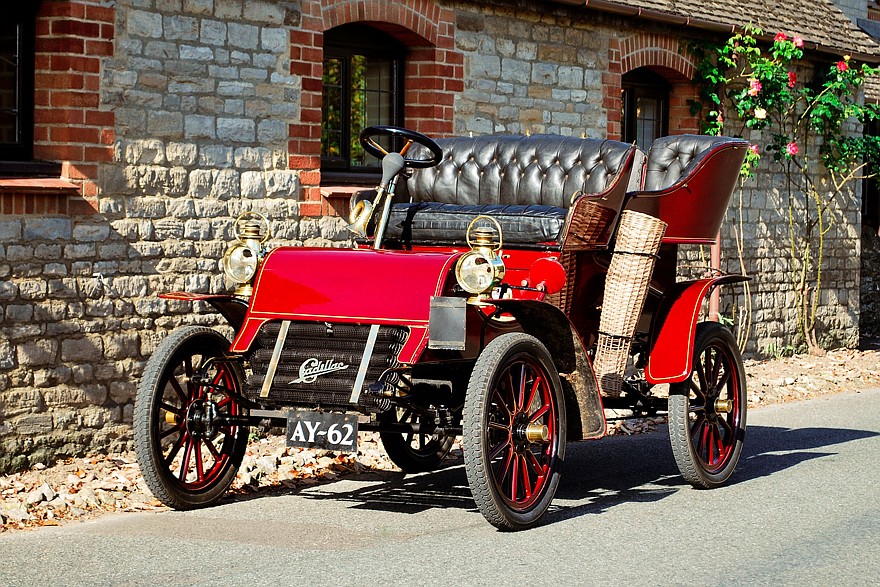
In 1903, the Cadillac Runabout/Tonneau model was released, whose engine used an intake valve with variable lift height designed by Alanson Partridge Brush. A patent application was filed on August 3, 1903, and granted as Patent No. 767,794 on August 16, 1904 – a few more important dates for automotive history enthusiasts. So, the historical roots of this “modern” technology are deep, and there is no one left to blame for it: all those who conceived its principle are long gone.
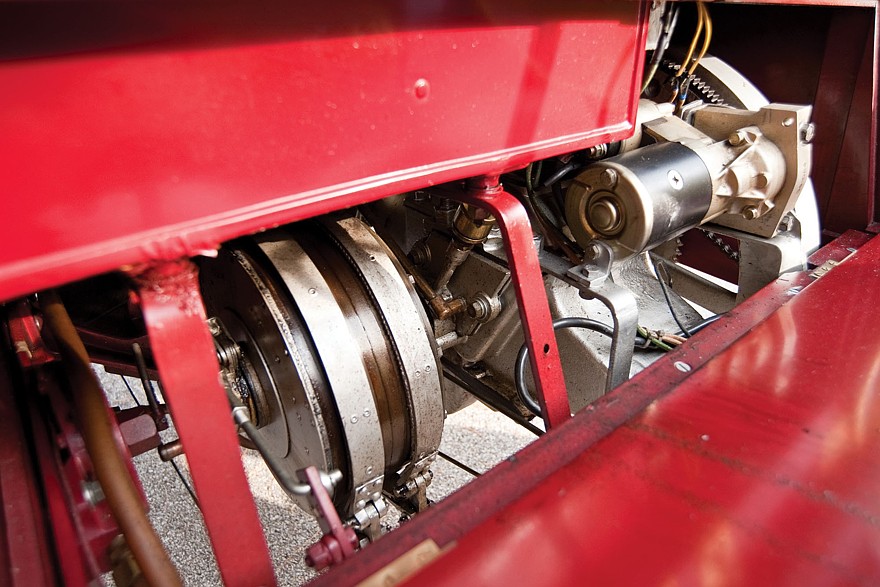
VVT truly became common and began to actively develop only in the second half of the 1970s and early 1980s, when Alfa Romeo and Nissan introduced it in their production cars. The first mass-produced model equipped with it was the Alfa Romeo Spider 2000, released in 1980.
At this stage, Honda joined the research. Its engineers significantly improved the technology, introducing the now well-known proprietary (and almost legendary) system for variable valve timing and lift with electronic control – Variable Valve Timing & Lift Electronic Control (VTEC). After that, it became clear that VVT was here to stay, and its triumphant march through the automotive world continued at a rapid pace.
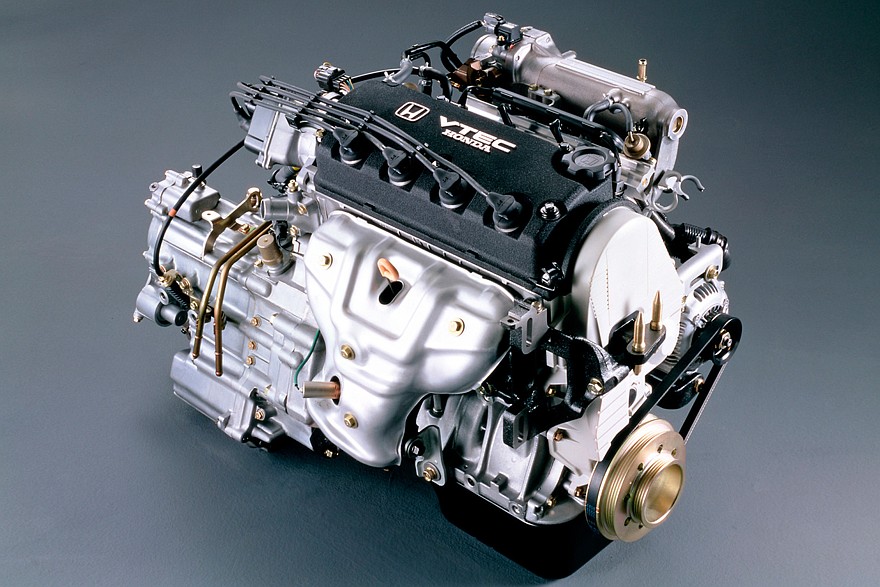
Now, virtually all automakers use this technology in one form or another. And although the systems they offer work slightly differently, their goals are identical. Here are just a few examples:
Subaru – Active Valve Control System (AVCS).
Nissan – Continuous Variable Valve Timing Control System (CVVTCS).
Hyundai, Kia, and Volvo – Continuous Variable Valve Timing (CVVT).
Ford – Twin Independent Variable Camshaft Timing (Ti-VCT).
BMW – Valvetronic (controls intake valve lift height) and VANOS (adjusts valve opening and closing times).
By Time and Height
So, what is a modern variable valve timing system? In a general sense, it is a combination of two mechanisms: one regulates the opening and closing times of the valves, and the second regulates their lift height. From a marketing positioning and end-user perspective, they can be differentiated into two product names (as in the case of BMW) or combined into one (for example, as with Honda). But we will not focus on marketing flirtations with the public and will turn to technological specifics. However, without excessive technical details.
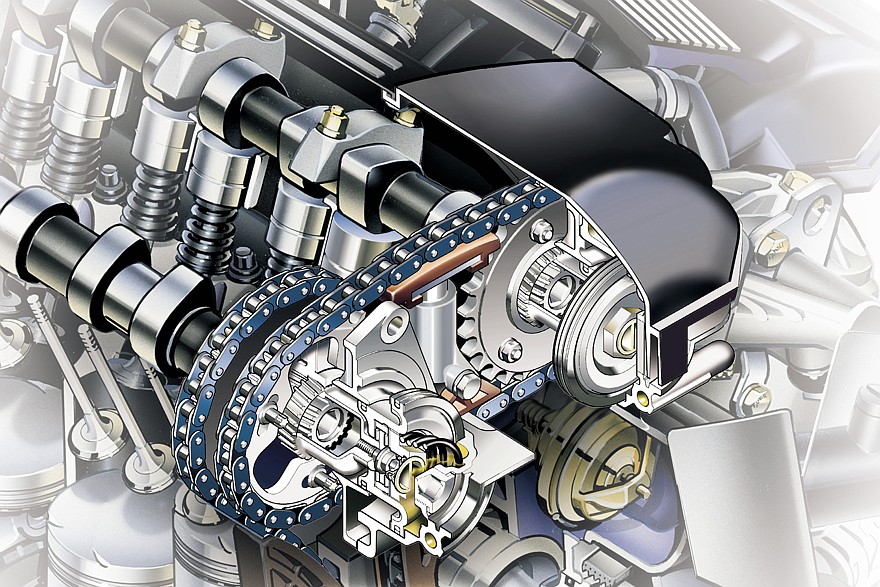
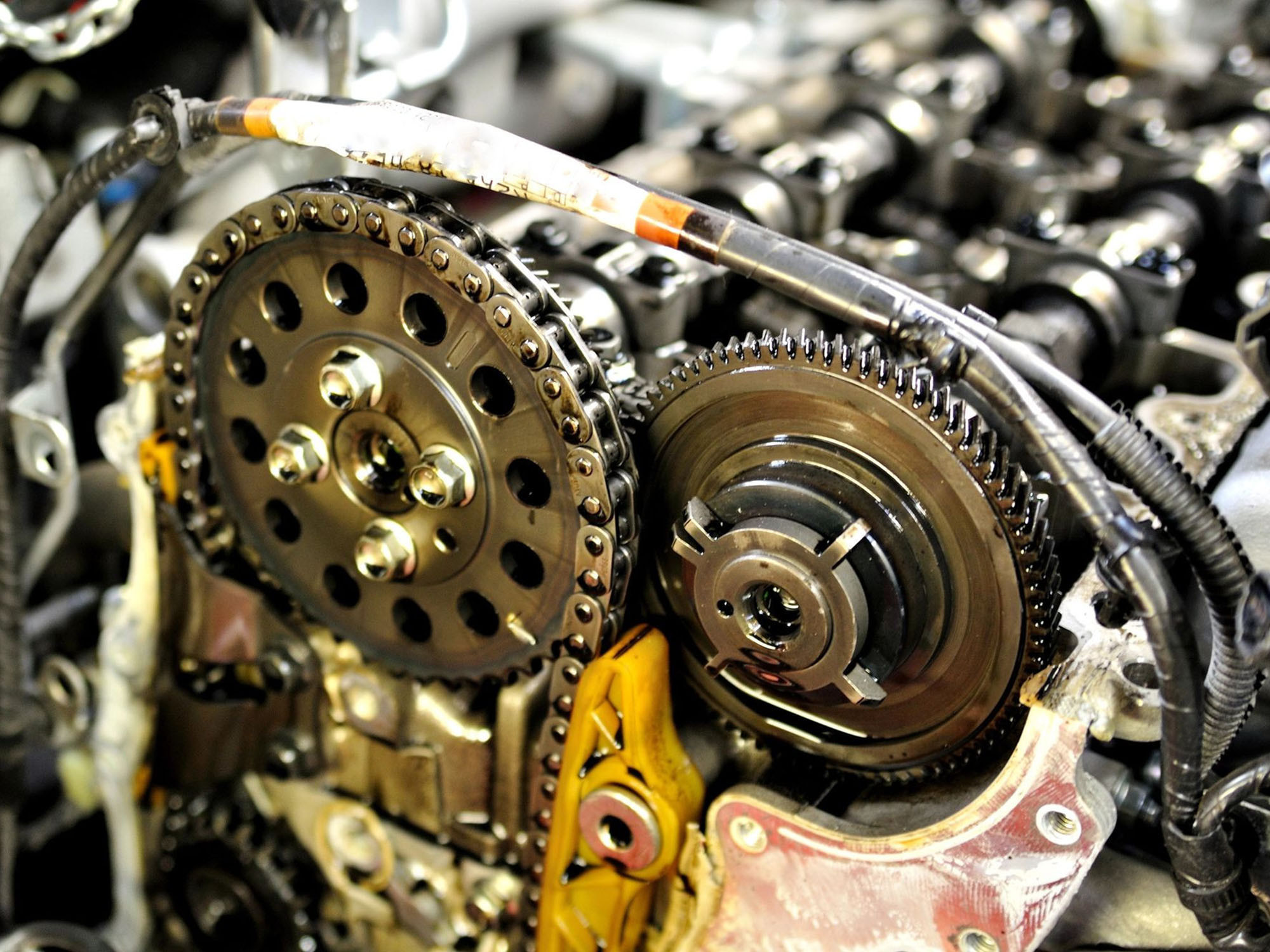
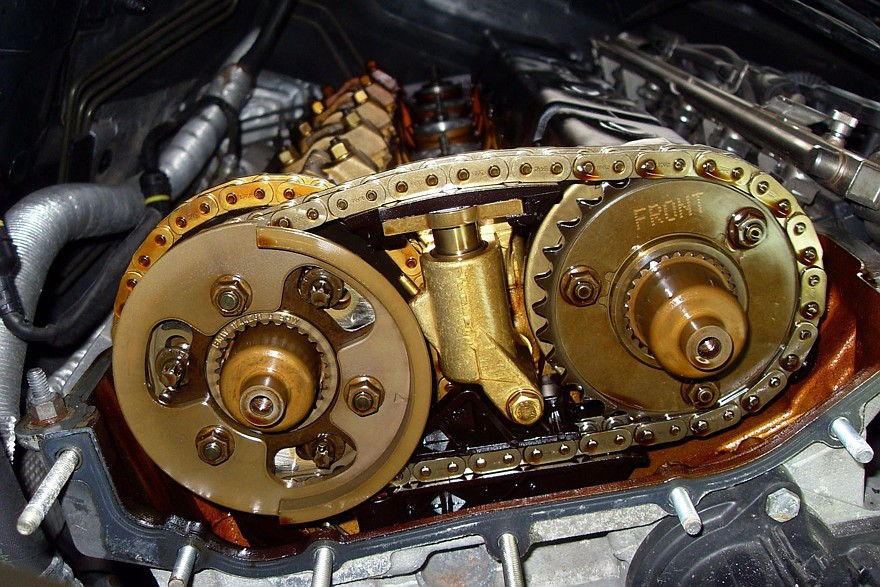
The system is based on a so-called phase regulator, also known as a phase shifter (it sounds a bit incorrect because it does not shift phases but regulates them, but what can you do – this is how it is often referred to today). This device consists of two key elements: an internal rotor, rigidly connected to the camshaft, and an external stator (housing), linked to the timing chain or belt.
Under normal driving conditions, this pair rotates at the same speed, as in engines with fixed valve timing. However, under oil pressure supplied by a solenoid valve based on a signal from the control unit to special internal cavities of the phase regulator, the rotor and stator change their rotational speed relative to each other. This changes the valve timing – the camshaft can open and close the valves earlier or later depending on the engine speed.
All this provides the following important advantage. At low RPMs, when the engine does not need much air and fuel to keep the pistons running, VVT closes the valves earlier to reduce the volume of intake air and, consequently, pumping losses and emissions.
On the other hand, late closing of the intake valves causes the piston to push some of the air-fuel mixture back into the manifold before ignition. This is another way to control the amount of mixture entering the combustion chamber during ignition, thereby reducing emission levels.
Additionally, variable valve timing systems can also open the intake valves earlier, causing exhaust gases to flow back into the manifold. This helps control the temperature in the combustion chamber, further reducing emission levels. That is, to some extent, this system can replace EGR where there is no physical exhaust gas recirculation valve.
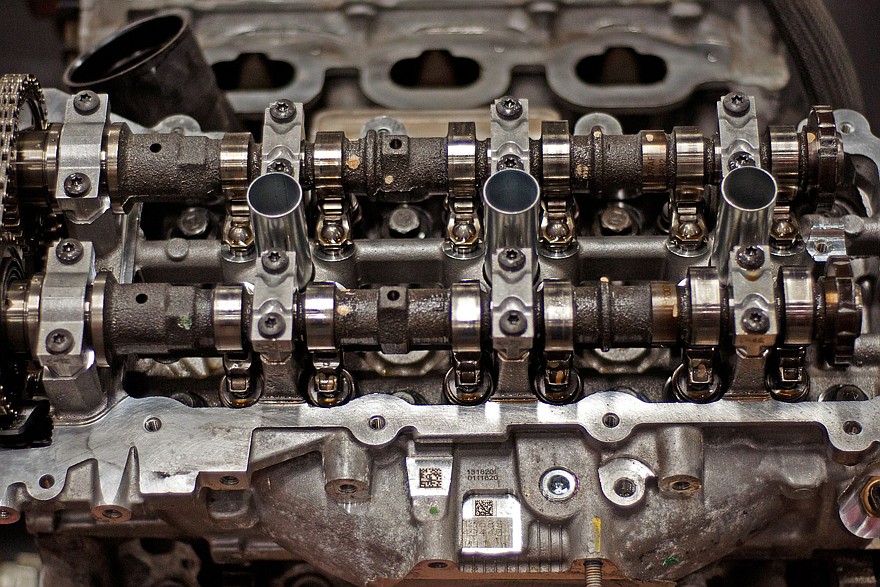
And by using camshafts with adjustable valve lift (using cams with different profiles; such technologies are often called “variable cam profile systems”), through corresponding ECU signals, fuel and air consumption can be reduced at low RPMs and increased at high RPMs. That is, optimizing flows and achieving different performance characteristics at different speeds and loads.
Naturally, this description of the system’s operation is made in broad strokes. In reality, there are many nuances that distinguish the basic schemes of different automakers and allow achieving certain results. But the general picture looks exactly like this.
It only remains to add that VVT systems can be installed on just one shaft, regulating the valve timing of the intake (only the intake!) shaft. Or on both shafts (Dual VVT or DVVT), and then regulation is carried out on both the intake and exhaust shafts.
Additional Capabilities
In some engines, mainly those with a high compression ratio, late closing of the intake valves allows the pistons to compress the air-fuel mixture before ignition for a longer period. This “late intake valve closing” strategy is now adopted by many automakers when designing turbo engines, as it helps reduce the effective compression ratio. This helps prevent detonation and reduce the octane number of the fuel used, thereby improving fuel economy and reducing operating costs for the car owner.
In turn, in hybrids or vehicles with cylinder deactivation, under certain operating conditions, an algorithm for deactivating the exhaust valve opening can be implemented. This prevents exhaust gases from entering the cylinder, effectively turning it into an “air pump,” which reduces pumping losses and increases efficiency.
Furthermore, in engines with turbocharging or supercharging, the valve timing of the intake and exhaust valves can be optimized to work together with these forced induction systems. This ensures optimized management of the air-fuel mixture supply and cylinder scavenging, enhancing engine performance.
Not Just Pros
Based on all the above, we can conclude that one of the main advantages provided by the VVT system is the ability for engines to produce more power and torque. More precisely, it increases torque at low RPMs and power at high RPMs.
Another extremely important advantage is fuel economy. By adjusting the valve timing on the intake and exhaust and synchronizing valve operation for more efficient fuel combustion, VVT reduces pumping losses, increases thermal efficiency, and improves fuel economy. This is especially noticeable at low loads and in cruising mode.
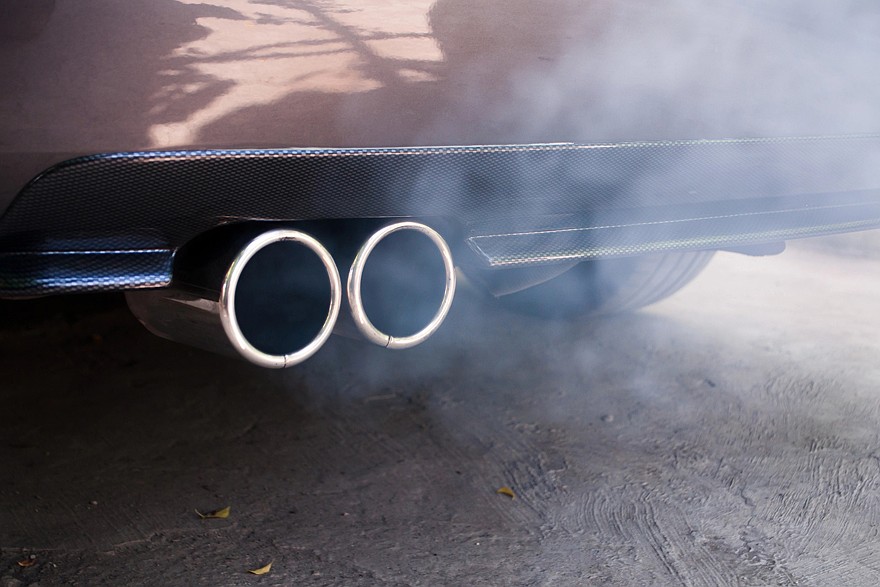
A direct and logical consequence of using a variable valve timing system is a reduction in unburned fuel and harmful emissions. These include carbon monoxide and nitrogen oxides.
Another significant result of applying VVT is smoother and quieter engine operation. By optimizing valve timing synchronization, the system helps reduce vibration and increase stability at idle and low RPMs. As a result, the service life and trouble-free operation of the internal combustion engine are significantly increased.
Moreover, it is worth understanding that engines with VVT provide smoother acceleration, better throttle response, and, as already mentioned, higher acoustic comfort and reduced vibration. This means that the car owner’s driving experience is significantly improved.
But even this sun of advanced automotive technology has its spots. As we have repeatedly stated and as you have probably seen for yourself, the variable valve timing system is a rather complex thing. It consists of mechanical, hydraulic, and electronic components, making it more complex compared to traditional engines with fixed valve timing.
Accordingly, technological and design complexity increases the likelihood of malfunctions and the difficulty of diagnosing them. This directly affects the cost of maintenance and repair: such systems require the involvement of highly qualified specialists, more and better-quality parts and consumables than conventional systems.
And the initial price of an engine with VVT is undoubtedly higher than one without it.
Furthermore, it is always worth remembering that the presence of a variable valve timing system significantly increases the requirements for engine oil. It must be impeccably clean and exactly match the automaker’s specification. VVT is highly dependent on oil pressure, which operates the phase regulators. Sludge, varnish deposits, carbon buildup, and other contaminants lead to clogging of solenoid channels and inevitable failures, which will negatively affect not only the VVT but also other engine components and assemblies.

Well, a low engine oil level or viscosity not meeting specifications will lead to system lag and reduced performance. There is nothing good about that either.
In conclusion, I want to ask: have we managed to convince you that the variable valve timing system represents a big step forward in the development of engine building technology? After all, it is thanks to it that some modern civilian cars accelerate faster than 20th-century sports cars, and massive SUVs consume no more fuel than our fathers’ passenger cars. Yes, these delights had to be paid for with significant system complexity and an increased likelihood of some malfunctions. But if you think about it carefully, it is probably worth it. For the pleasure of driving with the wind, without spending too much on fuel, it is not a very high price.