




























Mazda RX-8 Drift Review
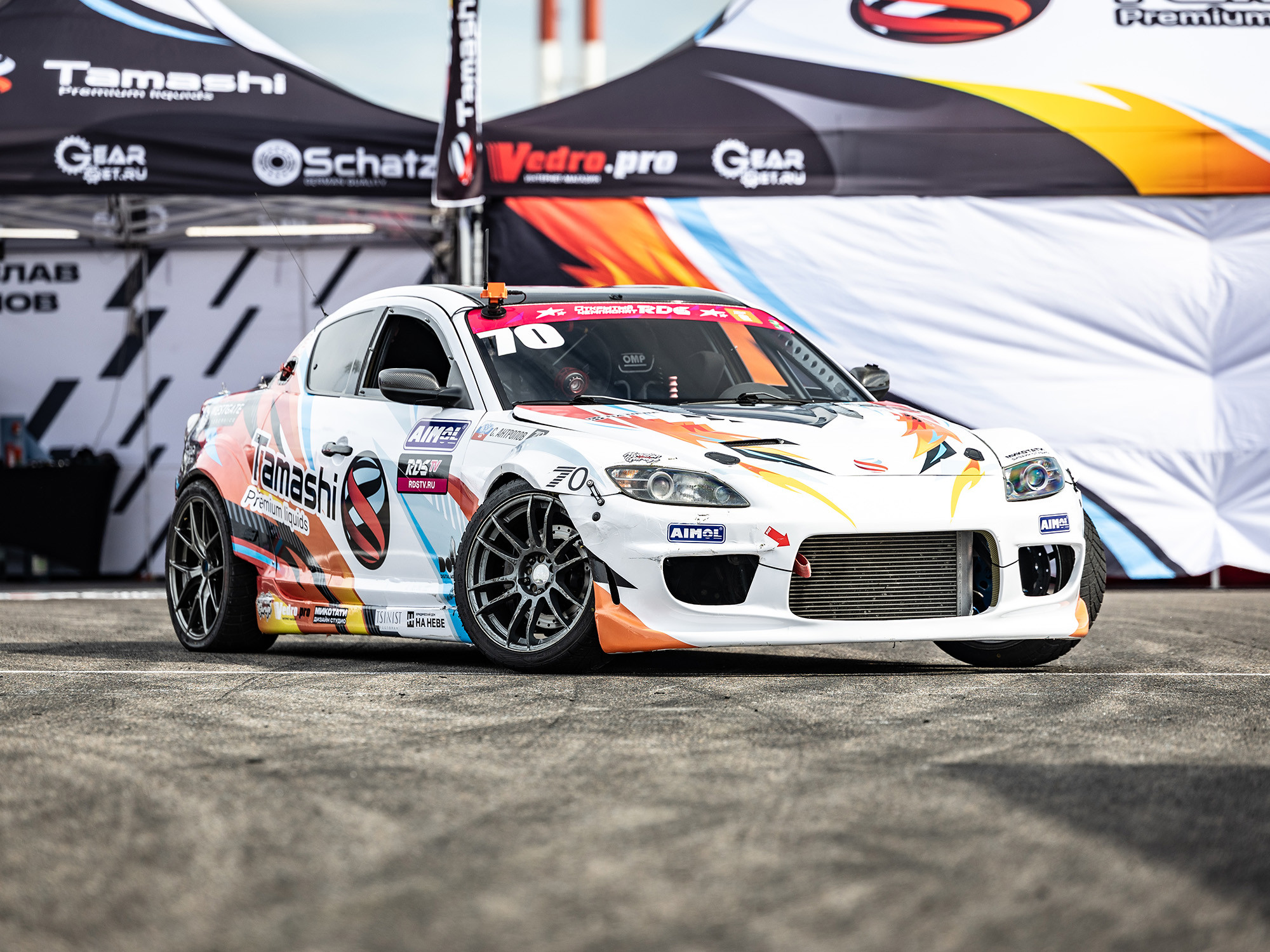
What cars are we used to seeing in drift competitions? Nissan, BMW, Toyota. The Mazda RX-8 is not just a rare base for a drift project; this car is almost never seen anymore. That makes the story of Stanislav Antropov and his battle-ready RX-8, with which he participates in the RDS Open and RDS GP, all the more interesting and unusual.
Initially, Stanislav tried to build a race car based on the Mazda RX-8 in his hometown of Omsk, but there were no mechanics with sufficient qualifications to build a car on this platform. Six years ago, when he moved to St. Petersburg and met Oleg Shudegov and the Westgate auto service center, he finally got the chance to start bringing the RX-8 plan to life. The car has been gradually refined over six years and is now in its final stage.
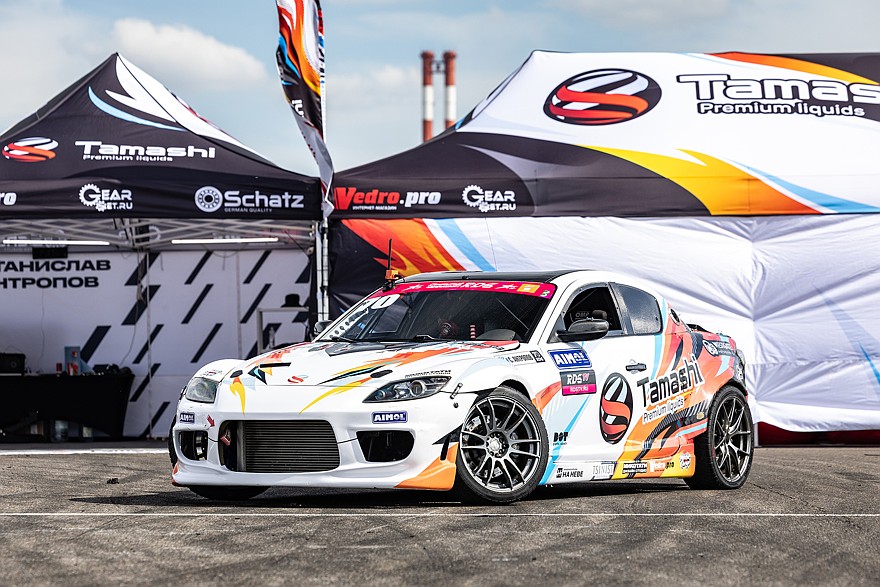
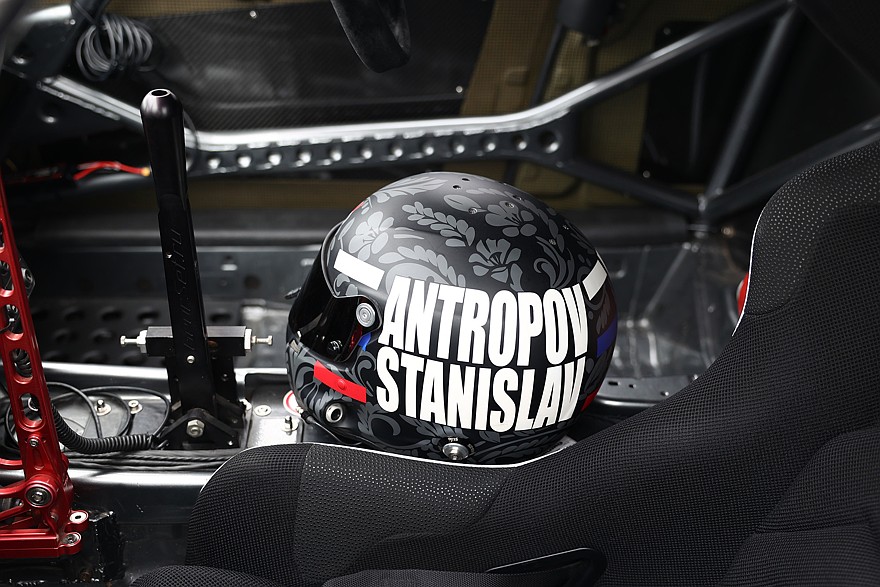
Stanislav Antropov began his journey as a driver in this discipline with regional championships in St. Petersburg. Then he started participating in the championship of the Republic of Belarus. He also competed in the ADM Drift Contest in Moscow, and in 2026, Stanislav is driving his first full season in RDS Open. Choosing a step-by-step approach and striving to develop and move forward gradually, he progressed from small regional championships to a federal-level championship. Also this year, using a Wild Card (an invitation to compete bypassing standard entry requirements), he took part in the second stage of the country’s main drift championship, RDS GP, and will participate in the fourth stage of RDS GP 2026.
Exterior
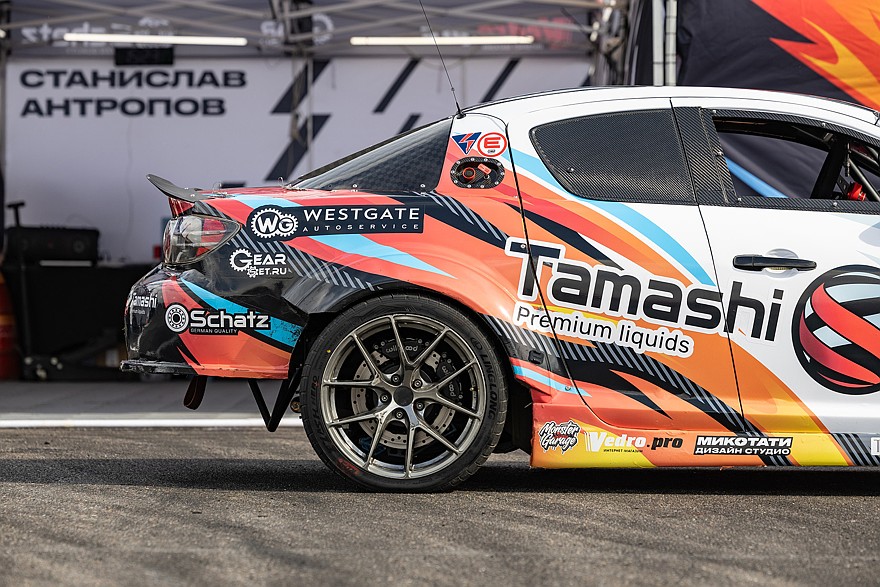
A feature of this platform is the rigid body, and compared to, for example, BMW and Nissan, the Mazda RX-8 frame itself is heavy. To be competitive in championships, the overall weight of the car needed to be reduced, so the body panels were custom-made. The roof, hood, and rear diffuser here are carbon fiber. The fenders, doors, bumpers, side skirts, and rear section of the car are made from Kevlar-carbon. The roof, doors, and trunk lid are made to stock shapes, while the bumpers, overfenders (i.e., front and rear fenders), and side skirts are copies of the Japanese Ings+1 body kit.
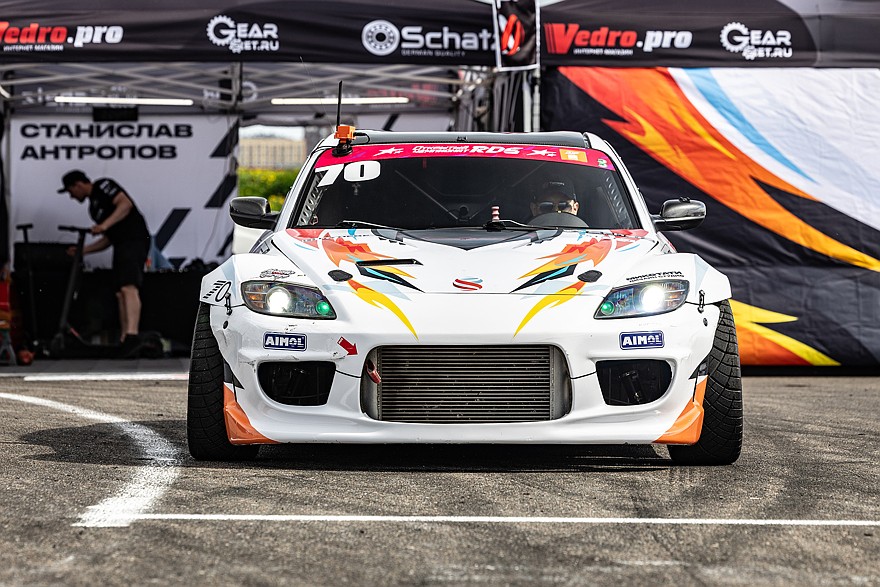
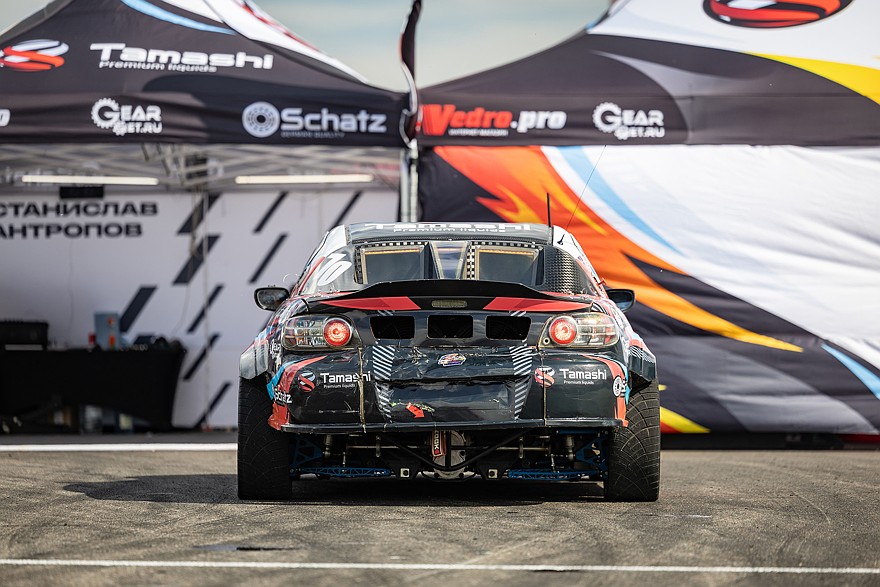
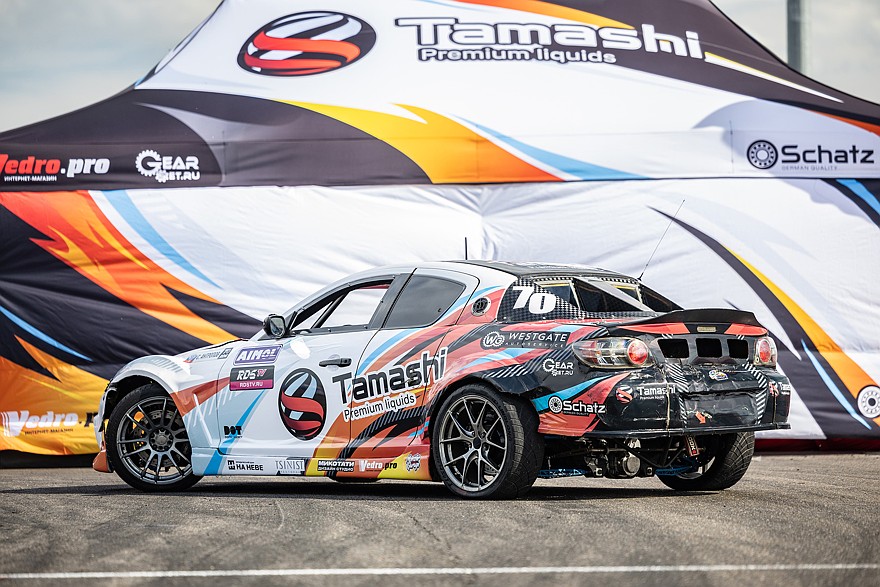
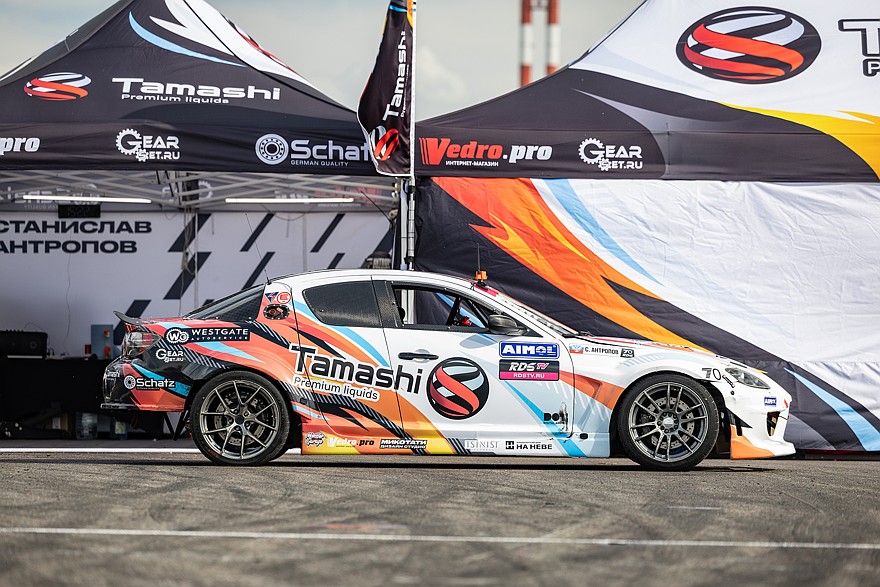
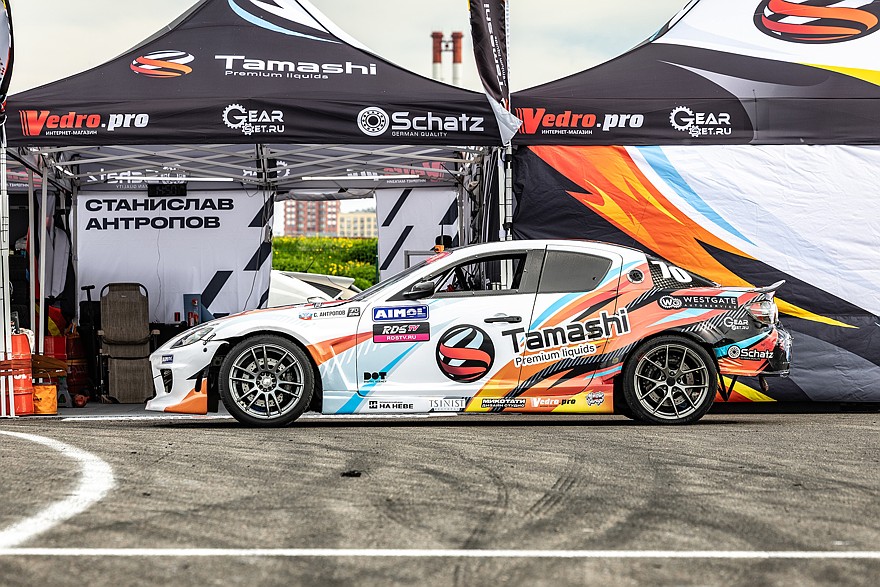
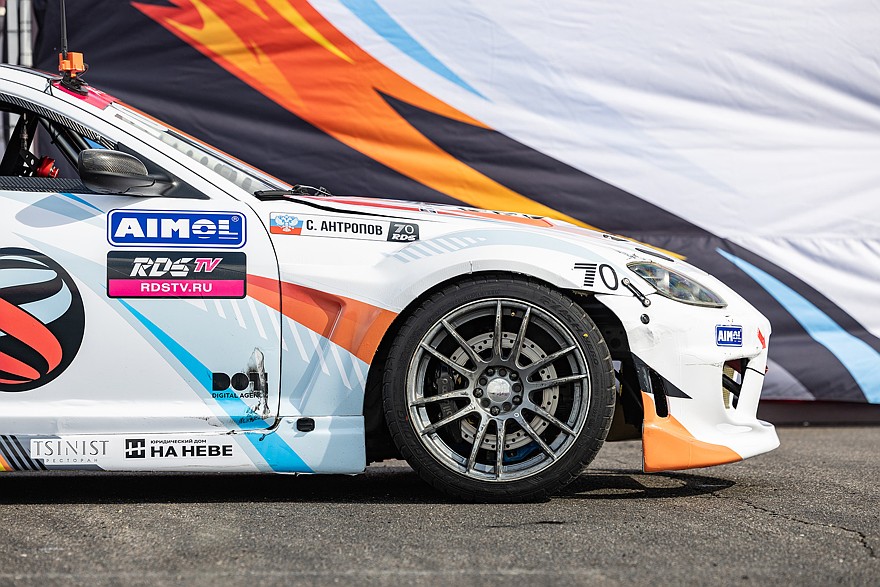
The choice of wheels was simple: Chinese wheels with a design he liked. Drift is a contact sport, and wheels often get damaged. The solution is to buy 20 pieces of the same design per season. Tires are used according to regulations: for RDS Open competitions, the rear axle is allowed size 225/40 R18; for RDS GP, it’s 265/35 R18. The manufacturer is LingLong.
Interior
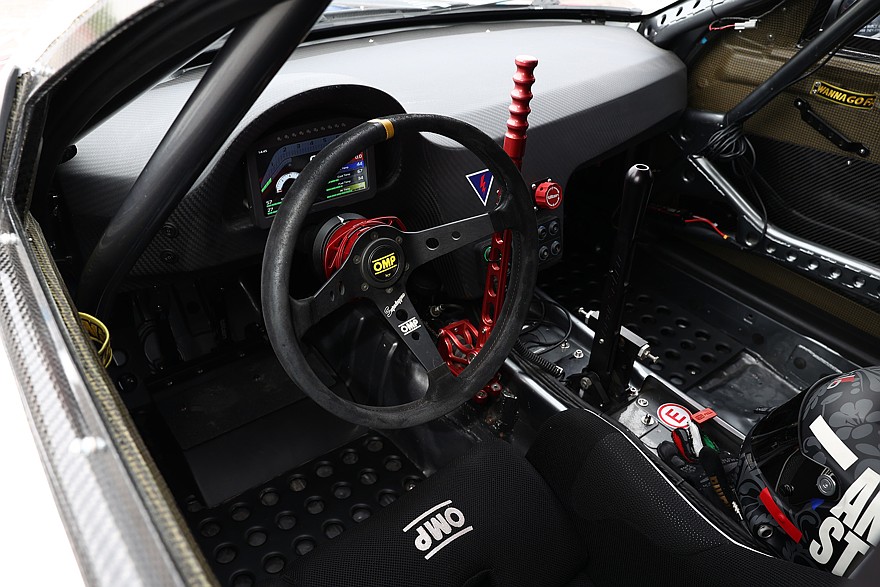
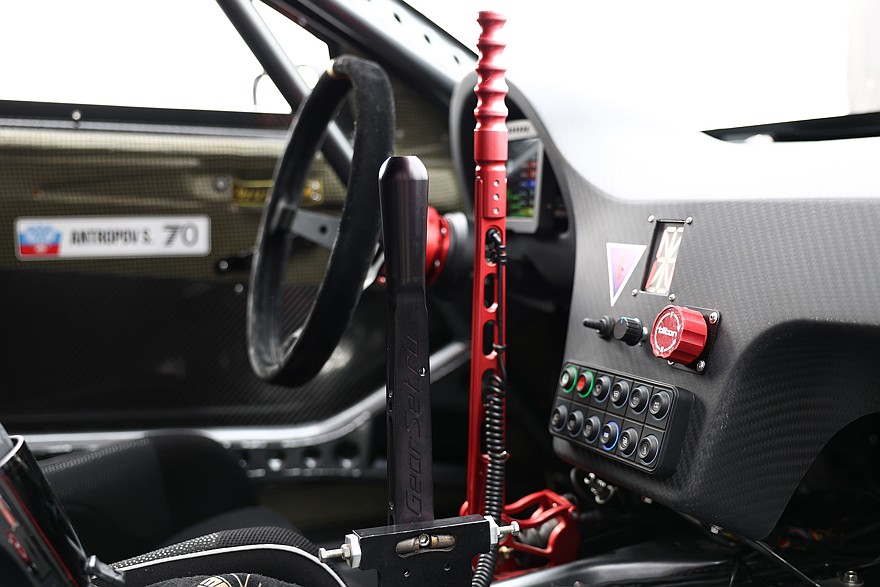
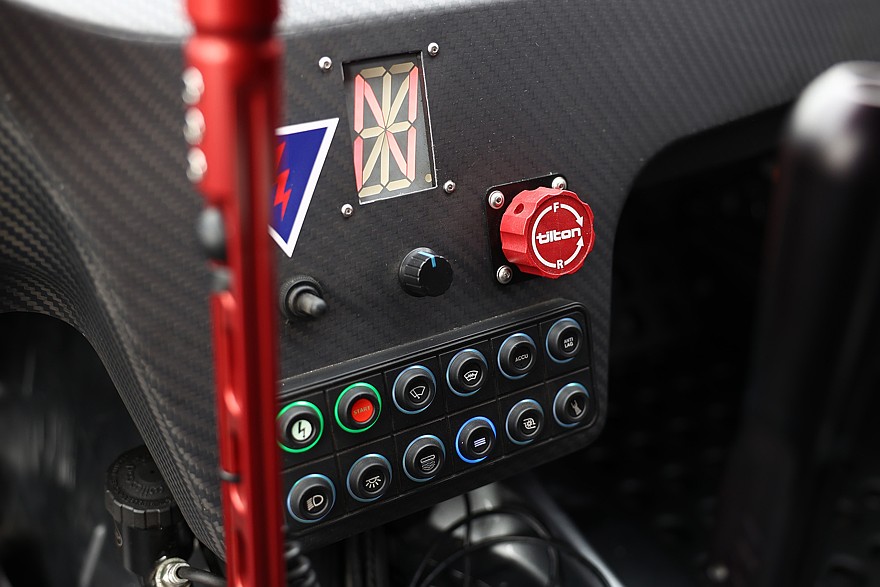
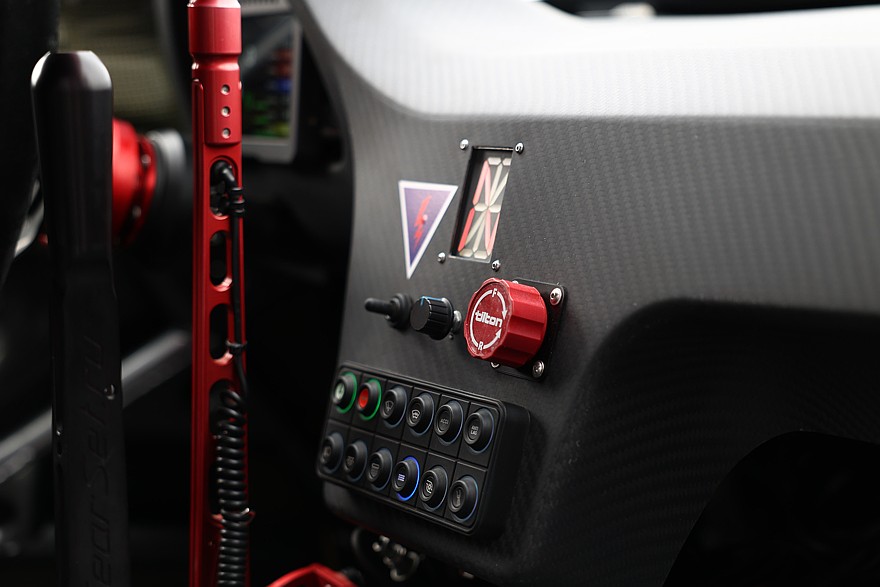
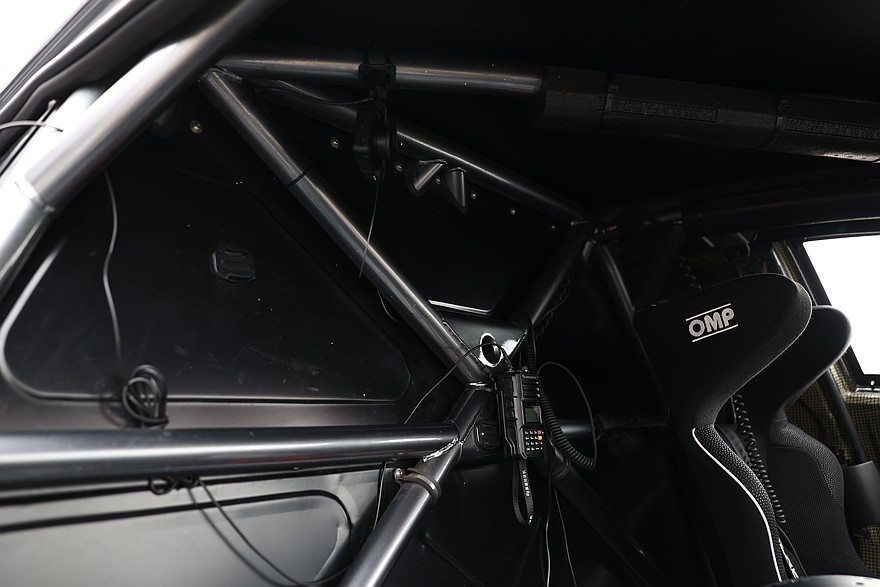
The Mazda’s cabin, naturally, is also maximally lightened and represents the pure quintessence of motorsport: an OMP bucket seat, Sparco harnesses, an OMP quick-release steering wheel, a hydraulic handbrake, and a Tilton pedal assembly. Since there are no ready-made carbon fiber dashboards for the Mazda RX-8, a panel from a BMW E92 was installed. Interestingly, it fit with minimal modifications.
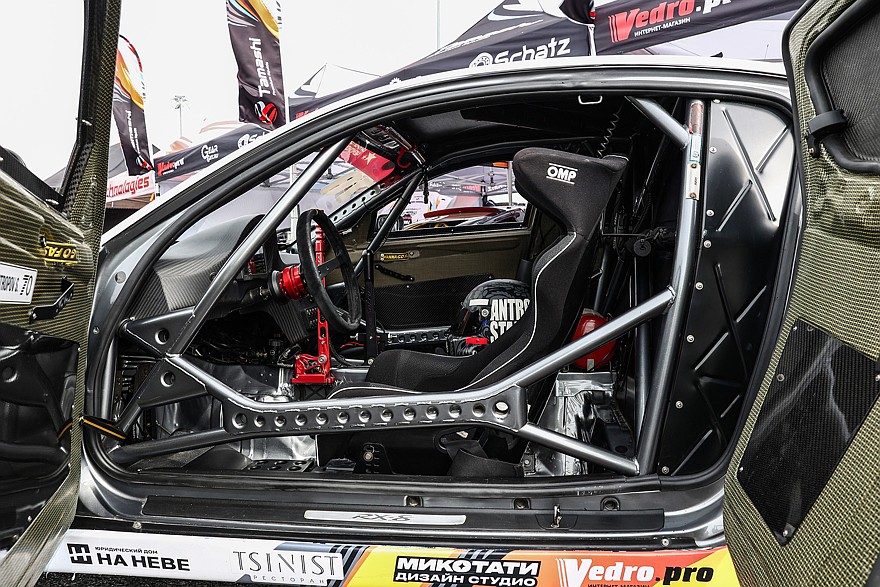
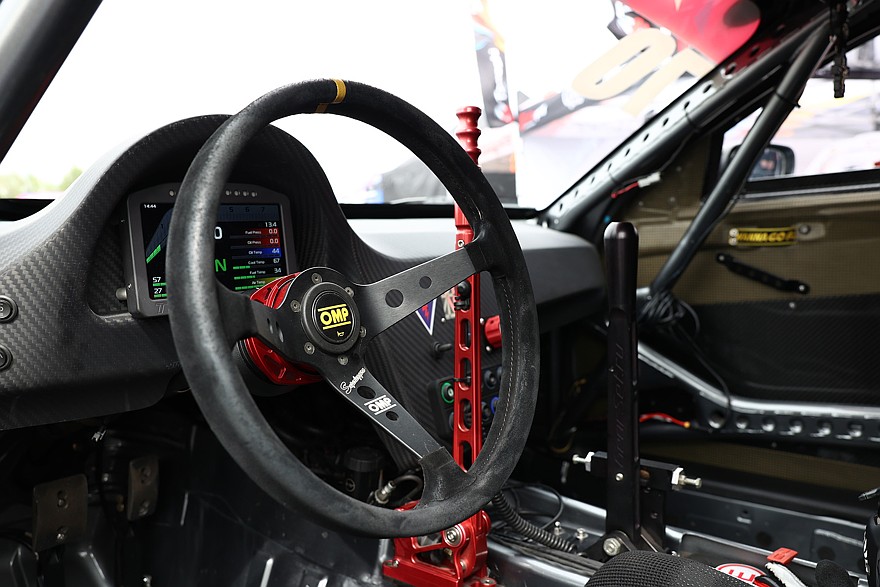
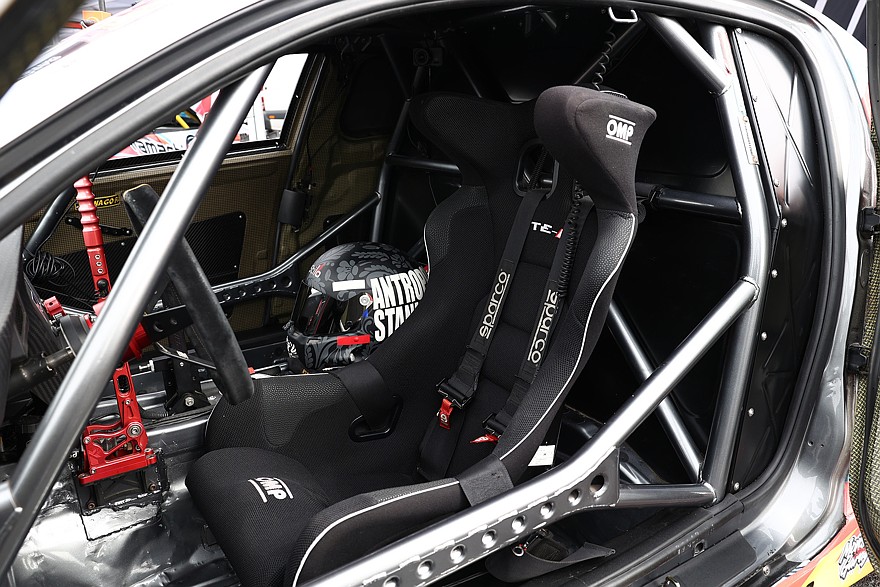
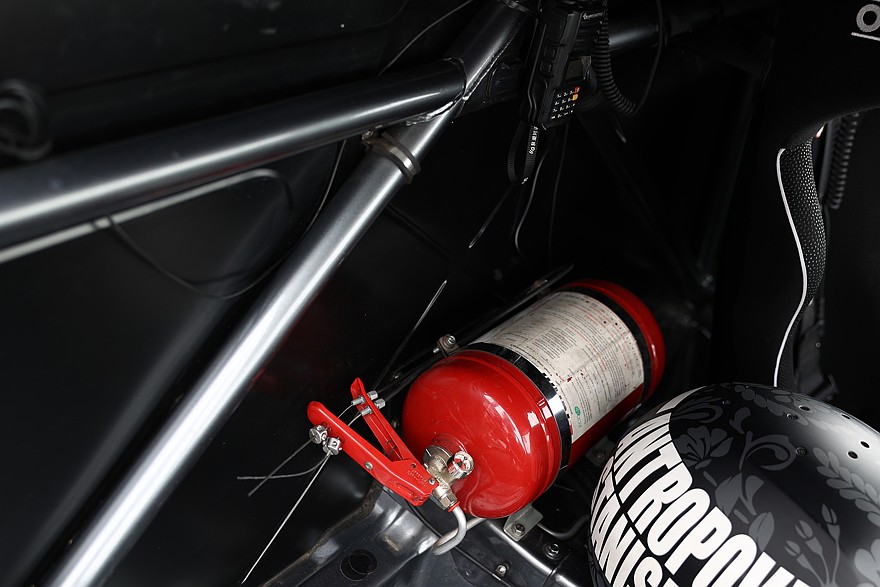
An OMP fire extinguisher system is installed, along with a firewall behind the driver (a wall separating the fuel tank and the driver’s seat), and, of course, a roll cage. The weight of the car with a full tank, coolant, and driver is 1310 kg.
Hardware
Under the hood of the Mazda RX-8 is a significantly modified inline-six-cylinder Toyota JZ-series engine with a displacement of 3.0 liters – the so-called “1.5JZ.” Why was this particular engine chosen? As mentioned earlier, the car was originally purchased with a 1JZ. The potential of this engine can be increased by switching to a 1.5JZ. This means the cylinder head and crankshaft from the base unit are retained, while the engine block is the three-liter one from the 2JZ.
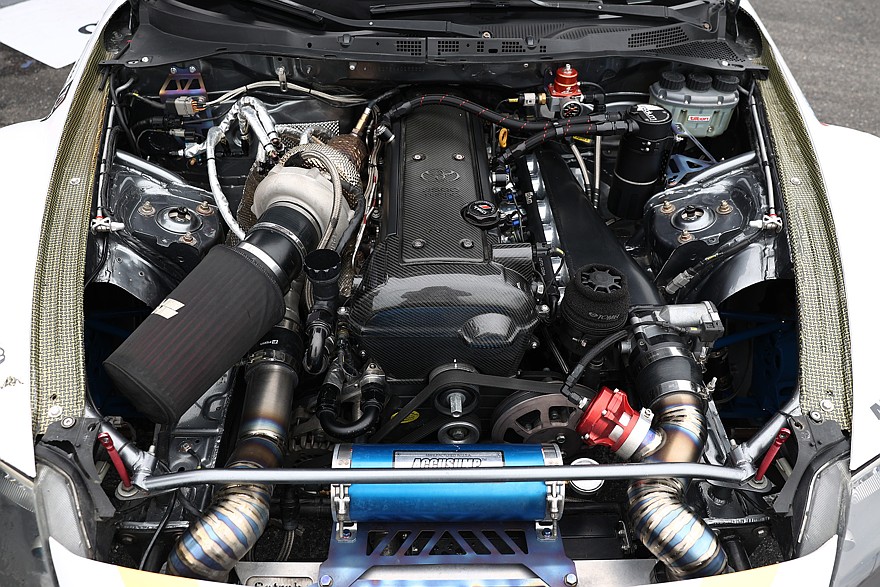
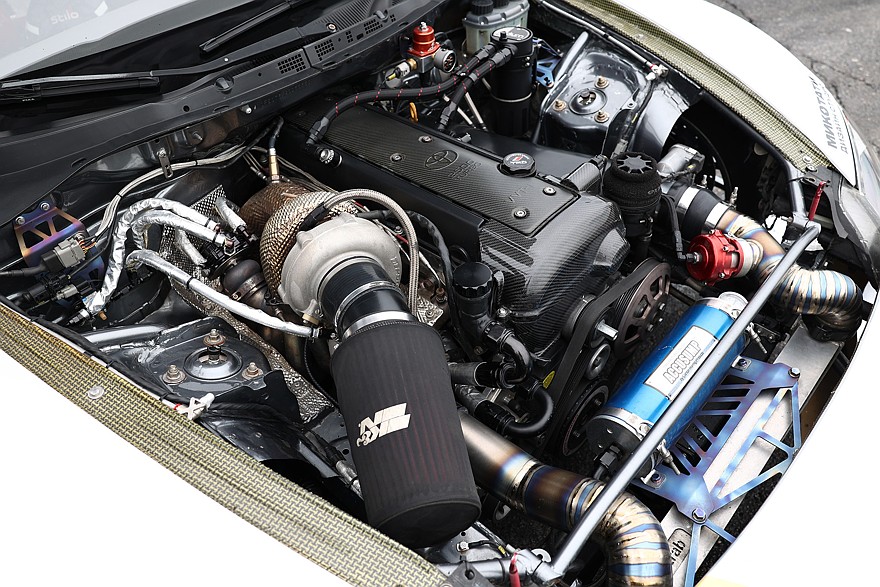
All other elements have been replaced with components designed for high-load operation. The bottom end features reinforced Real Street Performance main caps, forged Manley connecting rods, and CP Pistons. Forced induction is provided by a Pulsar G30-770 turbocharger, enabling power output exceeding 800 hp. The engine’s potential is up to 1000 horsepower with 1100-1200 Nm of torque. The engine was assembled in the Republic of Belarus by Alexander Ananyev.
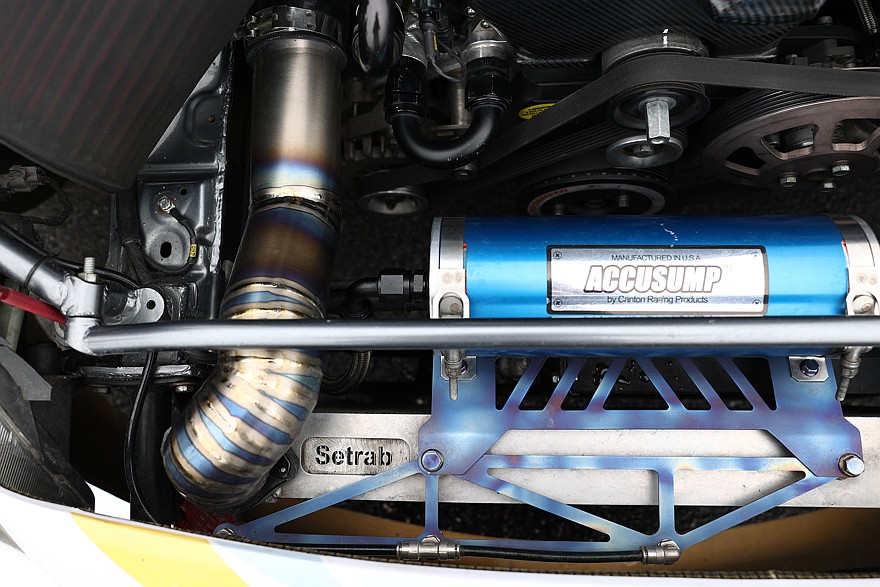
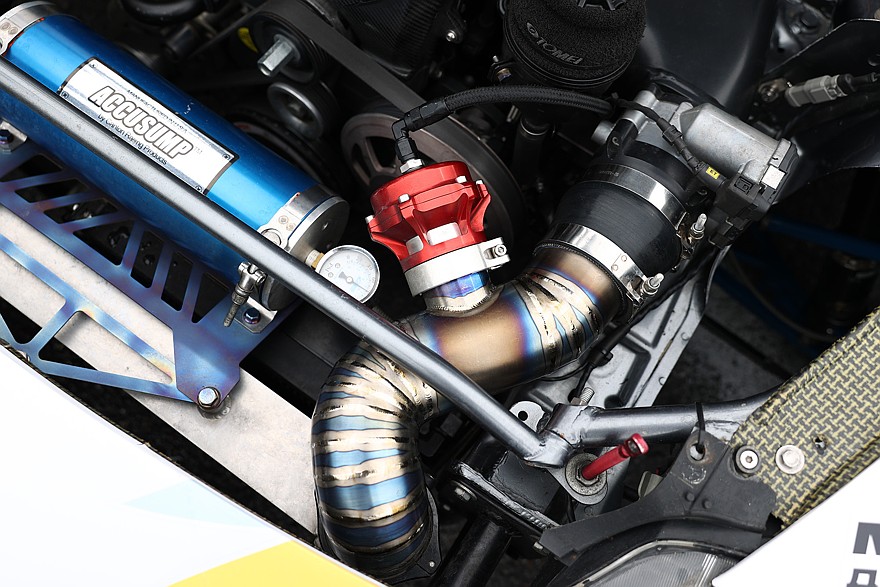
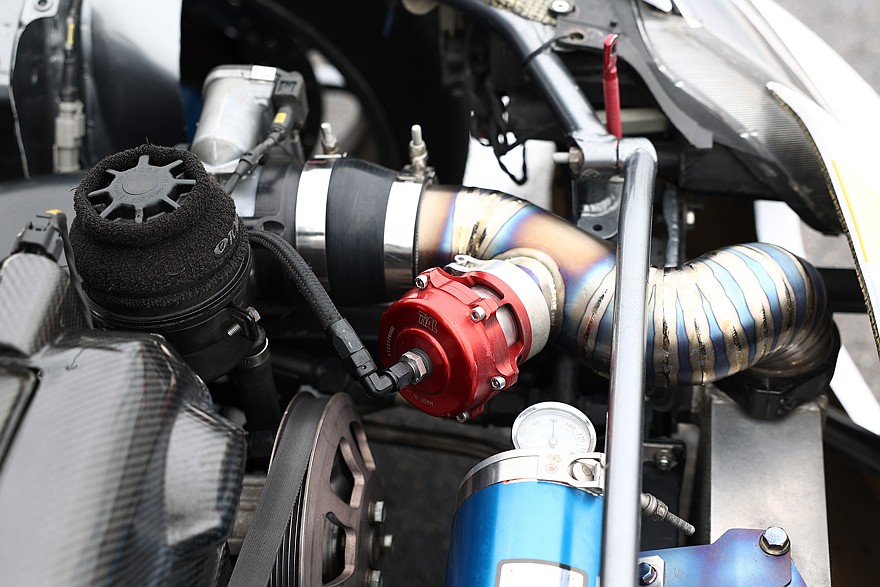
The intake system includes a custom-made aluminum intake manifold, a Setrab intercooler, a TiAL blow-off valve, and custom 3-inch diameter titanium piping. To stabilize temperatures during prolonged high loads, a spray system for the intercooler and fuel radiator has been implemented. The exhaust system was built entirely from scratch: the car received a custom exhaust manifold and a 3-inch diameter titanium exhaust path, manufactured at the Westgate auto service center.
Engine management and telemetry data collection are handled by a Link Fury X ECU. Instead of a classic fuse box, two TDG Electronics power distribution modules are used. Information is displayed on a TDG Electronics dashboard, and control of main functions is implemented via a Blink Marine Keypad.
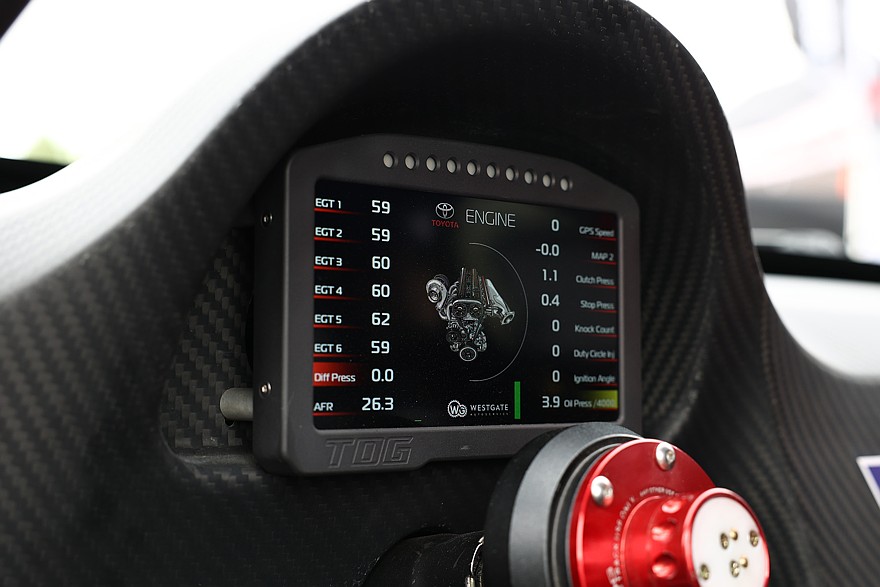
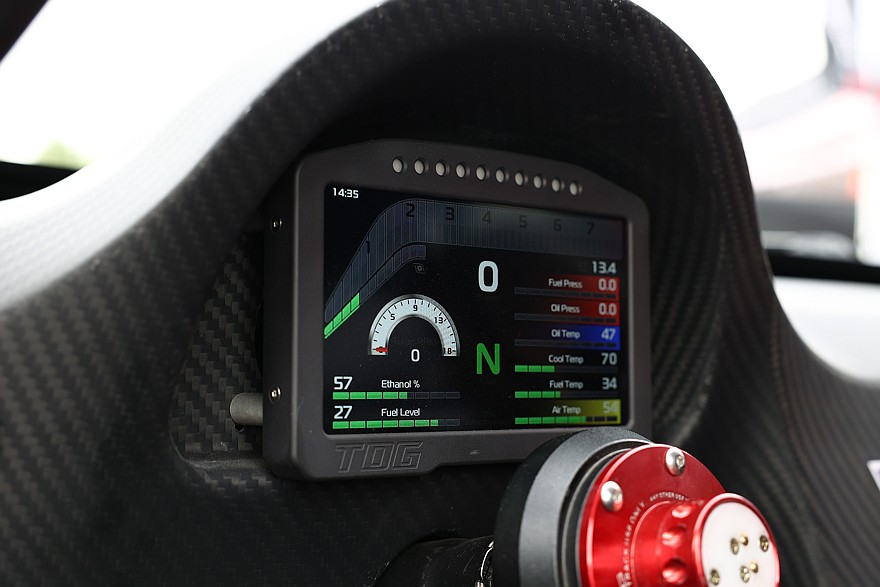
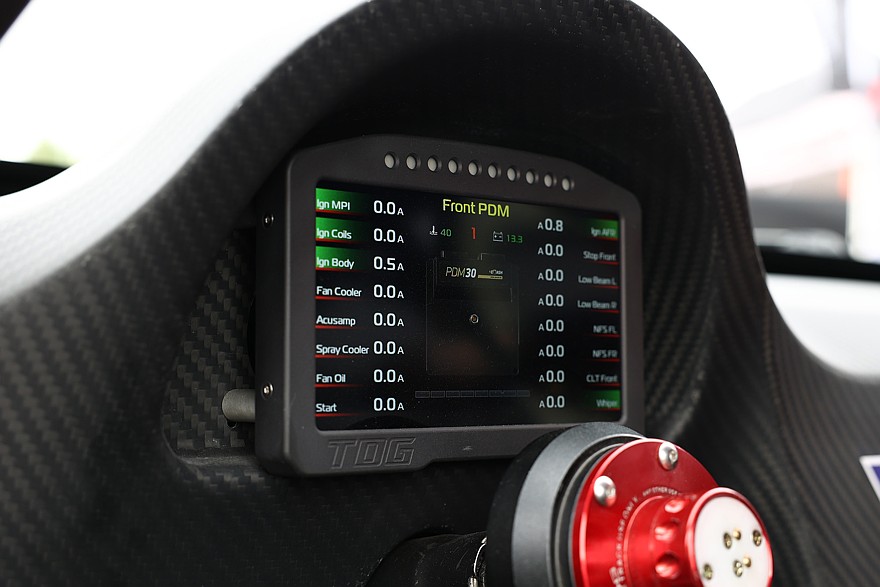
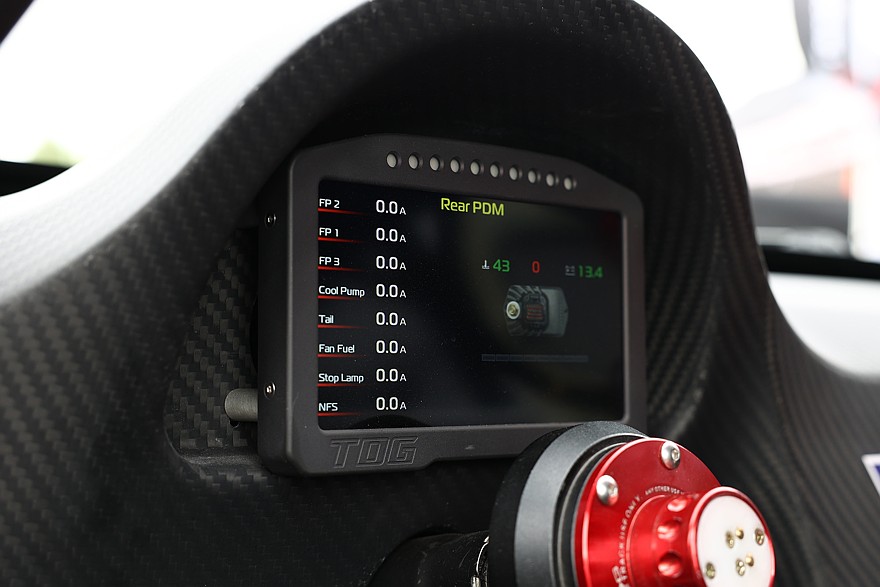
According to dyno tuning results, the engine produces 820 hp and about 1050 Nm of torque at the wheels. Several engine calibrations are available for different track configurations and weather conditions, with the ability to switch between them quickly.
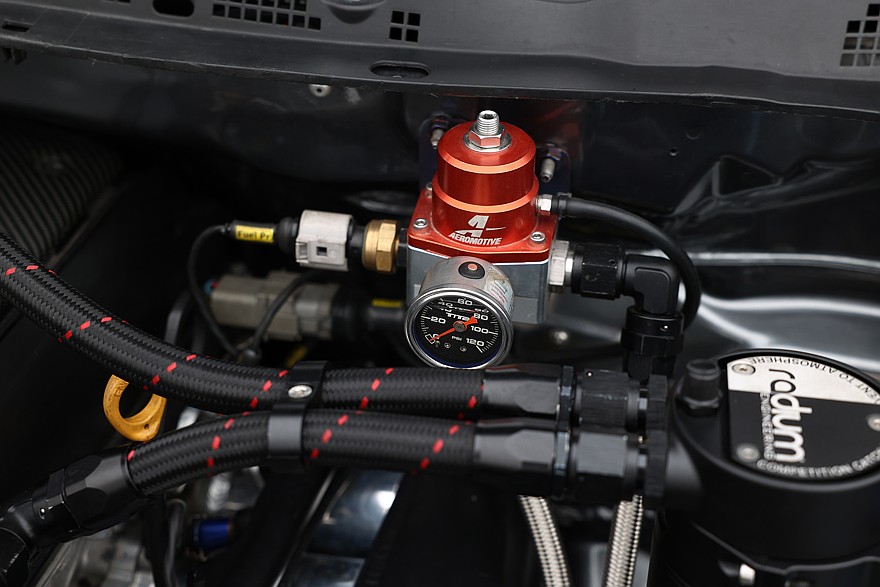
The car is tuned to run on E60 fuel, consisting of 60% ethanol and 40% BRF MX100 racing gasoline. A flex-fuel system is installed, allowing the engine to run on different fuel types: gasoline, pure ethanol, or a mixture. A Radium Engineering fuel tank with an integrated fuel station and a two-stage filtration system is used. The configuration includes one transfer pump and two Walbro main pumps. Fuel delivery is ensured by a Radium Engineering fuel rail, Injector Dynamics injectors, and an Aeromotive pressure regulator. Additionally, fuel temperature monitoring and a fuel cooling system are implemented to prevent overheating during prolonged operation in hot weather.
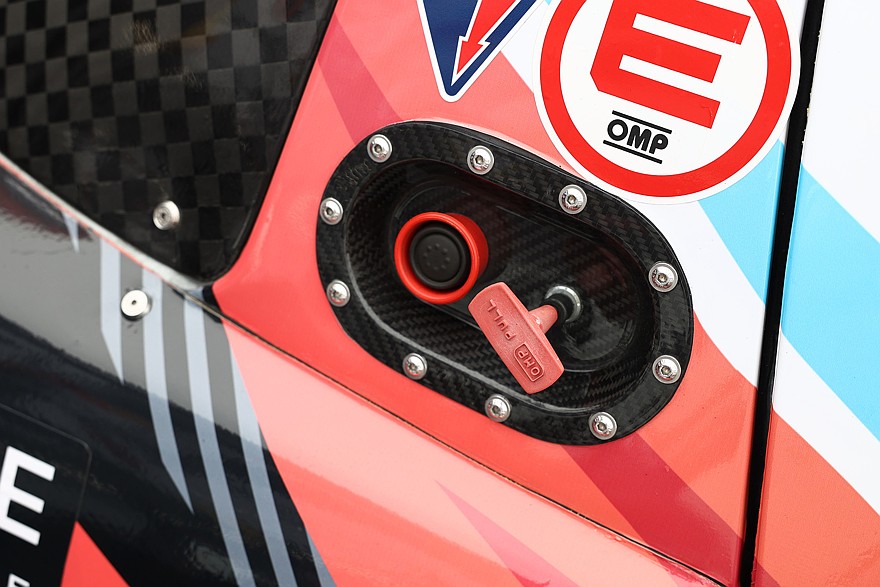
The fuel tank and radiator with fans are mounted in the rear trunk area.
The car uses a Russian-made Gear Set sequential dog engagement gearbox. Torque transmission is achieved via an EDEL Racing triple-disc, unsprung clutch. The drivetrain also uses a Gearset differential with the ability to quickly change the final drive ratio for a specific track configuration. Why Gearset specifically? Because the manufacturer is based in Russia, provides prompt customer feedback, and, if necessary, performs quick repairs on parts. By the way, after each season, Stanislav sends the gearboxes, differentials, and engines to the manufacturers for inspection, who also provide assembly services for these units.
The car retains and reinforces the stock Mazda front subframe, and the steering system is built around a BMW E36 steering rack installed in the stock location.
The most interesting part is the suspension setup. The front and rear suspensions are built using Westgate components. The kinematics are based on WiseFab suspension geometry, but individual components have been reworked to simplify maintenance, the hub mounting hardware has been changed to Nissan components (chosen for their availability and good quality), and the brake caliper mounting points have been relocated to accommodate the lightweight Wilwood brake system.
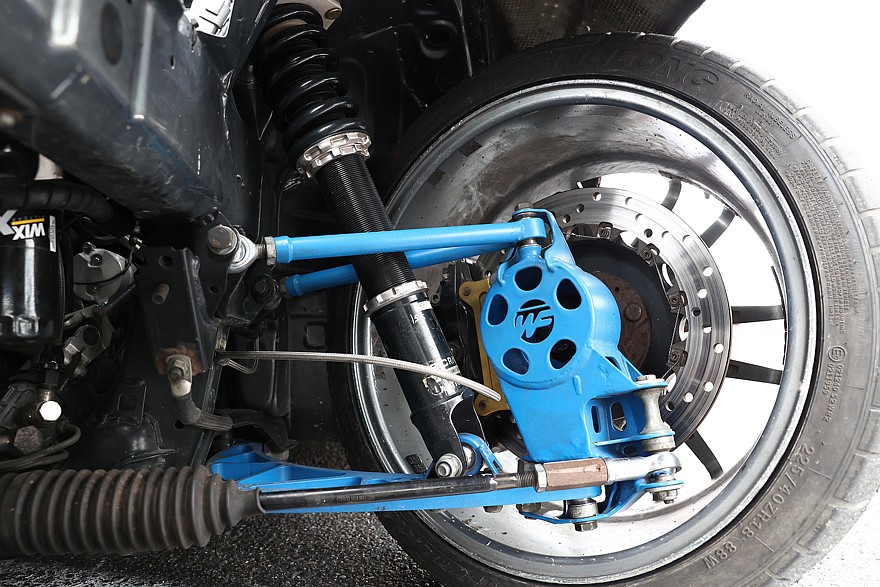
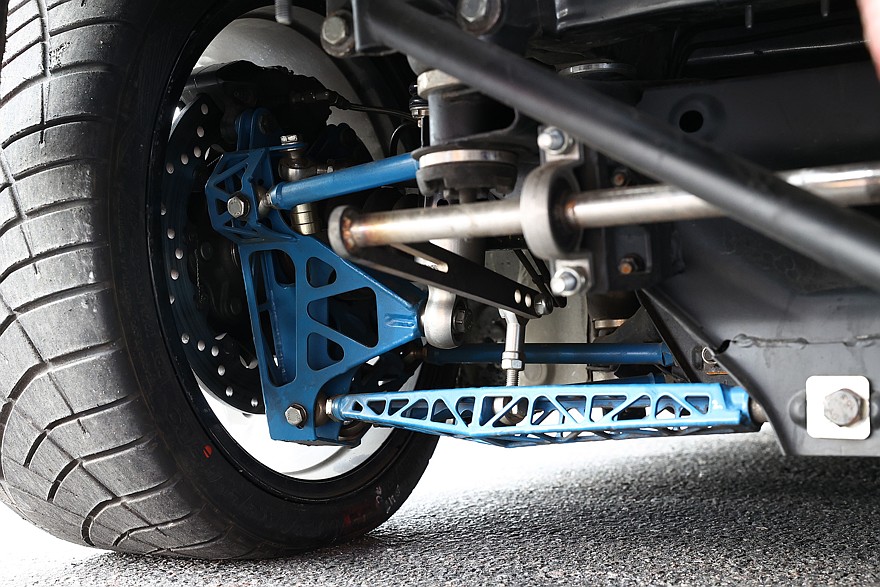
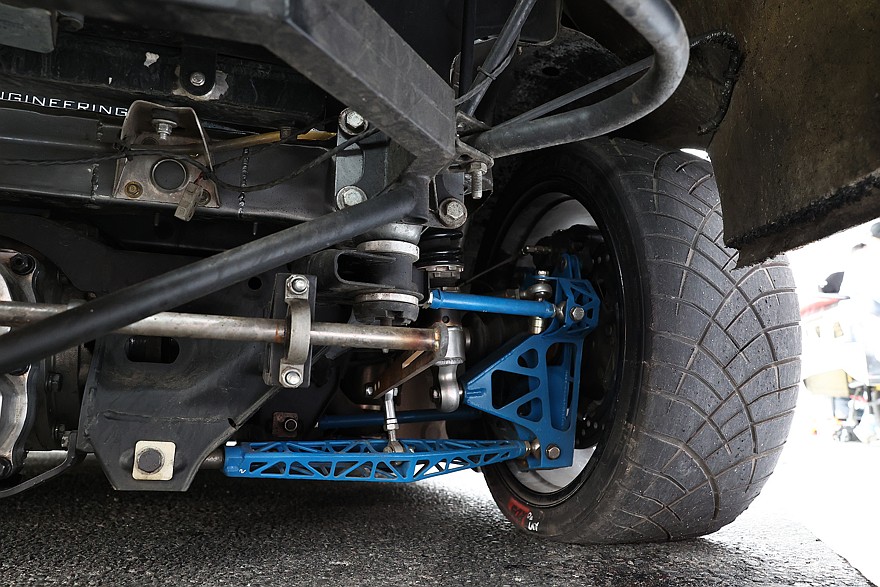
The car uses BC Racing shock absorbers, and custom anti-roll bars have been developed to control body roll, featuring quick-change torsion bars of varying stiffness. This allows for rapid adaptation of the chassis balance to specific track tasks and weather conditions.